
Toyota considers hydrogen trucks as SMEs face changing logistics demands
Toyota is considering using hydrogen-powered trucks to move automotive parts and support other logistics operations at its factories, as the carmaker looks for more practical uses for hydrogen technology.
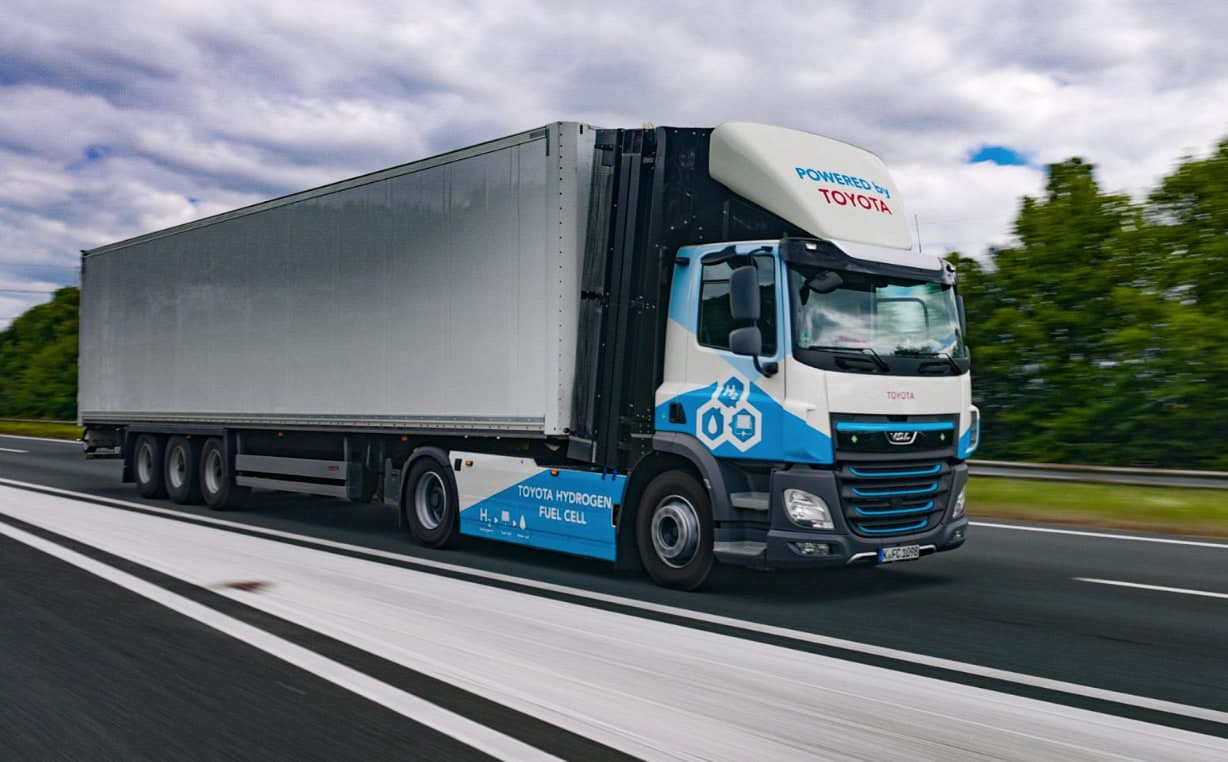
Toyota Pic
Toyota is considering using hydrogen-powered trucks to move automotive parts and support other logistics operations at its factories, as the carmaker looks for more practical uses for hydrogen technology.
The move would take hydrogen beyond passenger cars and into the commercial side of Toyota’s operations, where trucks can run regular routes between factories, warehouses and suppliers.
AI-generated summary. It can miss nuance — read the full story above for the complete picture.
Toyota is considering using hydrogen-powered trucks to move automotive parts and support other logistics operations at its factories, as the carmaker looks for more practical uses for hydrogen technology. The move would take hydrogen beyond passenger cars and into the commercial side of Toyota’s operations, where trucks can run regular routes between factories, warehouses and suppliers.
Why Toyota is looking at hydrogen trucks
Factory logistics could provide Toyota with a practical environment to test hydrogen-powered trucks. Trucks moving parts between factories, warehouses and suppliers often follow predictable routes and return to the same locations. That makes it easier to plan where vehicles can refuel and how much fuel they need. Unlike a passenger vehicle, a commercial truck may spend much of its working day on the road. The time it takes to refuel, along with how far it can travel and how much weight it can carry, can have a direct effect on a logistics company's costs. Hydrogen fuel cell trucks can be refuelled more quickly than many battery-electric trucks, although the overall economics depend on the availability and cost of hydrogen.
“The immediate issue is not whether to buy a hydrogen truck. It is watching how large manufacturers change their supply-chain requirements.”
Hydrogen has a different role in commercial transport
Toyota has been developing fuel-cell technology for years, but hydrogen-powered passenger vehicles have not gained the same market traction as battery-electric cars. The company has continued to pursue a broader approach to vehicle technology, using batteries, hybrids, hydrogen and other powertrains for different applications. Heavy duty transport is one area where hydrogen could potentially have a stronger use case. A truck carrying automotive components over a long route has different requirements from a passenger car used mainly for commuting. Payload, range, refuelling time and how frequently the vehicle is used all matter. For Toyota, using hydrogen trucks within its own manufacturing and supply chain operations could provide a controlled way to test whether the technology works commercially.
The supply chain could be the bigger story
The impact of hydrogen trucks may eventually extend beyond the vehicles themselves. Automotive manufacturers are under growing pressure to reduce emissions across their supply chains. That includes emissions generated when parts and finished vehicles are moved between suppliers, factories and distribution centres. If Toyota and other manufacturers begin using lower emission trucks, suppliers could eventually face similar expectations. A company supplying components to a vehicle plant may still be making the same products, but its customers could increasingly want information about how those products are transported and the emissions associated with those deliveries.
What this means for SMEs
For small and medium-sized businesses, the change is unlikely to mean immediately replacing diesel trucks with hydrogen vehicles. The more important issue is whether large manufacturers start changing the requirements attached to their supply chains. SMEs that supply automotive manufacturers could eventually be asked to reduce transport emissions, provide better emissions data or use logistics providers that meet specific environmental standards. That could add costs for smaller companies that already operate on tight margins. At the same time, it could create new business opportunities.
Logistics companies could benefit
Transport SMEs could find opportunities if manufacturers begin looking for lower-emission ways to move components. A small logistics company that operates routes between automotive suppliers and manufacturing plants could potentially become part of a hydrogen-based transport network without necessarily having to develop the entire infrastructure itself. Large manufacturers, logistics operators and energy companies could provide the infrastructure while smaller transport businesses provide the actual delivery services. The same could apply to businesses involved in fleet maintenance, vehicle servicing and specialist transport equipment.
The cost remains a major obstacle
Hydrogen trucks are still expensive, and the infrastructure required to refuel them is not widely available. That is a particularly important problem for SMEs. A large manufacturer can afford to test a small fleet of vehicles and build partnerships around them. A small logistics company may not have the same financial room to experiment with an expensive new technology. The cost of hydrogen itself will also determine whether operators can make money from the vehicles. If fuel and maintenance costs remain too high, businesses may have little incentive to move away from diesel or battery electric trucks.
SMEs may not need to own the technology
One possible way around the cost is for SMEs to access hydrogen transport through larger logistics providers. Instead of buying a hydrogen truck, a small automotive supplier could contract a logistics company that already operates the vehicles.This would allow manufacturers to reduce the emissions associated with their supply chains without forcing every small supplier to make a large capital investment. It is a model that could become increasingly important if environmental requirements become part of supplier contracts.
South African businesses could eventually feel the pressure
The issue is relevant to South Africa because of the country's automotive manufacturing industry and its large network of component suppliers. South African SMEs supply vehicle manufacturers, larger component companies and logistics operators. Many are therefore connected to global automotive supply chains. If international manufacturers introduce stricter requirements around emissions, local suppliers could eventually have to adapt to those standards. That could mean tracking emissions from deliveries, working with cleaner transport companies or changing how goods are moved between suppliers and factories.
South Africa's hydrogen ambitions could create opportunities
There is also a potential opportunity for South African businesses. The country has been developing plans around green hydrogen, with the aim of building an industry that can serve domestic and international markets. If hydrogen becomes more widely used in commercial transport, businesses could emerge around the infrastructure needed to support it. That could include hydrogen production, storage, distribution, refuelling equipment, vehicle maintenance and fleet services. For SMEs, these areas could offer opportunities to participate in the hydrogen economy without becoming vehicle manufacturers themselves.
Hydrogen will have to prove its economics
Toyota's plans do not mean hydrogen trucks are about to replace diesel or electric trucks across the industry. The technology still has to prove that it can compete on cost, infrastructure and reliability. For now, factory logistics may be one of the easier environments in which to test hydrogen because routes can be planned and vehicles can return to known refuelling points. If those trials work, the technology could gradually move into other forms of commercial transport.
What SMEs should watch
For smaller businesses, the immediate issue is not whether to buy a hydrogen truck. It is watching how large manufacturers change their supply-chain requirements. If automotive companies begin asking suppliers to measure and reduce transport emissions, SMEs that already understand their logistics costs and emissions could be in a better position to respond. Toyota's hydrogen plans are therefore less about an immediate change in the trucking market and more about where commercial transport could be heading. If hydrogen proves practical for factory logistics, it could eventually create a new set of suppliers, transport operators and service businesses around the technology while giving SMEs another shift in the automotive supply chain to prepare for.