South Africa's private sector reduces dependence on Eskom for power supply
Eskom's sales have been on a downward trajectory as South Africa's corporate sector progressively reduces its dependence on the utility for power supply. In its half-yearly results ending September, Eskom reported a 5.9% decrease in sales volumes. The utility attributed this decline primarily to supply limitations, resulting in frequent power outages, reduced electricity demand due
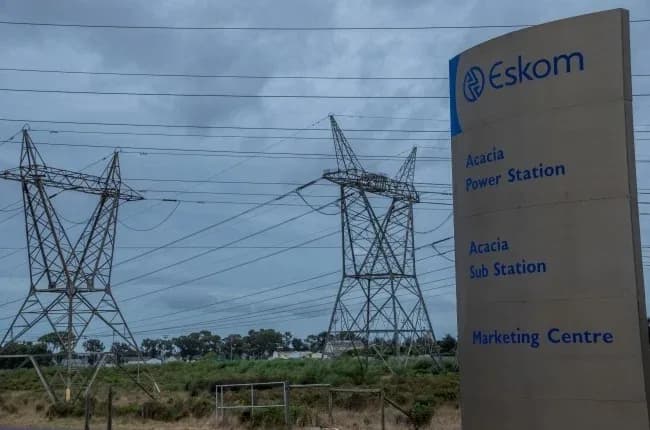
South-Africas-private-sector-reduces-dependence-on-Eskom-for-power-supply
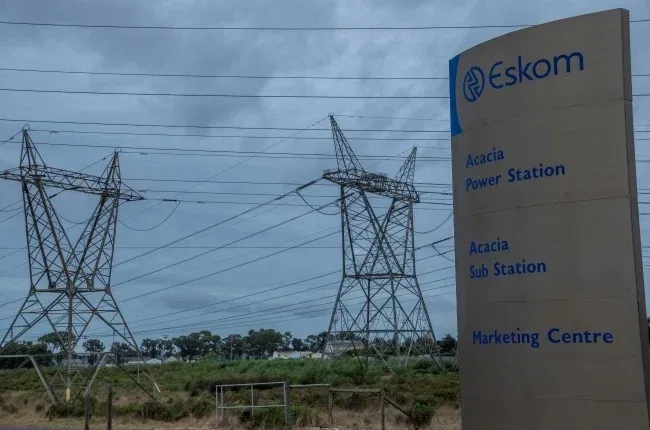
Eskom’s sales have been on a downward trajectory as South Africa’s corporate sector progressively reduces its dependence on the utility for power supply.
In its half-yearly results ending September, Eskom reported a 5.9% decrease in sales volumes. The utility attributed this decline primarily to supply limitations, resulting in frequent power outages, reduced electricity demand due to economic challenges, and the rising trend of self-generated power, such as solar PV and wind energy.
A study by RMB Morgan Stanley indicates that within the next two years, the corporate sector will largely supplant Eskom’s existing power generation infrastructure.
Eskom’s operational performance has seen a significant decline in recent years, marked notably by extensive load-shedding episodes in 2023.
Yet, the discourse surrounding power generation and outages is undergoing a shift towards a more optimistic outlook.
Similar to how private airlines stepped in after South African Airways’ downfall, the private sector is stepping up to fill the gap left by Eskom.
South Africa is witnessing a surge in solar panel installations, with over 4,400 MW of rooftop solar systems added independently of government initiatives. Projections suggest a staggering 420% growth by 2030.
Both Eskom’s data and insights from Professor Anton Eberhard indicate that between June 2022 and June 2023, installations of rooftop solar energy surged by 349%.
Additionally, South Africa’s solar panel imports reached an unprecedented R12 billion in 2023, contributing an additional 2,200 MW to the national grid.
This fourfold surge in private solar energy generation is affecting Eskom’s revenue, reducing its sales by an estimated 2.3%, as highlighted by Public Enterprises Minister Pravin Gordhan.
Economist Dawie Roodt views this trend as an indirect form of privatization. He believes Eskom is gradually ceding its distribution infrastructure and partially outsourcing its power generation.
However, Roodt clarifies that this isn’t a deliberate privatization strategy but rather a scenario where state operations are faltering, prompting the private sector to step in.
RMB’s data aligns with Roodt’s perspective, forecasting that by 2025, private entities will predominantly handle Eskom’s generation duties.
Looking ahead, the prevailing sentiment suggests a landscape where Eskom primarily focuses on electricity distribution, purchasing power from diverse sources for resale.
Despite these shifts, the government remains steadfast in its stance against fully privatizing Eskom. The Ministry of Finance explicitly stated that there’s no intention to privatize Eskom’s core assets.
Yet, Deputy Finance Minister David Masondo emphasized the need to diversify energy sources, suggesting a departure from sole reliance on Eskom.
Echoing this sentiment, Gwede Mantashe, Minister of Mineral Resources and Energy, highlighted the government’s commitment to transition from a monopolistic electricity supply model, as outlined in the 1998 White Paper of Energy Policy. However, Mantashe emphasized the importance of retaining a public sector role in the energy landscape.