South Africans are choosing SUVs over bakkies
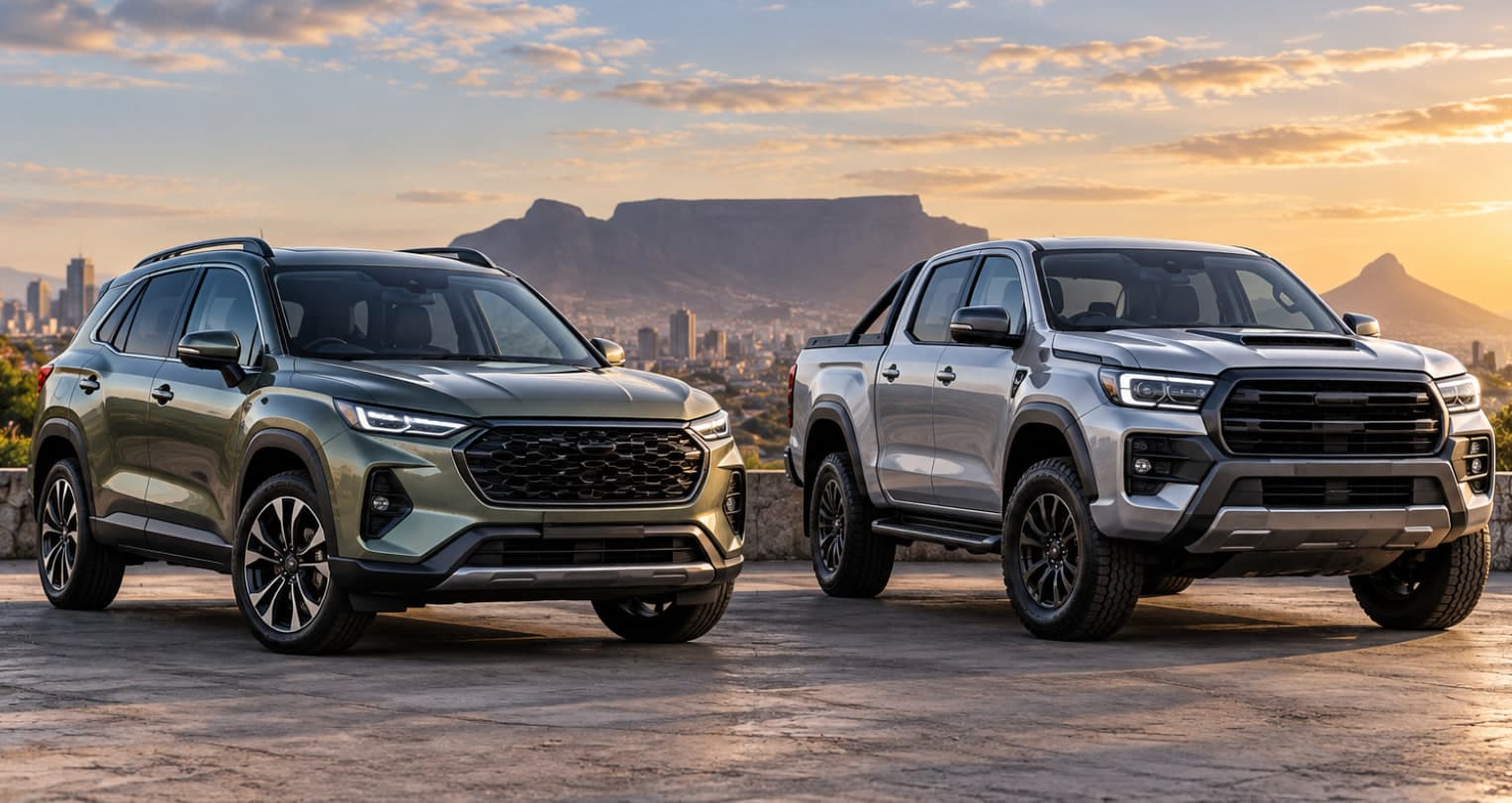
SUVs are taking a larger share of vehicle finance applications in South Africa, while bakkies are losing share. Absa Vehicle and Asset Finance says SUVs accounted for 67.6% of applications across SUVs, bakkies and body-on-frame SUVs in the second quarter of 2026.
SUV vs Bakkie
SUVs are taking a larger share of vehicle finance applications in South Africa, while bakkies are losing share. Absa Vehicle and Asset Finance says SUVs accounted for 67.6% of applications across SUVs, bakkies and body-on-frame SUVs in the second quarter of 2026.
AI-generated summary. It can miss nuance — read the full story above for the complete picture.
SUVs are taking a larger share of vehicle finance applications in South Africa, while bakkies are losing share. Absa Vehicle and Asset Finance says SUVs accounted for 67.6% of applications across SUVs, bakkies and body-on-frame SUVs in the second quarter of 2026.
Three years earlier, SUVs accounted for 60.2% of the same group. The figures come from 2.56 million new and used vehicle finance applications processed by Absa between January 2023 and June 2026. The shift is happening alongside a sharp increase in the cost of some bakkies.
Bakkies have become more expensive
“The average bakkie finance application rose almost 20%, compared with just 0.6% for SUVs.”
The average SUV finance application increased only slightly over the period. In 2023, the average application was worth about R350,000. By 2026, it had reached roughly R353,000. That is an increase of 0.6%. Bakkies saw a much larger increase. The average bakkie finance application rose from approximately R375,000 in 2023 to R448,000 in 2026, an increase of almost 20%.
Body on frame SUVs also became more expensive. The average application increased by 14% to around R564,000. For customers financing a vehicle, the difference matters because a higher purchase price generally means a higher monthly repayment. A buyer who does not need a load box may therefore look at an SUV instead of spending more on a bakkie.
SUVs gain as bakkies lose share
The change is visible in the finance mix. Bakkies accounted for 28.9% of the combined SUV, bakkie and body-on-frame SUV market in the second quarter of 2026. In the second quarter of 2023, they accounted for 36.3%. Body on frame SUVs also lost share, falling from 5% to 3.6%. SUV finance applications increased by 38% between 2023 and 2025.
The increase does not mean every customer leaving the bakkie market is buying an SUV. Absa found that 49% of former half-ton bakkie owners moved into another vehicle category when they bought their next vehicle. Hatchbacks were the most common choice. That suggests some buyers are responding to higher vehicle prices by moving into smaller and cheaper cars.
Chinese brands are taking more of the market
Chinese manufacturers have gained a much bigger share of SUV finance applications during the same period. Their share increased from 19% in 2023 to 40% in 2026. Their share of bakkie applications also increased, from 4.4% to 11.2%. Chinese brands have been adding models across the South African market, including SUVs, bakkies and smaller passenger cars.
According to figures cited by Absa, Chinese vehicle sales increased 72% year on year in the second quarter of 2026. Traditional manufacturers recorded 3% growth over the same period. The growing presence of Chinese brands means customers have more options when comparing vehicles on price, specification and financing.
SUV buyers are more likely to stay with SUVs
The Absa figures also show that many SUV owners continue with the same type of vehicle when they replace it. 55% of existing SUV customers bought another SUV when they changed vehicles. The corresponding figure for bakkie customers was 45%. That does not mean bakkies are disappearing from the market.
Bakkies remain important to small businesses, tradespeople, farmers and customers who need the load space. The issue is that a large part of the private vehicle market does not need those capabilities. For those buyers, an SUV can provide a higher driving position, additional passenger space and a large boot without the price of some newer bakkies.
Affordability is changing the choice
Vehicle prices have been under pressure for several years, while interest rates and household costs have also affected what buyers can afford. That makes the finance application data useful because it shows what customers are actually applying to buy rather than simply what manufacturers are putting on the market. The numbers show two changes happening at the same time.
SUVs are taking a larger share of the market, while the average amount being financed for bakkies has increased considerably faster than it has for SUVs. Some buyers are moving into SUVs. Others are moving into smaller cars. The common factor is the cost of the vehicle. For manufacturers and dealerships, that means the competition is not only between brands. It is also between vehicle types competing for the same monthly budget. The growth of Chinese brands adds another layer to that competition, particularly in the SUV market.
For buyers, the decision is increasingly about what they can finance and what they actually need the vehicle to do. The latest Absa figures show that, for a growing number of South African buyers, that calculation is favouring SUVs over bakkies.