SA’s Labour Minister to Oppose Privatization of Eskom
South Africa's labour minister has said he would oppose any attempt to privatize power company Eskom, as it struggles to generate electricity, prevent blackouts and repay debts of 396 billion USD. Corporate privatization will hurt the poor, Employment and Labour Minister Thulas Nxesi said in an interview. While the government of President Cyril Ramaphosa has
/SA’s Labour Minister to Oppose Privatization of Eskom
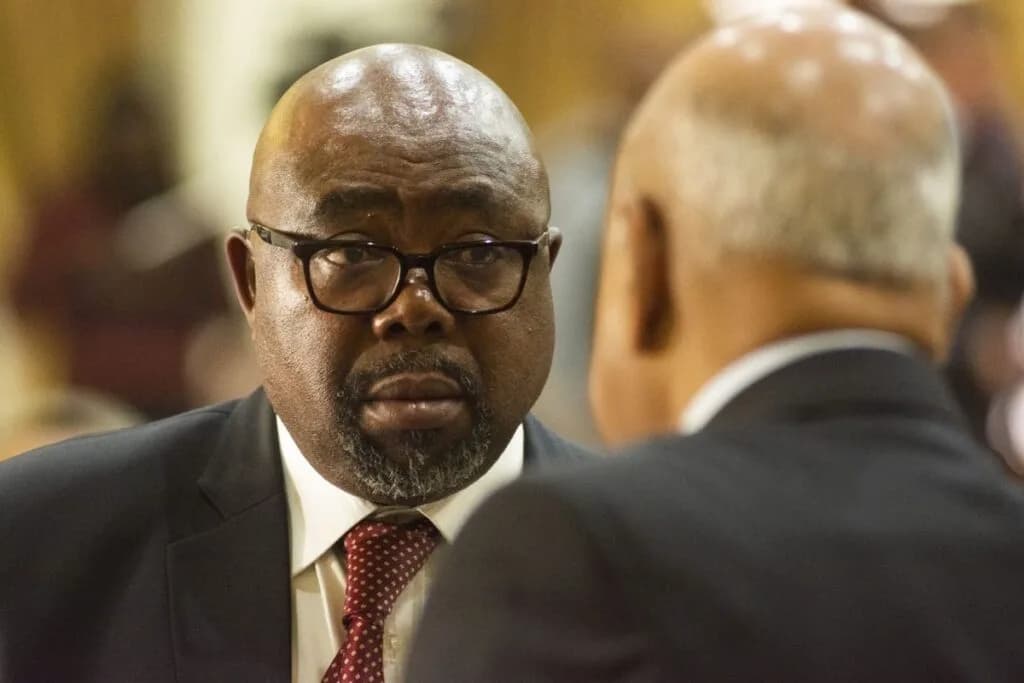
South Africa’s labour minister has said he would oppose any attempt to privatize power company Eskom, as it struggles to generate electricity, prevent blackouts and repay debts of 396 billion USD.
Corporate privatization will hurt the poor, Employment and Labour Minister Thulas Nxesi said in an interview. While the government of President Cyril Ramaphosa has previously denied any plans to sell the business, there have been calls to divest the assets. S&P Global Ratings says privatization could be the best option to solve the electricity crisis in Africa’s most industrialized nation.
“I am not a proponent of privatisation of key state assets,” said Nxesi, who’s also a leader of the South African Communist Party. “If you privatize electricity, you can forget about the majority of people having access to electricity, it is going to be very expensive for them. That’s why government steps in when there is market failure.” “I am not a proponent of privatisation of key state assets,” said Nxesi, who’s also a leader of the South African Communist Party. “If you privatize electricity, you can forget about the majority of people having access to electricity, it is going to be very expensive for them. That’s why government steps in when there is market failure.”
Eskom poses significant risks to South Africa’s economy and public finances, with government guarantees of up to 350 billion rand ($20.6 billion). The utility has consistently cut 6,000 megawatts off the grid since last month, leaving the country in the dark for hours and further constraining industrial production and growth. Eskom poses significant risks to South Africa’s economy and public finances, with government guarantees of up to 350 billion rand ($20.6 billion). The utility has consistently cut 6,000 megawatts off the grid since last month, leaving the country in the dark for hours and further constraining industrial production and growth
“I see the energy issue as an economic crisis,” Nxesi said
Eskom’s operating problems pose risks to South Africa’s economic outlook, and the company’s revenue is not enough to pay off its 396-billion-rand debt, according to S&P Global Ratings. Shifting corporate bonds to government balance sheets would result in a marked reduction in government debt.
“These utilities typically tend to be a problem, but then the ones that have done better are the ones that have done some kind of a wholesale privatization,” Zahabia Gupta, S&P associate director of sovereign ratings in the Middle East and Africa, said in an interview. “Then the problem at least is no longer the government’s and typically the utilities run better.”
The government is in the process of dividing Eskom into three separate entities: electricity transmission, generation and distribution.
Ramaphosa also announced policy changes to reduce excessive bureaucracy and allow private investors to build their own power plants with up to 100 megawatts of generating capacity without the license. The state has also encouraged increased support for renewable energy projects to supplement the country’s needs.
Nxesi says the ruling African National Congress could upset South Africans if the country fails to resolve its energy crisis by 2024, when the next general election is due to be held.