Has African Mining-Tech Startup Innovation Stalled?
Promising mining-tech startup ideas still need access to mines. Developing an AI tool for mineral exploration or technology that improves mineral processing is one thing. Getting a mining company to test it, pay for it and use it in its operations is another.
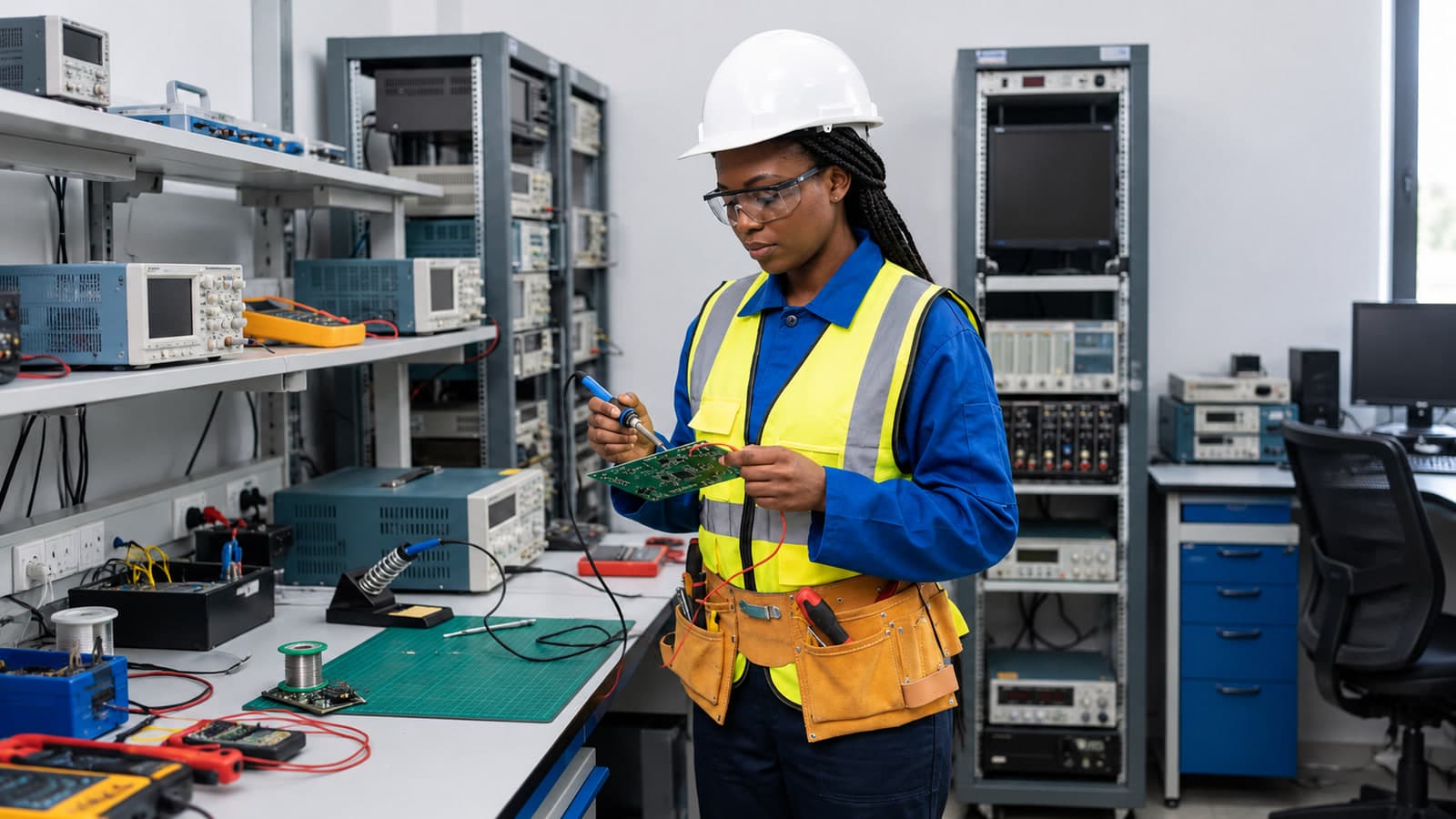
Focused Electronics Lab Technician
Promising mining-tech startup ideas still need access to mines. Developing an AI tool for mineral exploration or technology that improves mineral processing is one thing. Getting a mining company to test it, pay for it and use it in its operations is another.
That challenge raises a bigger question: has African mining-tech startup innovation stalled, or are startups struggling to get mining companies to back locally developed technology?
Startups are still developing solutions, and programmes continue to support early-stage innovators. But the number of ideas entering incubators does not tell us how many businesses secure paying customers or get their technology into operating mines.
Getting a Mining Company to Say Yes
For a mining-tech startup, finding a mining company willing to test new technology can be difficult.
A startup developing ore-sorting technology needs access to ore samples and processing facilities to demonstrate whether its solution can improve recovery or reduce waste. A company building predictive maintenance software needs equipment data to show whether its system can identify potential failures accurately.
It is true that Mining companies need evidence that a new product works under real operating conditions. An unsuccessful trial can cost time and money, while changes to production systems can introduce operational and safety risks.
This leaves startups with a difficult question: how can they produce the evidence a mine requires without access to its operations?
The challenge does not end when a pilot succeeds. A startup may still need to integrate its product with existing systems, train employees and provide technical support. These additional costs can make it difficult to turn a successful trial into a commercial business.
Funding Does Not Guarantee a Customer
Mining technology takes time to develop and test. Startups must pay technical staff, maintain equipment and refine their products while waiting for mining companies to make purchasing decisions.
For businesses with limited funding and no steady commercial revenue, the wait can become expensive.
Investors also want to know how a startup will make money. A working prototype may demonstrate that the technology works, but founders still need to show that mining companies will pay for it and that they can deploy it beyond a single site.
Building the technology is only part of the job. Startups must also find customers, deliver the product and generate enough revenue to support its continued use.
New Programmes, But What Happens Next?
Mining-tech innovation is still attracting support. In September 2025, the United Nations Development Programme's timbuktoo MineTech Accelerator selected five startups for seed funding and incubation after receiving more than 350 applications.
In October 2026, UNDP opened a pre-incubation programme for innovators in Botswana, Liberia, Malawi, Nigeria, Zambia and Zimbabwe. The 10-week programme targets early-stage solutions for mining and mineral exploration, including geological data, remote sensing and AI-based analysis.
These programmes give innovators an opportunity to develop their ideas and prepare for the market. However, the number of applications or startups entering an accelerator does not show how many will secure paying customers.
What happens after the programmes end? Do participating businesses win mine-site trials? Do those trials lead to commercial contracts? Can the startups generate enough revenue to maintain their products and expand to other customers?
Without evidence of these outcomes, it is difficult to establish how effectively Africa's mining-tech ecosystem turns innovation into viable businesses.
What Would It Take to Move Forward?
Mining companies could create clearer routes for startups to test their technology, access relevant data and move successful pilots towards procurement.
Startups, in turn, need to focus on problems mining companies are willing to pay to solve. Technology that reduces processing costs, improves equipment reliability or helps locate mineral deposits must demonstrate measurable value to potential buyers.
Investors and incubators also need to look beyond the number of startups they support. Paid trials, repeat customers and commercial deployments provide a clearer picture of whether these businesses are gaining traction.
Has Innovation Stalled?
The available evidence does not establish that African mining-tech startup innovation has stalled across the continent. New programmes continue to attract innovators, and organisations are still supporting the development of mining technology.
What remains unclear is how many startups are moving from promising ideas to commercially viable businesses.
Africa's mining industry needs more than prototypes and successful demonstrations. Startups need to secure contracts, deliver results at operating mines and sustain their businesses beyond the pilot stage.
The real measure of progress in African mining-tech innovation is not how many ideas are developed. It is how many mining companies are willing to use them, pay for them and continue using them.