Gungubele warns that if car manufacturing does not decarbonize, SA could lose 100,000 jobs
South Africa's manufacturing sector must urgently transition to producing electric vehicles, or around 100 000 jobs could be lost in the next five years as key export destinations phase out petrol and diesel vehicles, according to Minister in the Presidency Mondli Gungubele. The European Union has given local vehicle exporters until 2030 to decarbonize the
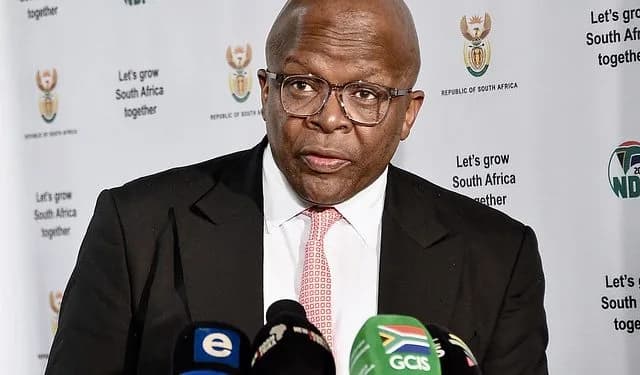
Gungubele warns that if car manufacturing does not decarbonize, SA could lose 100,000 jobs
South Africa’s manufacturing sector must urgently transition to producing electric vehicles, or around 100 000 jobs could be lost in the next five years as key export destinations phase out petrol and diesel vehicles, according to Minister in the Presidency Mondli Gungubele.
The European Union has given local vehicle exporters until 2030 to decarbonize the sector, after which they will stop importing South African-assembled internal combustion engine vehicles.
“If we don’t move in pace with that call, no fewer than 100 000 jobs are under threat. In other words, in that sector, we lose our status as a stakeholder and trading partner in the sector beyond that period,” On Tuesday, Gungubele told Parliament’s Portfolio Committee on Mineral Resources and Energy.
Gungubele was speaking about the country’s JET Investment Plan, which prioritises investment in the energy sector, electric vehicles, and green hydrogen from 2023 to 2027.
The plan aims to decarbonize South Africa’s economy by 2030 while protecting the environment, the economy, and livelihoods. The plan calls for R1.5 trillion in spending over five years, but there is currently a funding gap of 44%, or R700 billion.
As chair of the interministerial committee on the JET Investment Plan, Gungubele stated that South Africa must consider the environmental and economic implications of climate change on the path to net zero emissions by 2050.
Gungugele cited the floods in KwaZulu-Natal earlier this year as an example of the immediate risks associated with ignoring or postponing South Africa’s climate change priorities and targets.
“The attitude we adopt is that we want to take control of our own transition. We want to take control of our own navigation such that the sort of control we are taking responds to the unique situation of our country,” he said.
Daniel Mminele, head of the Presidential Climate Change Task Team, told the committee that South Africa’s problems with inequality, low growth, and insecure electricity supply exacerbated the country’s climate vulnerability.
Mminele said that if SA did not respond to the “degree of carbon embedded in our commodities and our products while trading partners were pushing for net zero emissions, it will “directly affect the demand for South African commodities, which will have implications for foreign exchange earnings, for the balance of payments, and so on”.
Mminele stated that the electricity sector will be prioritised because it accounts for roughly 45% of SA’s total greenhouse gas emissions. The transportation sector, which is “a significant employer and earner of export revenue” and the “nascent” potential of green hydrogen will follow.
“In terms of the total investment needs of the roughly R1.5 trillion plan in relation to these three sectors and where the investments are required, the bulk of the investments, around 70% or so, is required from the electricity sector, with about 22% going into green hydrogen and the balance going into new energy vehicles,” Mminele said.
He estimates that over a trillion rand of investment will be required in the electricity sector.
He emphasised that none of these interventions will be implemented in a way that worsens energy insecurity, harms South Africa’s fiscal position, or eliminates ordinary South Africans’ livelihoods.
Mminele stated that South Africa will continue to seek additional funding from other countries, regional economic groups, and philanthropies. He stated that the remaining funds will be raised from “as diverse a set of funders as we can get”
He stated that €600 million had been secured and would begin to flow into the system from French and German financing institutions next year.