Google is developing an AirTag competitor
According to a Twitter user notorious for releasing early facts about Google's Pixel smartphones, the firm is working on its own location-tracking gadget to compete with Apple's AirTags and Samsung's Galaxy SmartTags. Kuba Wojciechowski, a Polish leaker, first noticed references to Google support for a location tag in the developer interface for the Fast Pair
Google is developing an AirTag competitor
According to a Twitter user notorious for releasing early facts about Google’s Pixel smartphones, the firm is working on its own location-tracking gadget to compete with Apple’s AirTags and Samsung’s Galaxy SmartTags.
Kuba Wojciechowski, a Polish leaker, first noticed references to Google support for a location tag in the developer interface for the Fast Pair service, the company’s proprietary standard for swiftly connecting to Bluetooth Low Energy devices (BLE).
The project’s codename, according to Wojciechowski, is “Grogu,” after the enigmatic little green alien known as “Baby Yoda” in Disney+’s The Mandalorian TV programme.
The project is being handled by Google’s Nest team, which is also in charge of the company’s smart home speakers, routers, and cameras.
However, the tags may not be released as part of the Nest product line.
Wojciechowski claimed they will have an integrated speaker — like AirTags and SmartTags — and will come in various different colours. Other parts of their design are unclear at this time.
The trackers will support both Bluetooth Low Energy (BLE) and ultra-wideband (UWB), wireless technologies that allow users to follow them without using battery-draining GPS.
UWB tracking is more precise than BLE tracking, allowing for accurate distance estimates and pointing the user to the actual position of their device.
Google is also collaborating with numerous chip makers to offer Fast Pair functionality to their devices. Simultaneously, its Finder Network is anticipated to support a diverse set of networks.
Wojciechowski said he didn’t know when the trackers will be launched, but that they would be revealed at Google I/O in May 2023 and sold at the company’s US Fall event in September or October 2023.
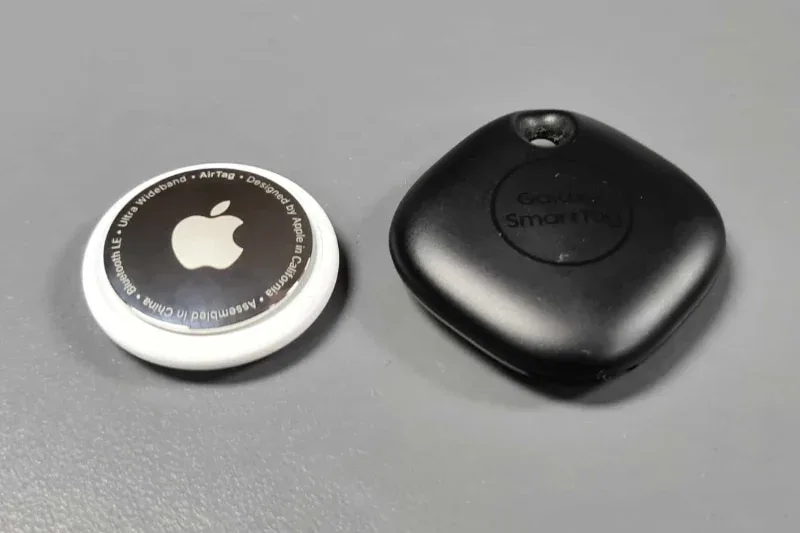
Apple initially introduced AirTags in April 2021, three months after Samsung introduced Galaxy SmartTags.
Tile’s trackers came before both of these, with the first version debuting in 2013.
Tracking tags are intended to be attached to or placed within anything of value to the owner, such as a purse, laptop bag, or even a pet’s collar.
Other devices that support the same manufacturer’s discovery network pinged the trackers’ locations.
In Apple’s instance, this is the Find My network, but Samsung utilises the SmartThings network.
The trackers are undoubtedly handy for individuals who frequently lose precious stuff in public places or who wish to recover stolen assets.
Some people have even utilised the tags to substitute a GPS-capable car tracker or to track the position of their couriered products.
But they have also become renowned for being exploited by stalkers and criminals to monitor their victims’ movements.