Exclusive:FlightSite data breaches Leaves Customers Vulnerable
On the evening of 18 November 2026, FlightSite (Pty) Ltd became aware that an unauthorised party had gained access to part of its systems. Customers data, including Identity Numbers and Passport details were stolen.
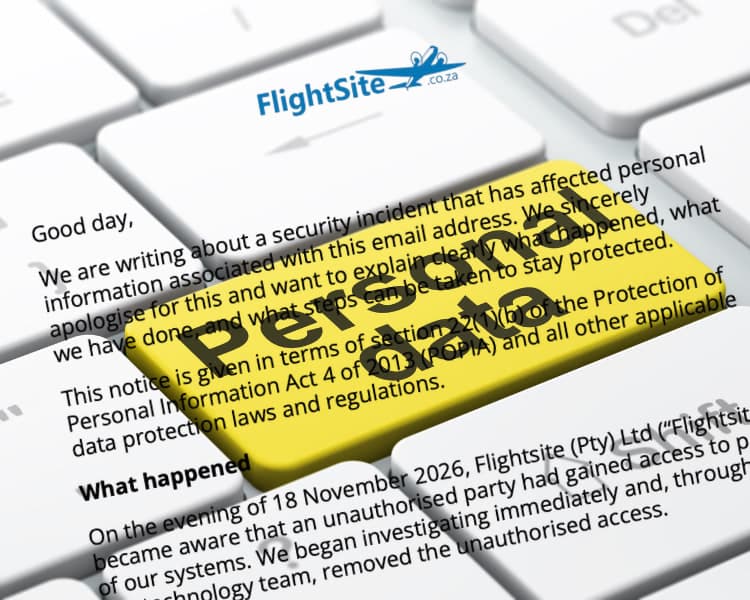
Flight Site Data Breach
South African travellers face heightened risks after FlightSite data incident
On the evening of 18 November 2026, FlightSite (Pty) Ltd became aware that an unauthorised party had gained access to part of its systems. The company removed the access and five days later, notified affected customers by email on 23 November 2026. The notice was issued under section 22(1)(b) of the Protection of Personal Information Act.
What Data Was Stolen?
The information associated with the affected email addresses included first names, middle names, surnames, email addresses and phone numbers given as contact details. More concerning is that the data also included the names, dates of birth and ID or passport numbers of passengers linked to those bookings. Banking details, payment card information and account passwords were however not involved, according to the notice.
FlightSite and TravelStart Both Breached on the Same Day
FlightSite operates as a travel booking platform that processes reservations through Travelstart systems. A closely related security incident at Travelstart, involving unauthorised access on the same evening of 18 November 2026, resulted in customer notifications within roughly one to two days. The five-day gap between FlightSite becoming aware of the issue and sending notices is longer than one would expect, particularly since the breach included Identity data.
These events form part of a broader pattern of increasing pressure on personal data held by travel companies. Online booking platforms, airlines and hotel partners routinely store names, contact details, dates of birth and identity document numbers to complete reservations and meet regulatory requirements.
When systems are compromised, this information can be used to craft convincing messages that appear to come from a trusted travel brand. Criminals may request payment into a different account or ask people to confirm further details under the pretext of an urgent booking change or refund.
Identity document and passport numbers create particular problems because they are difficult to change and are used for credit applications, bank account openings and other formal processes. Once such numbers leave the control of the organisation that collected them, the risk of identity-related fraud rises and can persist for years.
Customers Urged to Take Precautions
Customers who received the FlightSite notice should treat unexpected contact with caution. Any email, SMS, WhatsApp message or phone call that asks for payment or requests confirmation of personal details should be treated as potentially false, even if it refers to a booking reference. Links and attachments in such messages should not be opened. Passwords, one-time pins and card details should never be shared with anyone claiming to represent FlightSite, an airline or a hotel. FlightSite has stated that it will never request payment into a bank account other than the one shown on an official quotation or invoice.
People whose ID or passport numbers were accessed may register for free Protective Registration with the Southern African Fraud Prevention Service. This service alerts participating lenders that an identity may be at risk. Individuals are also entitled to one free credit report each year from each credit bureau. Checking these reports for unfamiliar accounts or enquiries can help detect misuse early.
When there is any doubt about the authenticity of a message, the safest step is to contact FlightSite directly using the privacy address given in the official notice rather than using contact details supplied in an unsolicited message.
Business Tech Africa sent q set of questions to FlightSite to establish how many customers were affected and why their warning to customers took so long.
We have not yet received any response and will update this article once received.
Remaining Alert Essential
The travel sector continues to handle large volumes of sensitive personal information under tight operational timelines. Incidents of this kind underline the need for customers to remain alert to unexpected requests and for companies to limit the time between discovery of a compromise and clear communication to the people affected. Practical steps taken by individuals after receiving a notice can reduce the chance that exposed identity numbers are successfully used in later fraud.