Eskom's predicament is worsening
Eskom CEO Andre de Ruyter's departure is a big blow for the state-owned power provider and South Africa for a variety of reasons. It comes at a time when the utility, which generates 95% of the country's power, need steady leadership. Stability is essential for success in Eskom's three major transformations. It must reverse the
Eskom's predicament is worsening
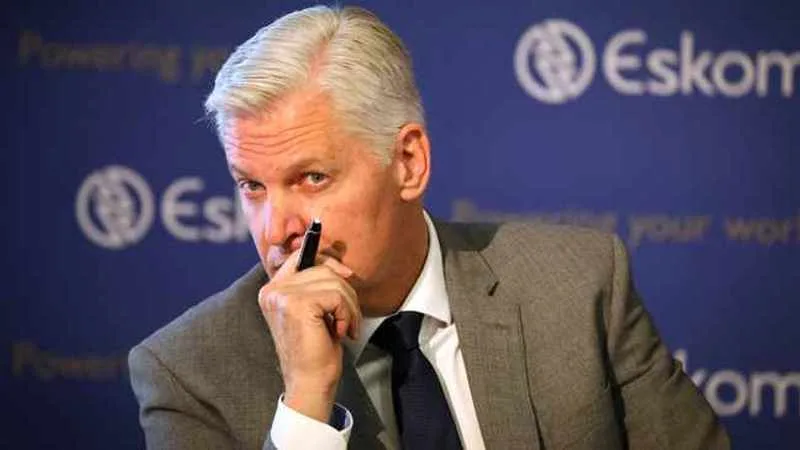
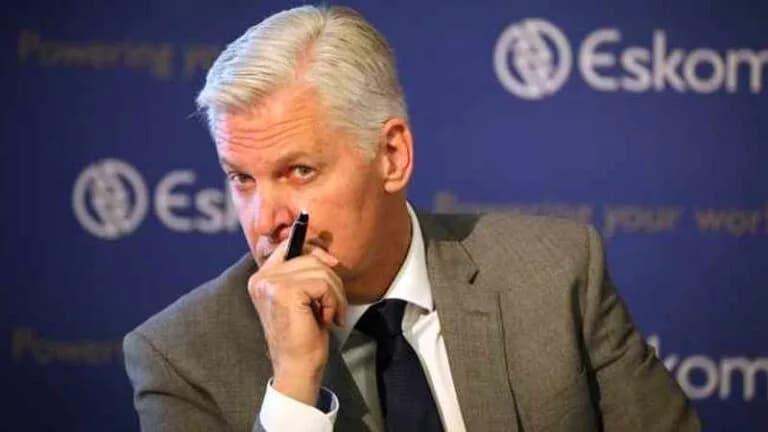
Eskom CEO Andre de Ruyter’s departure is a big blow for the state-owned power provider and South Africa for a variety of reasons. It comes at a time when the utility, which generates 95% of the country’s power, need steady leadership.
Stability is essential for success in Eskom’s three major transformations. It must reverse the tide of state capture and provide a dependable electrical supply. It must restructure the organisation into generating, distribution, and transmission, and it must lower its carbon impact.
De Ruyter’s leadership has resulted in some success in all three areas. The successful prosecution of individuals guilty for wrongdoing, the unbundling of Eskom, and the transition of generating units into an integrated and ecologically sustainable organisation are now seriously jeopardised.
De Ruyter’s departure comes as South Africa’s energy users face the worst planned power outages in history, beyond their wildest dreams. Eskom runs 15 coal-fired power plants, one nuclear facility, four gas turbines, and seven pumped storage/hydroelectric facilities. The majority of coal plants are closed for emergency maintenance, and there appears to be no end in sight to the rising rolling blackouts.
De Ruyter’s announcement came just a few days after the country was informed that the renewable energy programme, which is a critical component of South Africa’s energy future and a low-cost solution to the country’s energy shortfall, will only award the solar tenders of Bid Window 6, adding a pitiful 860 MW to the energy grid. This is in addition to the 5,200 MW pledged by President Cyril Ramaphosa in his Electricity Action Plan, which was released in July 2022.
Based on the 2019 Integrated Resource Plan, that is 20% of what was pledged and 5% of what the country required.
All of this demonstrates that De Ruyter’s departure has nothing to do with an individual’s skill – or inability – to cope with the electrical situation. Whoever succeeds him will have to deal with the company’s – and the country’s – numerous systemic or structural concerns.
The reason for the resignation
De Ruyter would not have had to ponder his resignation for long. The absence of political backing is at the top of my list, with Energy Minister Gwede Mantashe accusing Eskom of treason and Public Enterprises Minister Pravin Gordhan failing to defend him or respect his authority.
Regardless of the devotion of the management team or the views of the board, no CEO of a state-owned enterprise, particularly one under attack by criminals, can work effectively without political support.
My second reason for believing De Ruyter won’t have to ponder about his choice for long is that Eskom has given criminal elements and “rent-seekers” control of its power facilities in order to obtain greater maintenance and other costs from the utility. Drain plugs removed from motor housings, wires severed, theft of coal and diesel, and death threats against station managers are just a few of the many incidents awaiting police inquiry.
Furthermore, law enforcement is doing nothing to combat crime. No one has been convicted.
My last argument is that De Ruyter’s vision for a greener Eskom in the future is not shared by his board or ministers. South Africans must be reminded of Eskom’s current environmental pollution situation.
Eskom is the world’s greatest sulphur dioxide emitter, emitting more than China and the United States combined. Similarly, the utility’s carbon emissions are around 200 million tonnes per year, accounting for 40% of total South African emissions.
All of Eskom’s 15 power stations violate the Minimum Emission Standard, and the Department of Forestry, Fisheries, and Environment has repeatedly urged Eskom to reduce emissions or shut down its power plants.
De Ruyter has tried to address the issue of energy sustainability by shutting and reusing ageing coal-fired power facilities, unbundling the corporation, and collecting funding for the fair transition and decarbonization of electricity generation.
These efforts are continuously being thwarted by Mantashe and the coal lobby.
Power interruptions in the future
The resignation of the CEO suggests a worsening issue in terms of scheduled power outages. The country is currently experiencing rolling blackouts on a daily basis and must adjust to a routine energy availability factor of 50% to 55%, resulting in a generation shortage of 4 GW to 5 GW. Because load shedding affects just 66% of Eskom’s demand side – the national key points, which use 33% of total demand, are unaffected – the typical customer would be without power for 6 to 8 hours each day.
I previously claimed that rolling blackouts were driving large-scale consumers away from the national grid and toward less expensive and more dependable alternatives. Customers that rely on power for crucial manufacturing processes and operations such as refrigeration are buying solar panels as fast as they can find them, despite the lack of precise data.
This type of infrastructure investment is a 20-year choice since it takes that long for the investment to pay off. This means that major users are unlikely to return to the grid very soon.
Based on current patterns, I expect that the client base will shrink by 30% during the next two years. At least half of the 18 GW customer base affected by power outages will find alternate energy sources, either directly or through private utility firms.
What must be done
My top priority is to rid the sector of the “energy Mafia,” which benefits from sabotage and rent-seeking, and to reclaim control of the captive power plants. The new CEO will be responsible for ensuring that the “special law enforcement team to help Eskom in confronting crime and corruption”, about which President Ramaphosa spoke firmly in July 2022, performs its job.
The second objective is to completely commission Medupi and Kusile, which have cost the government a lot of money and must now run at full capacity.
This endeavour would need more capital investment, which Eskom lacks, and the South African National Energy Regulator is unlikely to supply the cash in the form of a high energy rate. Both stations are crucial to the grid’s long-term stability, at least until 2050.
Simultaneously with recovering the coal fleet, the new CEO must work on the renewable energy programme, which is now hampered by transmission constraints. Despite political influence and the weight of the coal lobby, Eskom requires new grid infrastructure to bring additional wind and solar electricity online and execute the renewable energy program’s findings.
It is a sorrow to witness the retirement of a high-calibre staff, including Jan Oberholzer, the Chief Operating Officer, and Rhulani Mathebula, the General Executive for Generation, who worked tirelessly to keep the lights on. It is now up to the board to select daring and dynamic successors who can restore the country’s faith in this government’s competence to administer a state-owned utility.
The track record is unimpressive. Bad and dishonest management has hollowed out other large state utilities. Prasa, South African Airways, and the South African Post Office are among these.
I’ll let you make your own conclusions.
Eskom clearly requires a new management team. However, the country requires fresh leadership as well.
David Richard Walwyn, University of Pretoria Professor of Technology Management
This item initially appeared on The Conversation.