Elon Musk's Twitter debt repayment strategy is fraught with uncertainty
According to all reports, including Elon Musk's, Twitter has more than enough cash to make its first interest payments, which are likely to total $300 million. However, with the payment deadline nearing, there is considerable concern about what the impulsive billionaire would do to alleviate the social-media company's $12.5 billion debt burden. Yes, Musk stated
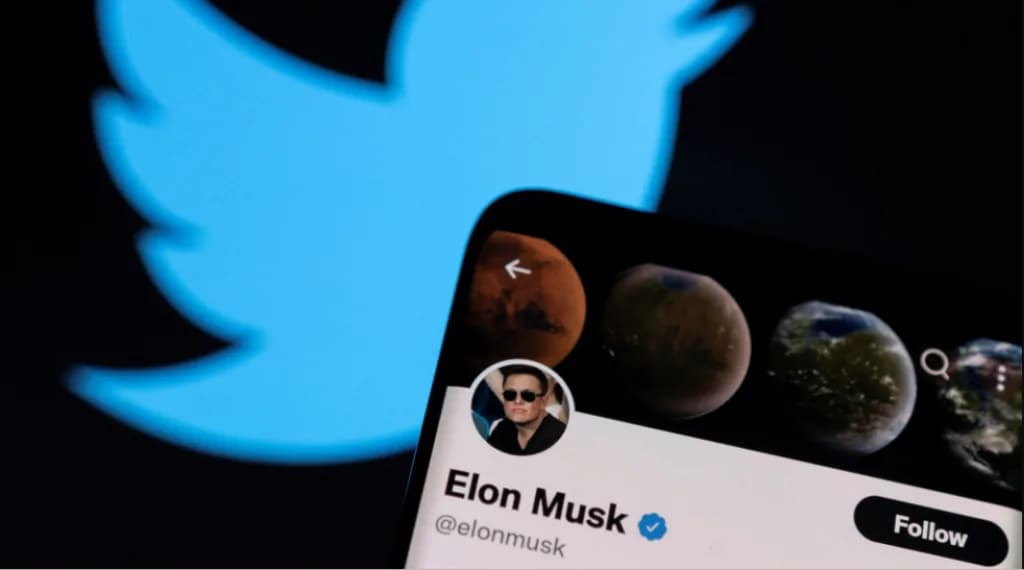
What Twitter employees are saying about Elon Musk
According to all reports, including Elon Musk’s, Twitter has more than enough cash to make its first interest payments, which are likely to total $300 million.
However, with the payment deadline nearing, there is considerable concern about what the impulsive billionaire would do to alleviate the social-media company’s $12.5 billion debt burden.
Yes, Musk stated on Twitter Spaces in late December that the business had around $1 billion in cash on its financial sheet.
But, after concluding his $44 billion leveraged purchase at the end of October, he’s publicly discussed insolvency, citing a “massive drop” in income as some advertisers deserted the site, and reduced personnel.
The debt is owned by a consortium of seven banks led by Morgan Stanley.
The turmoil surrounding Musk’s takeover, along with uncertain markets, left them stranded with debts that they would ordinarily have offloaded to investors.
After losing $4 billion on paper by supporting Musk’s Twitter offer, market observers see little motivation for the banks to agree to any unexpected manoeuvres approaching the interest-payment deadline, which is around Jan. 27.
After all, in the majority of bankruptcies, the equity is lost – and lenders finally seize control.
“There’s too much at stake for Musk and his co-investors,” said Jordan Chalfin, a senior analyst at credit research firm CreditSights.
“Twitter will make its near-term interest payments, come hell or high water, and give the business time to turn around.”
Morgan Stanley and Musk representatives did not reply to calls for comment.
Several Causes
While everything is conceivable for Musk, there aren’t many reasons for him to avoid the first interest payment.
The longer term question is more complicated: He stated in the Twitter Spaces debate that the firm was on track to lose $3 billion by 2023.
“That is why I spent the last five weeks cutting costs like crazy,” he said.
In the short run, however, failure to pay interest might result in a default, allowing the banks to drive the firm into Chapter 11 bankruptcy.
Some debt has a 30-day grace period, but it’s unclear if the Twitter loans have one.
Regardless, Musk, 51, who controls an estimated 79% of the firm, would face immediate and severe penalties.
While Twitter is responsible for the debt, not Musk, he put up more than $20 billion for his investment in the firm.
According to the Bloomberg Billionaires Index, that’s now worth an estimated $11.6 billion, a large portion of his $137.4 billion wealth.
“If you’re a lender to Twitter and Elon Musk is threatening to not pay the coupon, you go to the standard playbook, which is: ‘OK, I’ll see you in bankruptcy,’” said Philip Brendel, a distressed debt analyst at Bloomberg Intelligence.
“In terms of who’s got more to lose, it’s certainly Elon Musk,” Brendel said.
“Whether he cares whether he loses that or not, that’s a whole different question. He certainly behaves differently than what normal people would do in those situations.”
Expanded Negotiations
Musk is notorious for being unexpected, and the initial payment might be used in larger talks with Twitter’s lenders.
He and the banks have been attempting to find answers to the interest load, which has gotten more severe since his April offer as interest rates have risen.
Bankers were discussing substituting part of the high-interest debt with fresh margin loans backed by Tesla Inc. shares that he would be personally responsible for repaying late last year, one of many possibilities discussed at the time.
When Musk sold $3.6 billion in Tesla stock last month, several experts suggested that he may use the proceeds to purchase Twitter debt from banks, placing him in a stronger position during bankruptcy proceedings.
However, it is unclear if Morgan Stanley and others would sell to Trump at fire-sale rates.
There’s also the possibility that Musk will abandon Twitter and work on his other businesses, including Tesla and SpaceX.
Of course, if Musk withdraws, he would be hurting not just himself, but also the other equity supporters that joined his investment, such as Qatar Investment Authority, which invested $375 million.
“We engage with the management, with Elon in terms of the plan that he has for the company, and we believe in this, and we trust his leadership in terms of turning around the company,” QIA Chief Executive Officer Mansoor Al Mahmoud said in a Bloomberg TV interview at Davos on Monday.
According to a May filing, QIA was one of about 20 investors that contributed to the equity investment.
Saudi Prince Alwaleed bin Talal also rolled over more than 30 million shares, worth around $1.9 billion based on the $54.20 acquisition price. Jack Dorsey also increased his investment.
Debt Details
Twitter has three significant pieces of debt with interest due: $6.5 billion that was supposed to be sold to leveraged-loan investors, and $6 billion in bridge loans, split evenly between a secured and unsecured tranche, that banks were planning to sell as trash bonds.
According to an April debt commitment letter and sources familiar with the case who requested not to be identified because they were discussing a private transaction, all of the debt looks to involve quarterly interest payments.
According to Bloomberg estimates and market parties who are not engaged in the Twitter purchase, the interest payable in the coming weeks is estimated to be over $300 million. This is based on the debt commitment letter and an unsecured tranche interest rate of up to 11.75%.
This amount might be higher depending on whether the banks used their “flex” provision to raise the interest rate on the $6.5 billion tranche when the deal completed, and if Twitter is utilising the one-, three-, or six-month version of the benchmark Secured Overnight Financing Rate. (If the corporation had chosen the one-month rate, it might have paid smaller sums of interest each month instead of a bigger sum quarterly.)
Twitter also has a $500 million revolving credit facility, which permits the corporation to borrow, repay, and borrow again during the loan’s term.
If Twitter borrows from it, the interest expense would skyrocket. Twitter already pays a 0.5% yearly fee to gain access to the money.
Meanwhile, Twitter has been looking for innovative methods to save costs.
It has ceased paying rent on some of its office space in some situations, and has also urged staff to try to renegotiate contracts with third-party providers.
Twitter auctioned off hundreds of items of workplace furniture this week.
Throughout this time, Musk has been tweeting about the Federal Reserve’s decision to hike interest rates at the quickest rate in a generation.
“I wonder what would have happened in 2009 if the Fed had raised rates instead of lowering them,” he said on Jan. 13. “The higher the rates, the harder the fall.”