Cameroon Launches AfDB-Backed Initiative to Boost Small-Scale Cross-Border Trade
Cameroon has launched a new project aimed at strengthening cross-border trade, improving border management and supporting economic activity along key trade corridors connecting the country with the Central African Republic.
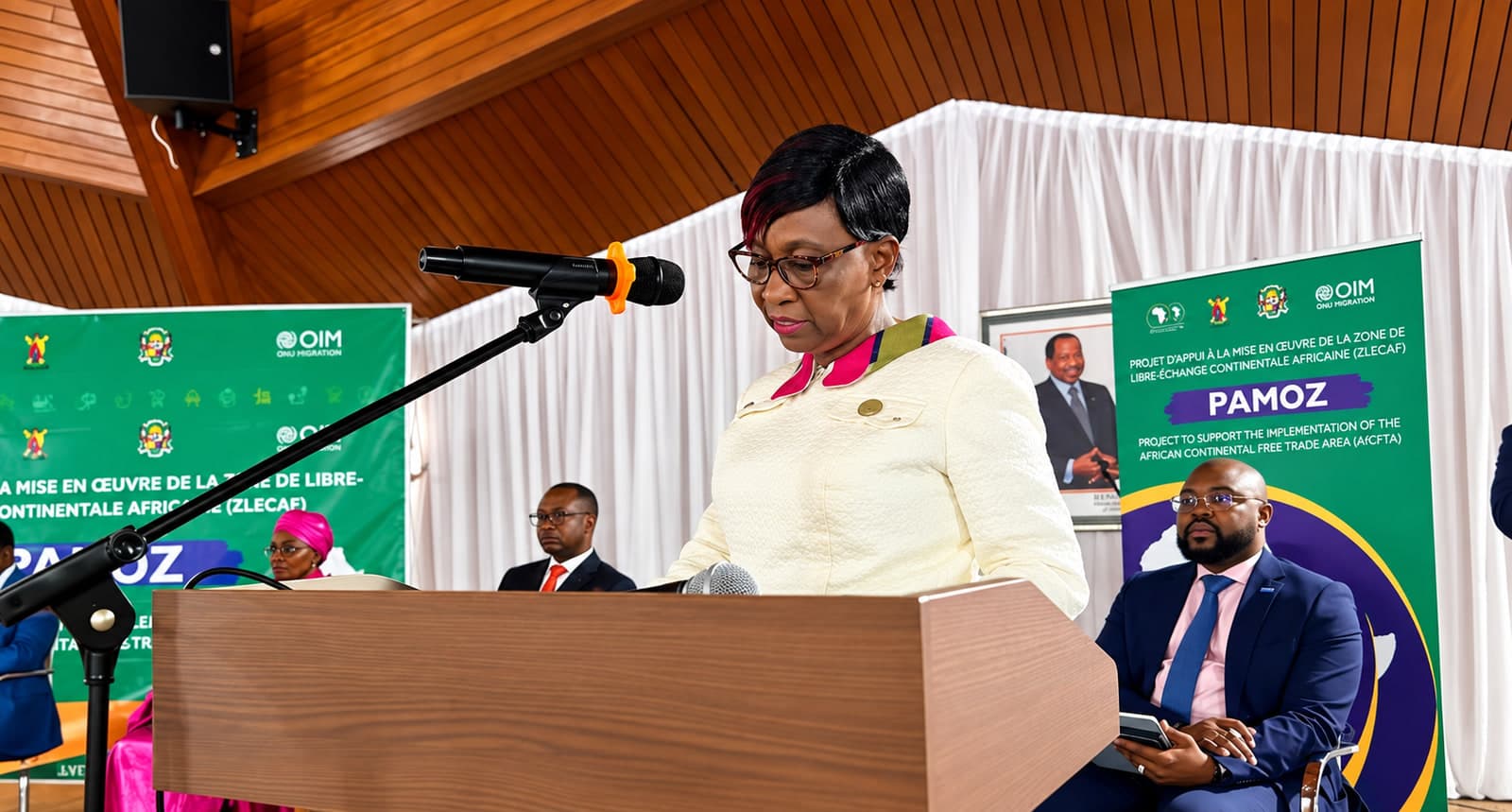
AfCFTA Conference
Cameroon has launched a new project aimed at strengthening cross-border trade, improving border management and supporting economic activity along key trade corridors connecting the country with the Central African Republic.
The project, known as PAMOZ, is backed by the African Development Bank (AfDB) and implemented by the International Organization for Migration (IOM). Trade Minister Luc Magloire Mbarga Atangana officially launched the initiative on October 6 at the Economic and Social Council in Yaoundé.
PAMOZ will focus on the Douala-Bangui and Douala-Kousséri corridors, two important routes for the movement of goods and people between Cameroon and landlocked Central African markets.
The Douala-Bangui corridor connects Cameroon’s Atlantic port and commercial centres with the Central African Republic, while the Douala-Kousséri route provides an important link towards northern Cameroon and Chad.
The project forms part of efforts to support implementation of the African Continental Free Trade Area (AfCFTA) by making cross-border trade easier and improving the systems that support the movement of people and goods.
Focus on small traders and border communities
PAMOZ will combine trade facilitation with measures covering human mobility, border governance, economic development and inclusion.
Small-scale cross-border traders will be a key focus, with particular attention to women and young people who depend on regional trade for income.
The project will also work with communities located around border areas and major trade routes, while supporting better use of mobility data and more sustainable approaches to border management.
Mbarga Atangana said the initiative would help position cross-border commerce within Cameroon’s wider efforts to increase trade between African economies.
He linked the project to AfCFTA’s objective of reducing fragmentation between African markets, supporting local processing and improving the competitiveness of businesses operating across the continent.
The initiative also supports Cameroon’s National Development Strategy 2020-2030 (SND30), which promotes greater domestic processing and increased consumption of locally produced goods.
Cameroon’s role in regional trade
Cameroon plays an important logistics role in Central Africa because of its Atlantic coastline and road networks connecting its ports and commercial centres with neighbouring landlocked countries.
The country serves as a major transit route for goods destined for the Central African Republic and Chad, making the efficiency of its border and transport systems important to regional trade.
The PAMOZ project will therefore address more than the movement of merchandise. Its scope includes economic development, inclusion, mobility data and border governance, linking trade facilitation with the needs of communities and people who rely on cross-border movement. Mbarga Atangana also highlighted the role of small traders, women and young people in expanding commerce under AfCFTA.
AfCFTA creates a continental market of about 1.3 billion people, with combined GDP estimated at nearly $3 trillion. Trading under the agreement officially began on January 1, 2021.
For Cameroon, improving connections between its domestic economy and neighbouring markets could strengthen its position as a regional trade and logistics hub.
The PAMOZ launch brought together representatives from the Cameroonian government, AfDB and IOM, alongside diplomats, international and regional organisations, institutional stakeholders and private-sector representatives.
The project is part of wider efforts to link trade, human mobility and regional economic integration, with AfCFTA implementation relying on regional economic communities and existing systems covering trade, transport, infrastructure, investment and movement of people.