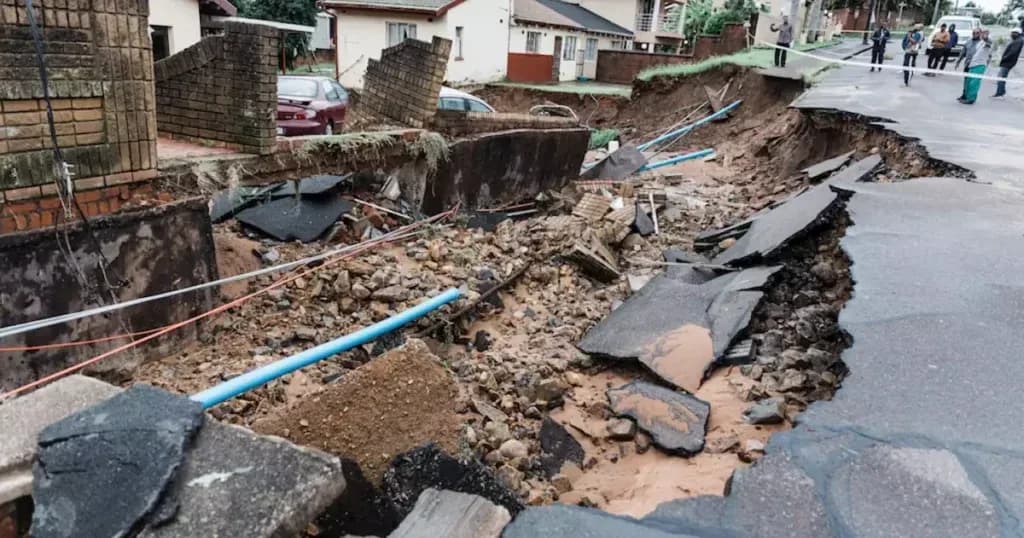
Calls for the establishment of state-owned construction companies have been renewed
Construction industry associations have expressed serious reservations about the proposed state-owned construction company's ability to address the country's infrastructure backlog. This follows a debate last week in the National Council of Provinces (NCOP) on the "Creation of provincial and municipal owned-construction companies to eradicate infrastructure backlog and abolish tenders”. Mmabatho Mokause, chief whip of the
Calls for the establishment of state-owned construction companies have been renewed
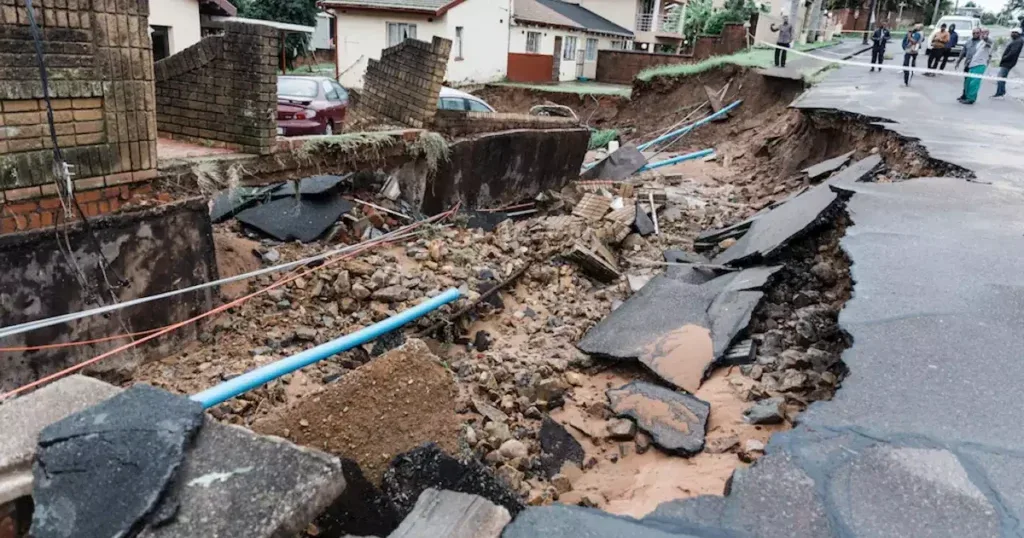
Construction industry associations have expressed serious reservations about the proposed state-owned construction company’s ability to address the country’s infrastructure backlog.
This follows a debate last week in the National Council of Provinces (NCOP) on the “Creation of provincial and municipal owned-construction companies to eradicate infrastructure backlog and abolish tenders”.
Mmabatho Mokause, chief whip of the Economic Freedom Front (EFF), stated that only a capable state can deliver sustainable infrastructure, even to the most remote areas of this country, without considering profit as the primary driver of development.
Mokause claims that the country loses billions of litres of water each year in municipalities, but instead of having internal capacity to detect and repair leaks, municipalities hire private companies at exorbitant prices.
“Had municipalities had their own internal capacity to deal with the entire water value chain, citizens would be in a much better position as far as their water needs are concerned and municipalities would be able to respond better and faster.
“The same applies to the issue of road maintenance,” she said.
Mokause believes that South Africa requires a centralised development planning process that is state-led and capable of eliminating infrastructure backlogs more quickly and efficiently.
She advocated for the establishment of a state construction company to ensure that all construction projects in the country, including the construction of millions of houses for the homeless, are completed by the state rather than the private sector.
Mokause also advocated for the establishment of a state company in charge of building material manufacturing to ensure that the state does not pay exorbitant prices for these items.
She also advocated for the abolition of tenders so that the government could train and hire thousands of people in government departments and provincial and municipally owned construction companies.
According to Hildegard Boshoff of the Democratic Alliance (DA), everyone agrees that South Africa’s economic recovery should be structured around infrastructure spending to stimulate the country’s economy, but not by delegating this sector to provincial and local governments.
“This is a disaster in the making,” she said.
Boshoff cited the Auditor-2020/21 General’s municipal audit outcomes report, which stated that only 41 municipalities in South Africa received clean audits based on the financial statements of 230 municipalities and 18 municipal entities.
The situation is so dire, according to the Auditor-General, that there is significant doubt that 28% of South Africa’s municipalities will be able to continue operating, she said.
Boshoff believes that combining failing municipalities with failing infrastructure will not result in a positive outcome.
“This will in all probability lead to another state-owned enterprise being bailed out. We have witnessed this for many years with the likes of Eskom, Denel and SAA to name but a few,” she said.
Mfebe, on the other hand, emphasised that construction is a technically complex and highly risky environment, and it is highly unlikely that most municipalities and provincial governments will have the necessary capacity, skills, and financial resources to run competitive construction companies.
“The fact of the matter is that some municipalities currently have stock yards with some yellow plant rusting away in a state of disrepair while basic infrastructure has collapsed. For such municipalities to successfully run construction companies will be a mountain too high to climb,” he said.
Mfebe went on to say that public procurement is constitutionally mandated, which means that eliminating public tenders would require a constitutional amendment.
He stated that there is nothing in the constitution or the law that prevents the state from developing its own internal capacity in the form of state-owned construction companies.
However, Mfebe expressed doubts that state-owned construction companies could be truly competitive because their losses could simply be absorbed by the fiscus, as is the case with the majority of state-owned enterprises.
According to Consulting Engineers South Africa (CESA) CEO Chris Campbell, it is probably more important for the public sector to look at facilitating infrastructure delivery and utilising private sector capacity.
Assuming that a state-owned construction company can do everything required to deliver infrastructure “is likely to lead nowhere,” according to Campbell.
He emphasised that the criticism of infrastructure costs stems primarily from the state entity’s inability to ensure that, in appointing those service providers or contractors, the risk and likely variability “through variation orders that may arise by simply gravitating towards the lowest cost.”
“So to assume it’s going to cost any less from within begs the question of where that capacity is going to come from? At the moment it hardly exists,” he said.
He emphasised that the criticism of infrastructure costs stems primarily from the state entity’s inability to ensure that, in appointing those service providers or contractors, the risk and likely variability “through variation orders that may arise by simply gravitating towards the lowest cost.”
Campbell believes the government should look for a better way to procure these services rather than replicating the capacity and skills required for a state-owned construction company.
He stated that municipalities, many of which are dysfunctional and incapable of providing basic services, should focus on “getting the basics right.”
“That means getting at least a level of competent capacity in place to manage the affairs of those entities.
“To be looking at all §the other aspects around the delivery of these projects is likely a bridge too far and it ignores the fact that you have a huge industry that you could use constructively,” he said.
According to Campbell, the context of infrastructure development costs is important because, for example, if the amount and type of rock encountered by a road contractor on a project is underestimated, it “blows costs out of the water.”
“The biggest problem is that people think that everything around infrastructure projects is something that you can just pull off the shelf, buy it and it’s ready-made.
“You are never buying anything that is completely ready-made. There are always aspects of risk that you may encounter,” he said.