Banque du Caire's $200 million investment could open more funding opportunities for Egyptian SMEs
Small businesses in Egypt often need finance for everyday expenses. A retailer needs money to replenish stock, a manufacturer needs equipment, while a supplier may have to pay for materials before receiving money from customers.
Banque du Caire
Small businesses in Egypt often need finance for everyday expenses. A retailer needs money to replenish stock, a manufacturer needs equipment, while a supplier may have to pay for materials before receiving money from customers.
AI-generated summary. It can miss nuance — read the full story above for the complete picture.
Small businesses in Egypt often need finance for everyday expenses. A retailer needs money to replenish stock, a manufacturer needs equipment, while a supplier may have to pay for materials before receiving money from customers.
Banque du Caire wants to expand its lending to businesses and households, with a target of increasing its loan book from about $5 billion to $8.9 billion by 2030. The bank also wants to increase the number of customers it finances from approximately 899,000 to 1.9 million.
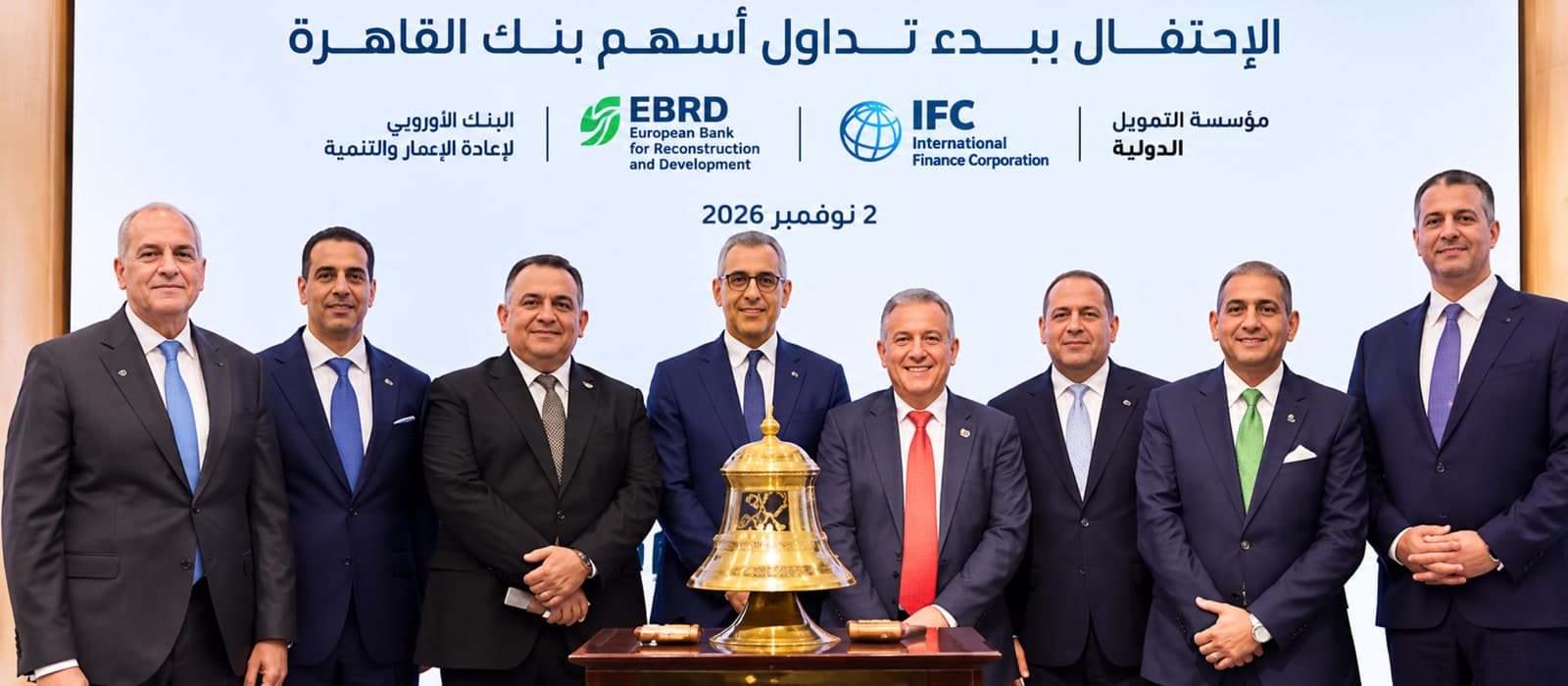
The expansion follows a combined $200 million investment from the International Finance Corporation (IFC) and the European Bank for Reconstruction and Development (EBRD). Each institution has invested $100 million through the bank's stock market listing. For Egypt's small businesses, the announcement is relevant because access to finance remains a problem. Many companies have customers and business coming in but lack the cash to buy stock, increase production or take on larger contracts.
“For those businesses, the number of loans approved and the terms attached to them will matter more than the bank's headline lending target.”
Banque du Caire's plans could give some of them another option, although the bank has not said how much of its additional lending will be allocated specifically to SMEs.
The bank already lends to SMEs
Micro, small and medium-sized enterprises contribute more than a third of Egypt's GDP and employ close to 40% of the country's workforce. Banque du Caire has previously worked with the IFC to finance this market. In 2024, the IFC committed $50 million to support the bank's lending to smaller businesses. Half of the facility was set aside for women owned companies. The two institutions also agreed on a separate $50 million trade finance guarantee facility to support businesses involved in importing and exporting.
The latest $100 million investment gives the IFC an approximately 7% stake in Banque du Caire. The EBRD's investment gives it a stake of approximately 6.9%. The existing facilities show that SME finance is not a new area for the bank. The question is whether its larger lending plans will allow it to reach more businesses, including those that struggle to meet the requirements of traditional bank loans.
More finance could help businesses take on work
For a small company, access to a loan can make a difference to the amount of work it can accept. A manufacturer that cannot afford raw materials may have to turn down an order. A distributor may lose customers because it cannot keep enough stock. A business that needs another vehicle or piece of equipment may have to delay the purchase until it has saved enough money.
Finance can help these companies deal with those costs. It can also create business for their suppliers, transport providers and other service companies. However, the terms of the loan matter. Interest rates, fees, repayment periods and collateral requirements can make borrowing difficult for smaller companies. A loan that is too expensive can leave a business with less money to cover its daily expenses. The bank will also need to consider businesses with irregular income or limited financial records. These companies may be trading successfully but still struggle to qualify for conventional finance.
Reaching businesses outside Cairo
Banque du Caire says more than 75% of its customers are based outside Cairo. This gives it an established presence in other parts of Egypt, where smaller businesses may have fewer financing options. Its customer growth plans could bring more companies in these areas into the banking system. But the bank's target of financing 1.9 million customers does not reveal how many will be small businesses or how much funding will reach them. That information will be important when assessing the impact of the expansion.
EBRD investment also covers banking operations
The EBRD's $100 million investment comes with technical support for Banque du Caire. This includes corporate governance, digitalisation, cybersecurity and environmental and social risk management. For customers, improvements to digital banking could make it easier to manage accounts and carry out transactions. Better systems may also help the bank process loan applications and manage a larger customer base.
But business owners will be looking for practical improvements: fewer delays, clear application requirements and quicker decisions on finance. The IFC and EBRD investments formed part of Banque du Caire's IPO on the Egyptian Exchange. The offering involved the sale of 45% of the bank's shares and raised approximately EGP36.4 billion.
The listing is part of the Egyptian government's programme to attract private investment into state-owned businesses. Banque du Caire has set out how much it wants to grow by 2030. What remains to be seen is how much of that growth will reach smaller companies that need finance to buy stock, pay suppliers, employ people or expand their operations. For those businesses, the number of loans approved and the terms attached to them will matter more than the bank's headline lending target.