
Why Home Wind Power is Not Practical for Most South Africans
Home wind power has been a topic of interest for many South Africans looking to generate their own renewable energy. However, according to Henri Hattingh, the chief executive chairman of AWPower, wind power is not a feasible option for most South Africans. There are several reasons why wind power is unsuitable for home self-generation in
Why Home Wind Power is Not Practical for Most South Africans
Home wind power has been a topic of interest for many South Africans looking to generate their own renewable energy. However, according to Henri Hattingh, the chief executive chairman of AWPower, wind power is not a feasible option for most South Africans. There are several reasons why wind power is unsuitable for home self-generation in South Africa, including lower energy availability, higher maintenance and monitoring requirements, and greater cost.
Solar and wind are the two major renewable energy sources used for the utility-scale generation, with solar enjoying widespread adoption in small-scale usage at homes and businesses. However, solar sees a decline in production during inclement weather and disappears for most of the night. Wind power, on the other hand, can produce electricity during both those periods, but it requires massive dams, strong water flow, and complex pump station installations, making it unsuitable for small-scale implementation.
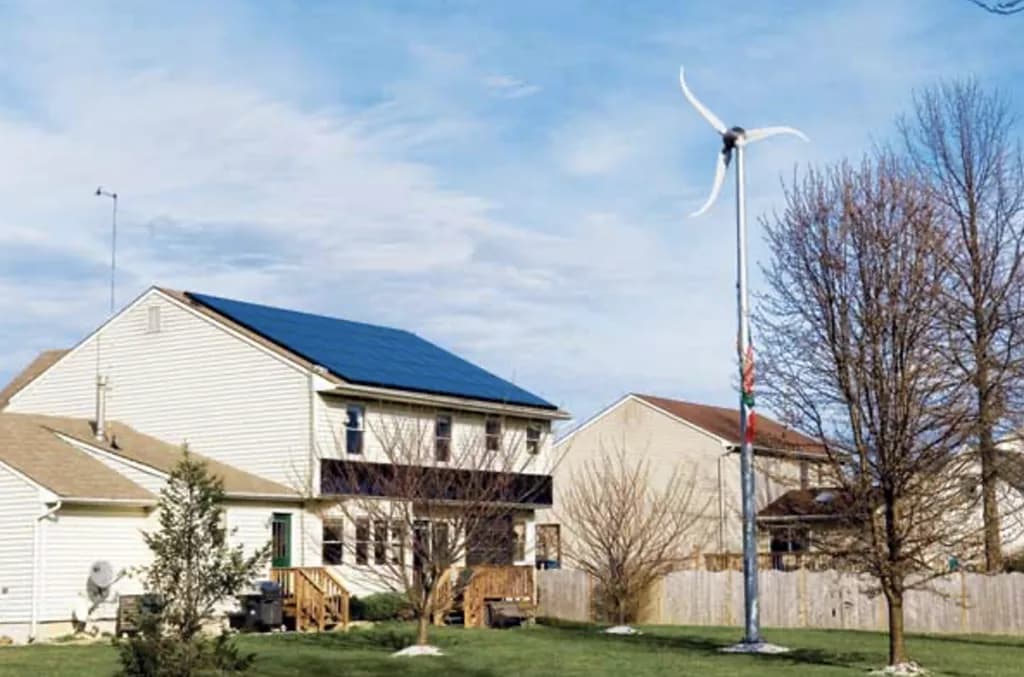
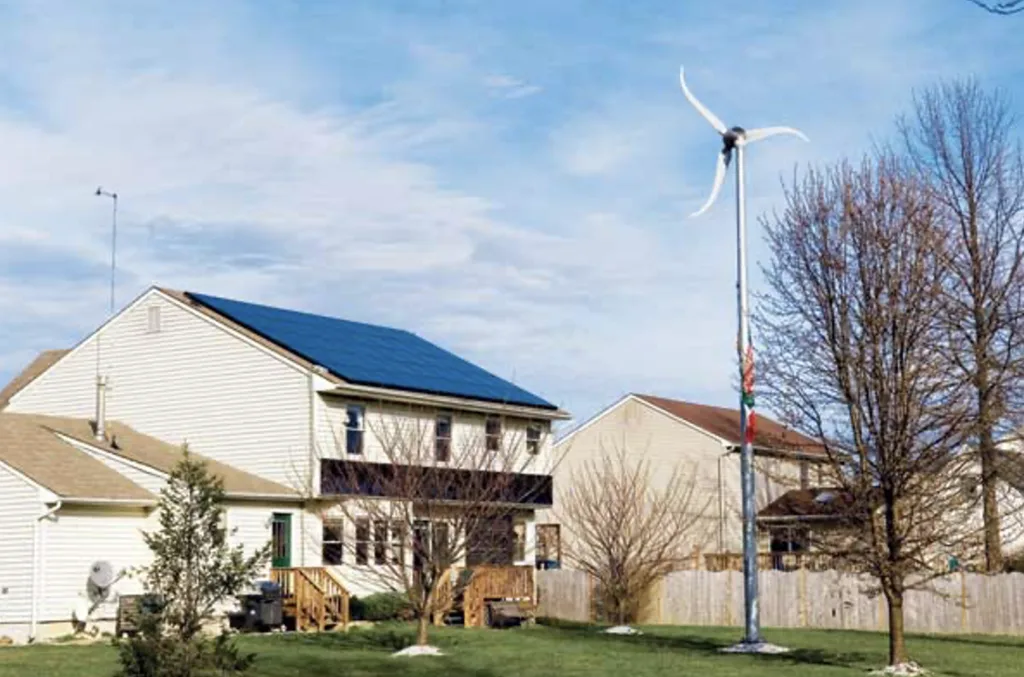
Although a quick Google search for “wind turbine for home” shows numerous options available online, Hattingh points out that businesses and homeowners who have installed wind turbines typically complain about two factors — vibrations and high noise levels. The physically-moving parts like gears are susceptible to wear and tear, requiring regular maintenance. Larger horizontal-axle wind turbines have more stable mounting, but they must be attached to a pole extending tens of meters from the ground to catch the wind properly. Therefore, a user would need lots of vertical space, which might only be an option on large plots or farms.
Aside from the additional significant installation costs such an installation would incur, a user would also need to get permission from the relevant authority, and their neighbours may not like it. For these reasons, most home wind turbine users install turbines in turbulent conditions lower to the ground. In such scenarios, frequent and fast fluctuations in wind speed can significantly degrade production and force turbines in the wrong direction, requiring the operator to reset them into the appropriate orientation.
Moreover, wind turbines need to run at specific rotations per minute (RPM) to produce electricity. The energy availability factor (EAF) of a small-scale wind turbine is around 5-8%, while large wind farms can have up to 40% EAFs in ideal conditions. Rooftop solar PV installations have an EAF of roughly 13-17% when considering that they cannot operate at night. Additionally, Hattingh said that a wind turbine with the same capacity as a solar panel would cost roughly R20,000 (excl. VAT), whereas solar panels cost about R7,500 (excl. VAT) per kWp of generation. Therefore, batteries are generally a better investment for home users than wind turbines.
Furthermore, many solar panels come with work-life warranties of 20 years or more, while small-scale wind turbines are unlikely to come with warranties anywhere near that length. Warranties on home turbines typically range between 2-10 years, and they have many more mechanical moving parts, including gears, that require regular maintenance and replacement. It is also likely that warranties could be voided if the operator failed to bring the turbine down to the ground when the wind speed was high.
In conclusion, although wind power might seem like an attractive option for home self-generation in South Africa, it is not a feasible option for most. The cost of installation, maintenance, and monitoring requirements, as well as the lower EAF and warranty limitations, make batteries a better investment for home users than wind turbines. It is crucial to consider all factors before deciding which renewable energy source to use for home self-generation.