What destroyed Tesla in South Africa
In 2004, a year after Tesla was founded, a group of South African engineers banded together to create an electric vehicle (EV) in response to mounting global warming concerns. Optimal Energy was formed in 2005 by Kobus Meiring, Mike Lomberg, Jian Swiegers, and Gerhard Swart with the goal of developing the country's first electric car.

What destroyed Tesla in South Africa
In 2004, a year after Tesla was founded, a group of South African engineers banded together to create an electric vehicle (EV) in response to mounting global warming concerns.
Optimal Energy was formed in 2005 by Kobus Meiring, Mike Lomberg, Jian Swiegers, and Gerhard Swart with the goal of developing the country’s first electric car.
They obtained R15 million from the Department of Science and Technology’s Innovation Fund in December 2005 to create a prototype.
For the body, chassis, and interior, the team relied on pre-existing technology and off-the-shelf components.
The majority of the research was focused on battery, electric drive, and vehicle control systems, which were all novel technologies at the time.
At the 2008 Paris Motor Show, Optimal Energy introduced their first electric car, the Joule, to the general public.
The Joule was developed by South African-born Jaguar automotive designer Keith Helfet and had the same flowing lines as his previous hallmark vehicles.
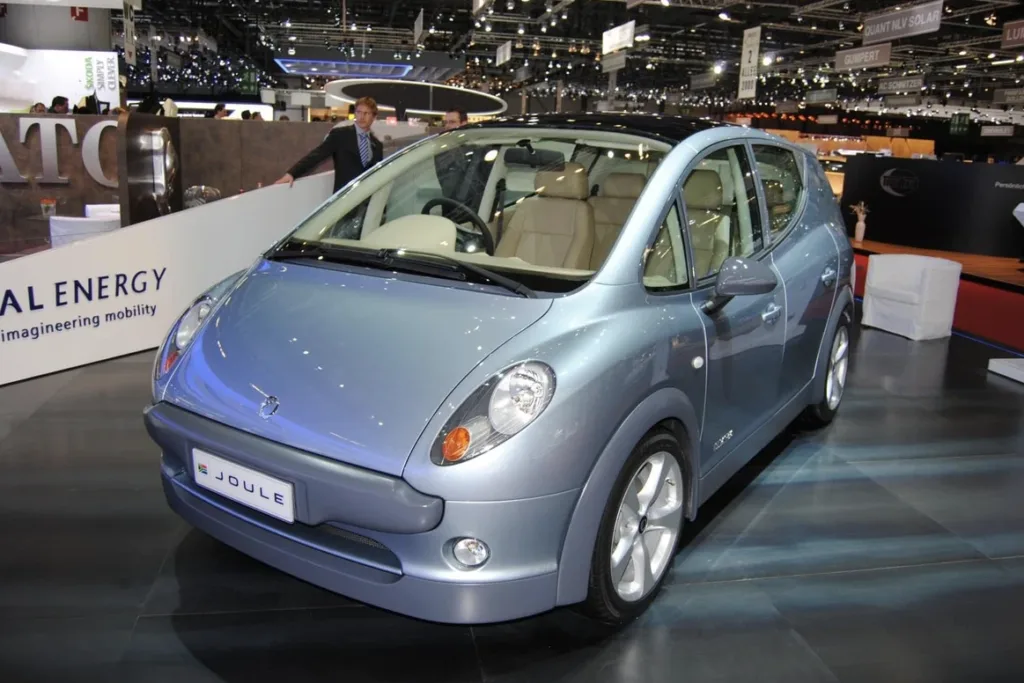
Following minor internal and external improvements, Optimal Energy debuted the redesigned Joule at the 2010 Geneva International Motor Show.
Hi-Tech Automotive hand-built this prototype of the Joule in Port Elizabeth, which was punted as being close to the anticipated production version.
Optimal Energy stated at the time that full-scale manufacturing of the Joule will begin at the end of 2012, with automobiles in showrooms by mid-2013.
The completed vehicle had a 230-kilometer range, a motorway cruising speed of 135 km/h, seating for five, and a 4-star NCAP safety certification at a retail price of R245,000.
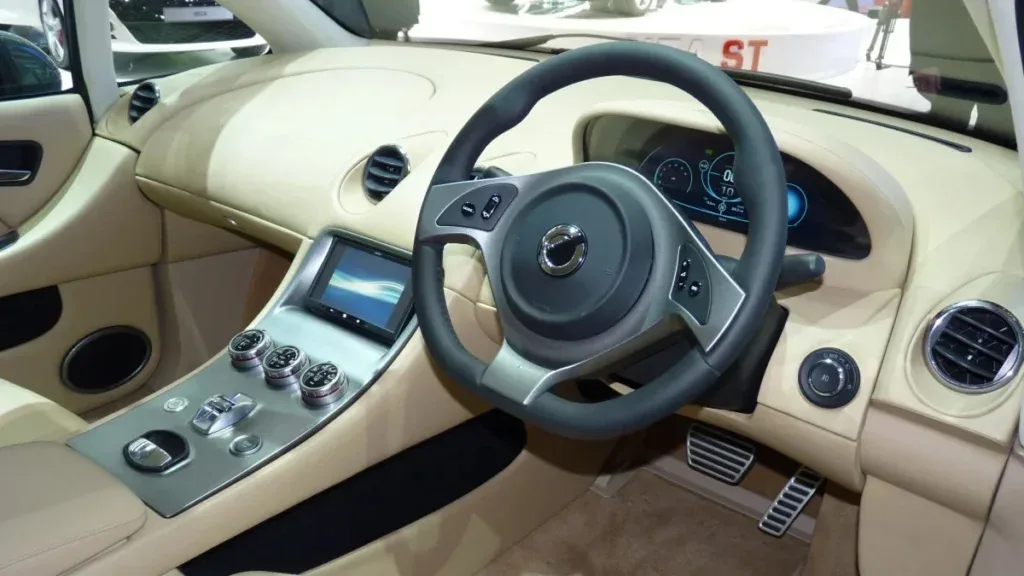
Because the South African electric car market was small, the Joule was designed for the emerging European market.
Optimal Energy, despite the buzz around the Joule, closed its doors in 2012.
It raises the issue of what went wrong.
Gerhard Swart, co-founder of Optimal Energy, noted that moving from the prototype stage to producing thousands of units per year was difficult.
It would have taken four years and an extra R9.8 billion to get the Joule into commercial production of 50,000 per year.
Optimal Energy was unable to acquire money from current or new investors, and the project was halted.
Swart said that Optimal Energy and the Joule EV were victims of the “innovation chasm,” or the incapacity of academic research to be commercialised as goods or services.
The Joule EV project offers a strategic opportunity for South Africa to enter the ranks of the full-blown automotive sector.
However, it was difficult for the funders to appreciate the importance of the opportunity as it was unlike usual innovation initiatives they had previously sponsored.
Swart believes Optimal Energy’s downfall may appear to be due to the large money necessary to execute the project.
He contended, however, that the initiative would have been more successful if they had tackled the challenges that caused them to fall victim to the innovation chasm.
Swart stated that communication is the common thread that connects all of the elements that lead to the death of Optimal Energy.
“Communication about process, communication about strategy, and communication about successes and failures,” he said.
“At some point, whatever the reasons may be, the investors lost confidence that the Optimal Energy plan was executable.”
Better communication with all parties may have remedied this.
This article was first published by Daily Investor