
Transnet wants to hand over its vital Durban-Joburg line, together with 3,573 employees
There is a 670km length of double-track electrified rail between the port of Durban, where the ships are, and the south of Johannesburg, the entrance to Gauteng's customers and manufacturers. At one end lies Bayhead, the Durban harbour's "back of port" terminal, which is continuously trying to enhance its freight-handling capacity. The City Deep and
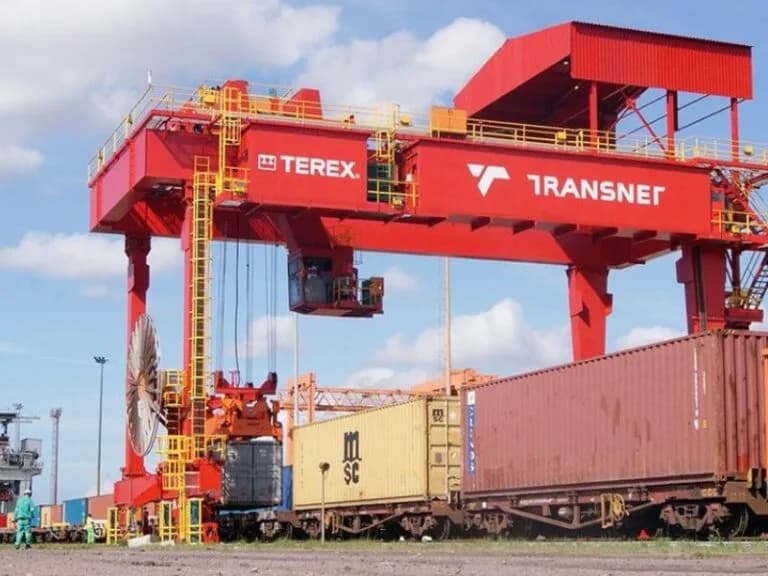
Transnet wants to hand over its vital Durban-Joburg line, together with 3,573 employees
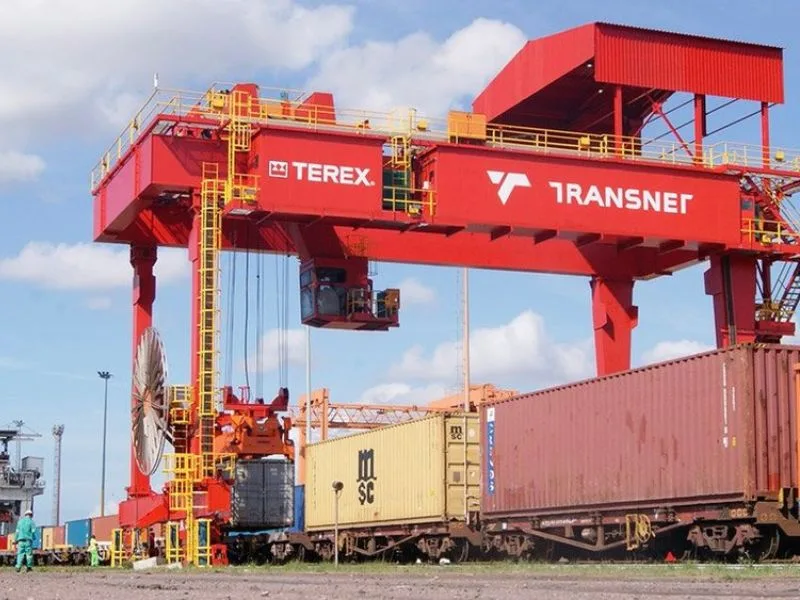
There is a 670km length of double-track electrified rail between the port of Durban, where the ships are, and the south of Johannesburg, the entrance to Gauteng’s customers and manufacturers.
At one end lies Bayhead, the Durban harbour’s “back of port” terminal, which is continuously trying to enhance its freight-handling capacity. The City Deep and adjoining Kascon ports, on the other hand, are said to be capable of handling 650,000 cargo containers each year.
Given the fairly mind-boggling amount of things that has to be carried between Durban and Johannesburg, owner Transnet expects the container corridor to be quite busy. However, utilisation has declined in recent years as the time it takes Transnet to move a train from one end to the other has increased from 28 to 37 hours, and consumers have requested clarity about when their containers would arrive.
Transnet claims in papers that the operation is “not performing optimally” and that its current strategy is to bring in a commercial partner to fix the corridor.
Transnet began looking for someone to take over the entire operation and operate it for the next 20 years last week.
Transnet estimates that a successful partner will require at least R5.5 billion in working and investment capital, and will be expected to take on the 3,573 employees now devoted to running the corridor, as well as assets such as 419 locomotives.
Transnet estimates that 87% of containers in South Africa are transported by road, but believes rail should account for nearly a third of the market. According to some estimates, it believes it can tenfold the number of containers on trains.
With fewer vehicles on the N3, faster operations at the Durban port, and better logistics for both importers and exporters, this would have consequences for a vast portion of the country.
However, doing so would require reversing a long-standing trend, which Transnet has failed to achieve. Transnet has notified potential partners that it lacks the funds to invest in the operation, but its figures also hint to a wide range of problems on the line.
In principle, the corridor can handle 47 trains in each direction every day if it is not destroyed by flooding or theft, both of which have recently occurred.
Transnet claims that it is now using around half of the line’s potential capacity, which is shared almost evenly between passenger trains, general freight trains, and container-carrying trains.
Increasing that would need a thorough revamp of many aspects of the system, as well as dealing with problems other than demanding consumers and ageing rolling stock. According to Transnet’s data, the container corridor has just under 5 “security incidents” every day on average.
Transnet anticipates compiling a short list of possible partners by the end of April. Those will then be requested to submit specific offers, with one chosen for final discussions.
A potential profit sharing agreement, as well as how everything will be returned to Transnet at the conclusion of a 20-year lease, will be explored.