Thousands Converge to Honour Slain Marikana Mineworkers: A Decade of Remembering
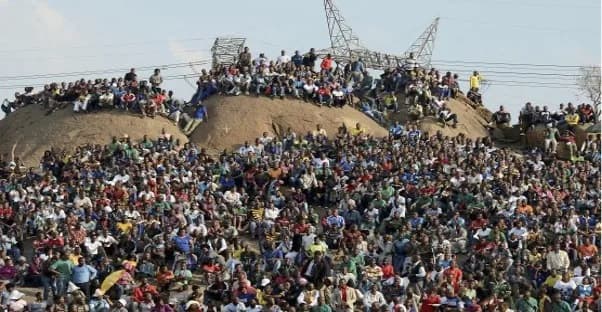
A large crowd gathered on the historic terrain of Wonderkop in Marikana, North West Province, to commemorate the 11th anniversary of the tragic massacre that killed striking mineworkers. As the sun rose on this solemn occasion, it was clear that the atmosphere had shifted slightly from previous years. There appeared to be a subtle shift
Thousands-Converge-to-Honor-Slain-Marikana-Mineworkers-A-Decade-of-Remembering
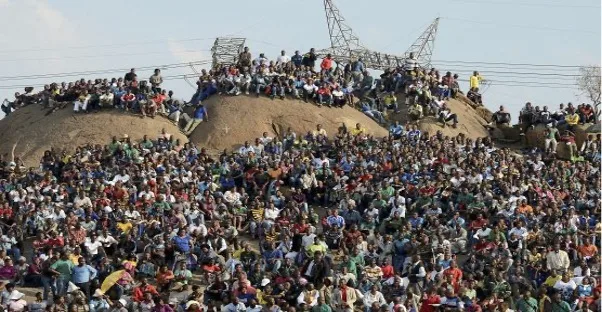
A large crowd gathered on the historic terrain of Wonderkop in Marikana, North West Province, to commemorate the 11th anniversary of the tragic massacre that killed striking mineworkers.
As the sun rose on this solemn occasion, it was clear that the atmosphere had shifted slightly from previous years. There appeared to be a subtle shift towards a blend of melancholy reflection and restrained commemoration amid the remembrance of the 34 lives lost to police gunfire.
By midday, the crowd had swelled to approximately 10,000 people. Representatives from the Association of Mineworkers and Construction Union (AMCU), flanked by religious and political figures, prepared to address the crowd. Their goal is to pay homage to the events that occurred when employees of the platinum mining company Lonmin (now part of Sibanye Stillwater) went on strike for better wages.
This tragic episode was not without precedent; in the weeks preceding the harrowing incident on August 16, 2012, approximately 50 other lives were lost, some at the hands of striking workers themselves, while others died as a result of other forms of violence.
Those gathered on the koppie in 2023 bore countenances that reflected a sense of contentment, nourishment, and a distinct lack of thirst, as opposed to the sombre faces of the August 2012 strikers. Notably, some of the employees who spoke with News24 expressed optimism about the future, owing primarily to wage increases they have received over time.
“In that regard, we are quite content; substantial wage hikes have materialised within a relatively short span,” said Zolani Cenga, an 18-year veteran at Sibanye Stillwater. Cenga revealed that living conditions in the Nkaneng informal settlement have remained largely unchanged since the tragedy while standing on the iconic koppie with companions from Ngutyana village in Bizana, Eastern Cape.
During the tumultuous strikes of 2012, discontent spread beyond employment conditions, affecting the living conditions in mining towns. Workers had monthly take-home pay ranging from R4,000 to R6,000 at the time. Their collective demand centred on a monthly minimum wage of R12,500 at entry level. In the years that followed, their perseverance bore fruit, with the lowest-paid underground workers now enjoying monthly wages exceeding R16,000.
Seabane Ramatlama, from Berea in Teya-teyaneng, Lesotho, and a Sibanye employee in the Carletonville gold mines, attested to the transformative changes in employment circumstances. He agreed that the Marikana strikers’ sacrifices had a significant impact on the improvement of their working conditions.
Ramatlama, whose employment with Sibanye Stillwater began in 1989 at the East Driefontein mine, recalled earning only R200 per month. He is currently enjoying a take-home pay of R7,500.
“While platinum miners continue to command higher wages,” he says, “our substantial increase from the paltry R700 take-home pay of 2012 owes its existence to their struggle.”
Motlatse Mathiso, a survivor of the fateful day in 2012, stood on the koppie’s hallowed ground. He remembered lying prone to avoid the police gunfire that had claimed so many lives. Mathiso attested to an improved quality of life since then, acknowledging that their collective plight had resulted in measurable improvements.
When asked about his message for the fallen comrades who paid the ultimate price during the strike, Mathiso said reverently, “We owe them gratitude for their sacrifices; their blood has paved the path to our triumph.”
“If only the fruits of our struggle had been reaped without the shedding of blood, our happiness would have been immeasurable,” he reflected in retrospect. No amount of money could ever compensate for their sacrifice.”
The commemoration reflected an unyielding spirit—a reflection on lives lost, battles won, and the ongoing pursuit of dignity and fairness in the mining industry. As the sun set on Wonderkop, the echoes of the past rang out with hope for a future in which progress can be made without the looming shadow of tragedy.