These companies will provide the first batteries for Eskom’s massive backup energy storage system
Hyosung Heavy Industries and Pinggao Group are the first companies contracted to provide large lithium-ion batteries to Eskom for its massive battery energy storage system (BESS). The power utility has told MyBroadband that Hyosung would provide 292MWh of storage while Pinggao would contribute 395MWh as part of Phase 1 of the project. Founded in 1962,
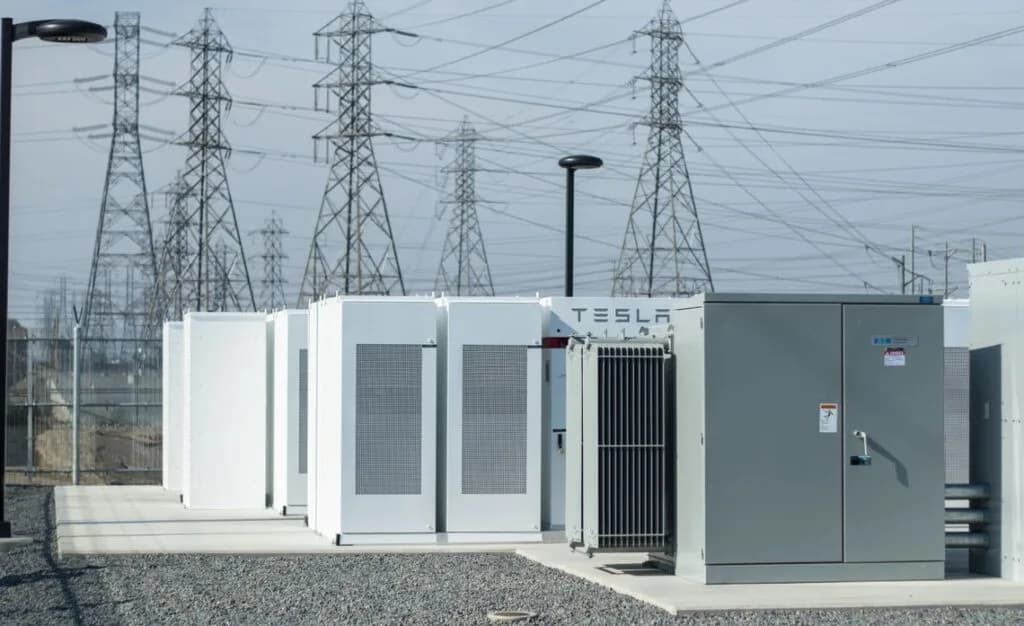
These companies will provide the first batteries for Eskom’s massive backup energy storage system
Hyosung Heavy Industries and Pinggao Group are the first companies contracted to provide large lithium-ion batteries to Eskom for its massive battery energy storage system (BESS).
The power utility has told MyBroadband that Hyosung would provide 292MWh of storage while Pinggao would contribute 395MWh as part of Phase 1 of the project.
Founded in 1962, Hyosung is a motor and generating company headquartered in South Korea.
It recently acquired a transformer production facility from Mitsubishi in the United States for $46.5 million (R784 million). In South Africa, it hosts a sales and maintenance office.
Regarding energy storage systems (ESS), the company lists several projects on its website, including sites at steel factories and renewable energy plants.

The other preferred bidder, Pinggao, is a wholly-owned subsidiary of China’s State Grid Corporation and was founded in 1970.
According to Bloomberg, the company researches, develops, produces, and sells high voltage, extra-high voltage, ultra-high voltage switchgear, and other electrical equipment, some of which it exports.
Eskom chose the preferred bidders after issuing an open tender to the market for the project’s first phase, following a procurement process by the World Bank, which is providing funding for the BESS.
Eskom estimates the cost of both phases of the project will be roughly R11 billion.
The utility said the companies underwent an intensive evaluation process using criteria issued as part of the bidding documents.
“Every effort is being made to ensure that the project is delivered within time, cost and quality to assist with the constraints currently facing the system,” Eskom stated.
When combined, Hyosung and Pinggao will contribute 687MWh of storage to the BESS.
How the BESS will work
Eskom is planning for the BESS to provide 1,440MWh of capacity, with a dispatchable generation of roughly 343MW.
The system will primarily be used to shave peak national load for four hours per day on at least 250 days of the year, helping reduce the likelihood of load-shedding.
Eskom said it would charge the BESS during off-peak periods or when network conditions permit
The system will then discharge energy to the grid during peak periods when demand is higher.
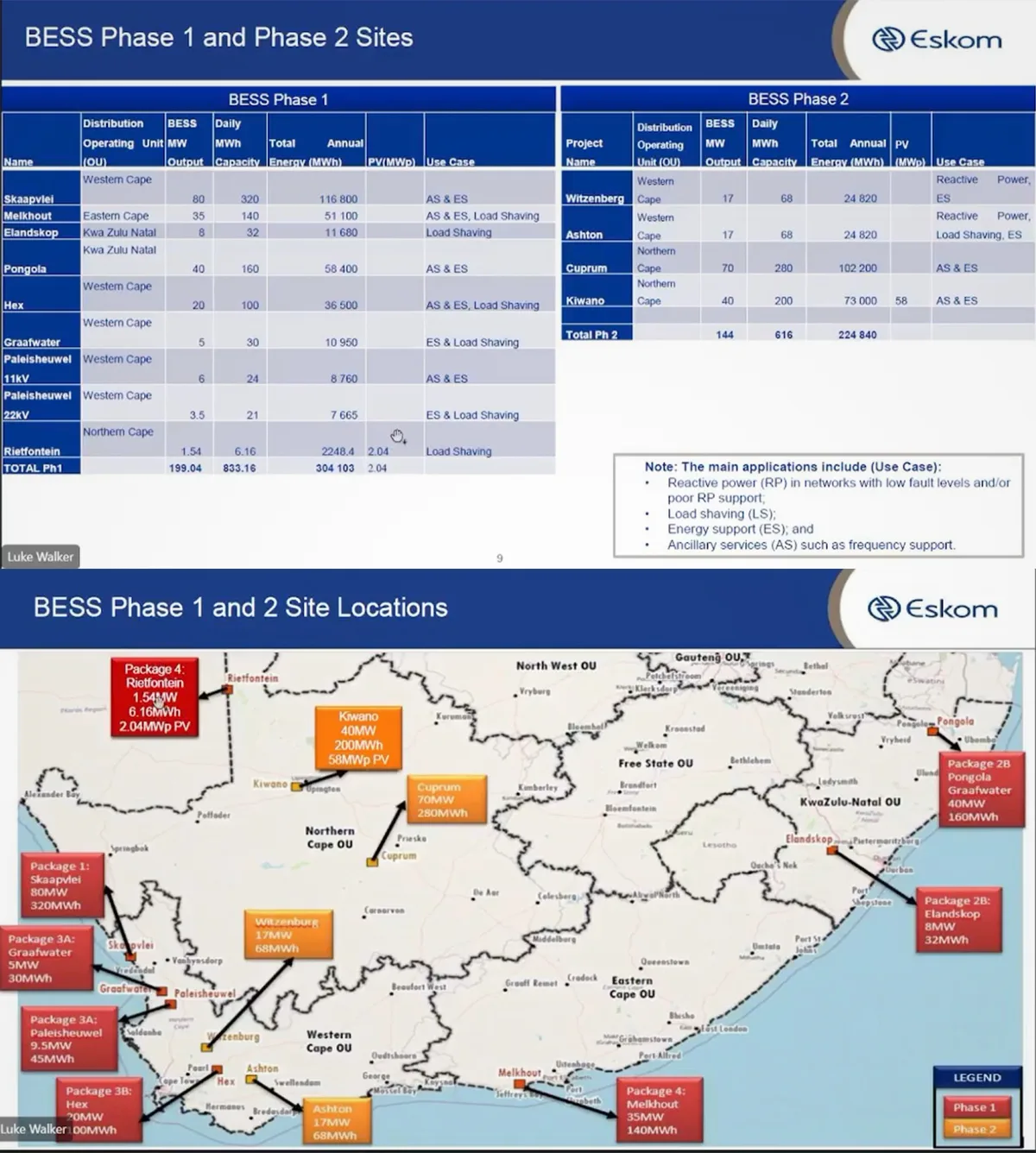
The batteries that make up the BESS will be distributed across various locations in the Western Cape, Eastern Cape, Northern Cape, and KwaZulu-Natal.
The biggest site will be at Skaapvlei in the Matzikama municipality in the Western Cape, with a daily capacity of 320MWh and dispatchable output of 80MW provided by Pinggao.
Phase 1 includes eight sites which should be constructed by June 2023, while Phase 2 will encompass four further sites planned for completion by December 2024.
Eskom said not all the sites in Phase 1 had been awarded yet. Phase 2 still has to be issued to the market.
According to a report from Seetao, the first phase also received bids from general contractors based in the United States and Spain.
The BESS is subject to approval by the national energy regulator of South Africa (Nersa).
The table and map below show the sites where the various parts of the BESS will be installed, from an Eskom presentation to Nersa explaining its licence application for the project’s first phase.
Main Image: Green Building Africa