
The one major omission from Ramaphosa's SONA finally mentioned
Anybody watching Cyril Ramphosa's 2023 State of the Nation Address would have noted a significant absence in the president's list of calamities affecting the country. There was no mention of the state's second main plan: the National Health Insurance (NHI) programme, despite an ongoing power crisis that forced the proclamation of a state of calamity,
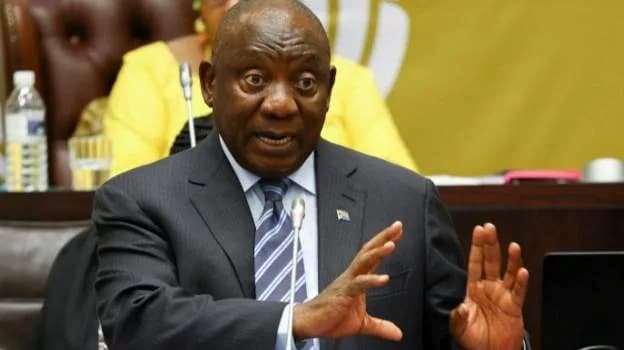
The one major omission from Ramaphosa's SONA finally mentioned
Anybody watching Cyril Ramphosa’s 2023 State of the Nation Address would have noted a significant absence in the president’s list of calamities affecting the country.
There was no mention of the state’s second main plan: the National Health Insurance (NHI) programme, despite an ongoing power crisis that forced the proclamation of a state of calamity, growing levels of crime and poverty, and another swing at corruption and state takeover.
The Democratic Alliance pointed out the absence this week, saying it was a hint that the president thought its execution was “implausible” and trivial, thus it didn’t need a mention.
“Despite the desperate state of the country’s public health sector, it deigned only the smallest comment from President Cyril Ramaphosa in his (SONA) in regards to the government’s reckless proclamation of the state of disaster.
“According to the President, the state of disaster will magically enable the government to fast-track the exemption of hospitals from load shedding – an initiative that started off with much enthusiasm and then slowly petered off after a mere 76 of the 213 identified hospitals were exempted last year,” the party said.
But, “not a word was said” about the Department of Health’s NHI ambitions.
While the NHI was not mentioned in the main presentation, Ramaphosa did reference it in his response to the parliamentary discussion on SONA.
The president stated that the government’s commitment to quality healthcare has not been abandoned, and that the National Health Insurance Program (NHI) is still on schedule.
“Access to quality health care – and indeed better health itself – are necessary to improve people’s lives and build a successful society and a more productive economy. We are committed to the provision of quality health care for all regardless of their ability to pay,” he said.
“We will, therefore, progressively implement the National Health Insurance as soon as the necessary legislation is approved by Parliament.”
The most recent update on the NHI Bill occurred in December 2022, when health minister Joe Phaahla stated that his department was working for the new legislation to be approved by the National Assembly in 2023.
Phaahla acknowledged that the route to adopting the NHI would be difficult and that the department was preparing for judicial challenges.
“There are already challenges, just in terms of the implementation of our structure of preparing for the NHI in the department. We are already in court with some of the…organisations,” he said.
“Once the Bill is passed in Parliament, there will be a slew of litigations.”
Meanwhile, Ramaphosa stated that the government is preparing for NHI implementation through the national quality improvement strategy, as well as putting in place the required manpower and funds.
What happened to the NHI?
The NHI had several quick and contentious advancements in 2022.
While procedures for exchanging information between the commercial and public sectors are being implemented, and recruitment for critical NHI roles is now permitted, no one in government has addressed the elephant in the room: how much will the plan cost?
The government’s drive for the NHI comes against a chorus of cautions and dissident voices, with many claiming that the programme is costly, unmanageable, and unsustainable.
Private healthcare organisations have been the most vociferous on this issue, claiming that the system is being set up for failure due to the magnitude of what the government wants to achieve against the backdrop of how it has previously failed in the public healthcare domain.
Concerns have also been raised about a mass departure of healthcare professionals who refuse to work under the scheme’s onerous circumstances, as indicated by the court verdict that the department is appealing.
Medical aids have been struggling for their survival since the NHI model envisions a healthcare system in which the state has complete control and little to no place for private healthcare finance.