The Death of the Retail Mall — Or Not
While Globally Retail Developments are Stalling, In Africa Retail is Flourishing
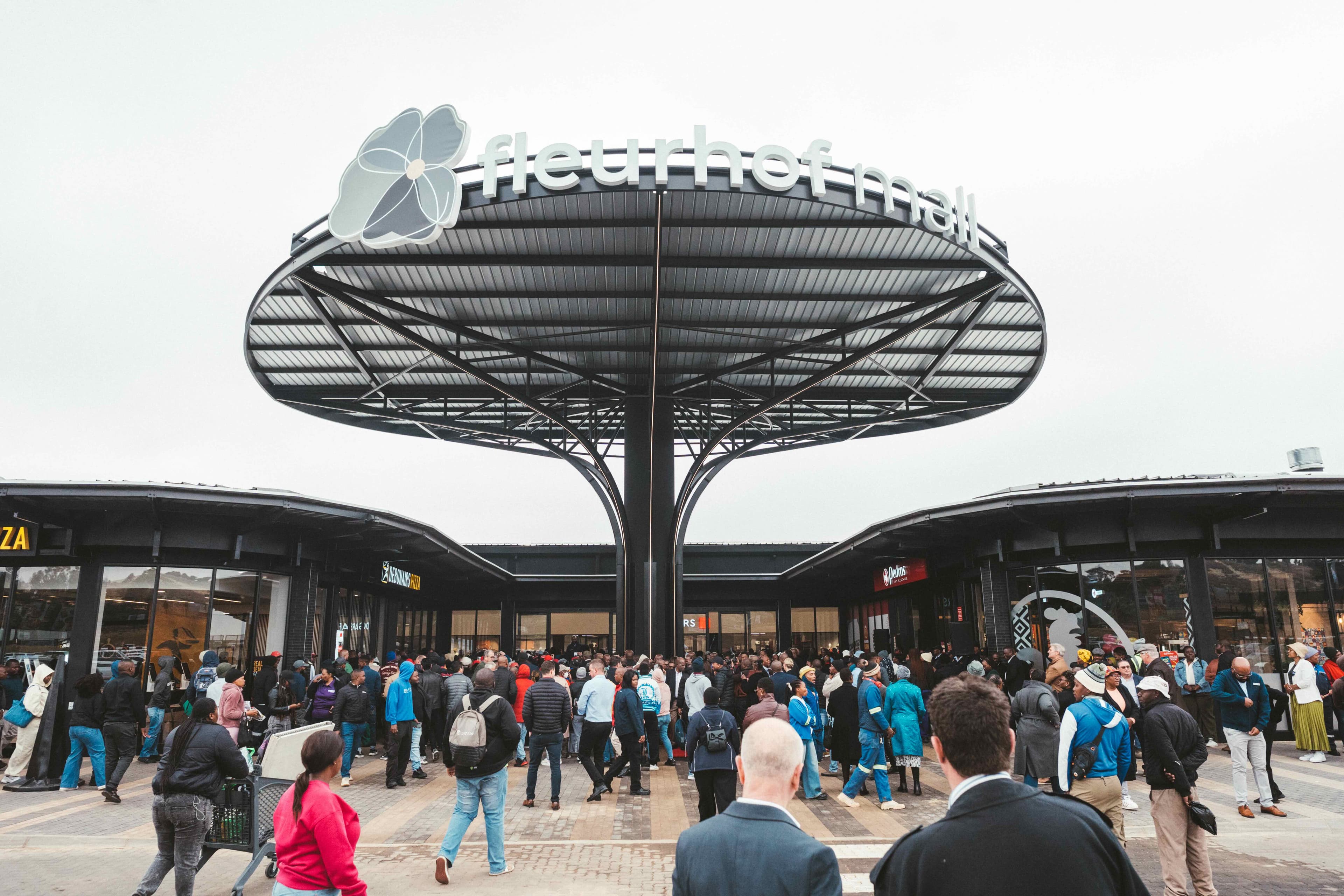
Fleurhoff mall
When Europe Stops Building and Africa does not
The global story is familiar. E-commerce takes share of market, department stores shrink, and listed landlords in mature markets stop commissioning new enclosed malls. Redefine’s Polish platform illustrates the point: household spend is recovering and brands are still opening stores, but the growth format is retail parks and the conversion of dead space, not another regional shopping centre. E-commerce already accounts for roughly 9 to 11 percent of Polish retail sales. In that market, new malls are not the bet.
South Africa and much of the rest of the continent are running a different play. Last week Fleurhof Mall opened on Fleurhof Drive on the outskirts of Soweto in Johannesburg. This is a 19,561 square metre centre developed by Abcon and Masingita Property Investment Holdings at a reported cost of about R400 million. It is the first major retail destination for one of Johannesburg’s largest integrated housing schemes. More than 9,000 homes have been delivered in the area over a decade. Until this week, those households drove to Roodepoort or Soweto for groceries. The anchor tennants are Pick n Pay, Shoprite, Edgars and Clicks. Fifty-three stores were trading at opening, while the construction created more than 1,000 jobs.
That is not a lifestyle mall chasing tourists. It is a catch-up asset. The housing arrived first. Retail followed because the catchment was already there and underserved. The same week, Etwatwa Crossing opened in Ekurhuleni: 17,976 square metres, more than 60 stores, Shoprite and Boxer as anchors, and incorporates an on-site taxi rank. Exemplar and partners are doing in the East Rand what Abcon and Masingita are doing on the West Rand: putting formal retail next to dense, recently built housing.
Rooftops First, then the Centre
The sequence matters more than the architecture. Fleurhof spent ten years adding houses without a matching retail centre. Abcon’s Bryce O’Donnell put it plainly at opening: every household that moved in was driving somewhere else for the basics. Across Africa the same pattern keeps repeating.
Formal retail follows population, mining towns, housing schemes and transport nodes. It does not wait for a Westfield-style regional mall to become fashionable again.
Nairobi’s Galleria Mall has put Sh2.2 billion into a second phase: 49 extra outlets, cinema, bowling, a piazza and nearly 900 parking bays. Knight Frank counted more than 230,000 square feet of new Kenyan retail space in 2025, much of it in neighbourhood and community centres rather than another mega-mall. Business Bay Square in Eastleigh is already Kenya’s largest complex. Egypt’s Mall of Arabia and Cairo Festival City sit inside mixed residential and hospitality schemes. Terrace Africa has flagged new centres in Harare. Safland is building Lüderitz’s first mall in Namibia, incorporating about 10,500 square metres, and Shoprite-anchored, targeting a November 2026 opening.
The Mixed-use bet: Live, Work, Eat
The other Johannesburg story is mixed-use developments, outside township convenience. Sandton Gate Central opened in March 2026 with about 12,000 square metres of retail inside a precinct that already has 136 apartments and a growing office component. Phase one cost about R500 million. Phase two is budgeted at around R1 billion. Checkers, Woolworths and Dis-Chem sit alongside dining concepts that O’Donnell has argued are no longer fillers.
In a separate note published this month, he described restaurants as destination drivers. Hybrid work has shortened the midweek trip. People want coffee, lunch and a glass of wine in the same node as the office and the flat (apartment). A distinctive restaurant extends a precinct’s catchment beyond the immediate suburb.
That is destination dining as destination development. A precinct with one good restaurant is a place people visit. A precinct with four or five, at different price points and occasions, is a place people want to live near.
Rescuing the Super-Regional
Fourways Mall, South Africa’s largest centre at about 178,000 square metres, shows the other side of the argument: existing stock can be rescued. After years of high vacancies, independent managers Flanagan & Gerard and the Moolman Group cut vacancies sharply, lifted trading density and pushed footfall above a million visitors a month.
The View, is a R100 million dining and lifestyle adjacency, is leasing at more than R200 a square metre to names such as Tashas and The Pantry, with a planned October opening. The mall is not being replaced by the internet. It is being recut around food, events and parking that actually works.
What the listed Landlords are Actually Reporting
Redefine’s Capital Markets Day on 26 August put numbers under this pattern. The group’s portfolio is valued at R101.2 billion. About 75 percent of assets are now linked to consumer activity. South African retail is its strongest operating sector: R30.5 billion carrying value, 1.17 million square metres of GLA, 52 properties. By July 2026, active occupancy was 95.2 percent, tenant retention by rental income 94.1 percent, and renewal success by GLA 88.2 percent. Renewal reversions had improved to 3.2 percent. Furthermore, national retailers occupy 72 percent of retail GLA. Grocers and pharmacies take 20 percent of GLA and 16 percent of gross monthly rent. Grocery-led reconfigurations delivered a 36 percent turnover uplift in the stores that were rebuilt.
Redefine plans 18,700 square metres of store optimisation in 2027 and 28,900 square metres of grocer upgrades. NOI margin in retail has reached 90 percent, helped by rent and solar.
Those metrics explain why capital is still arriving. Retailers keep opening physical space even as they sell online. Shoprite’s planned store pipeline remains large relative to its online share. Pharmacies and value apparel are doing the same. Online is growing. It has not replaced the weekly shop, the clinic visit or the meal after work.
Office and industrial sit around the retail story. Redefine’s industrial occupancy was 98.2 percent in July, with +4.4 percent renewal reversions. Modern logistics has driven most of the value gain since 2021.
Office occupancy has recovered to 89.3 percent, with single-digit vacancy targeted in FY27. Hybrid work has not killed the office. It has made the office next to lunch more valuable than the office next to a highway.
Power, Water and the Landlord as Utility Provider
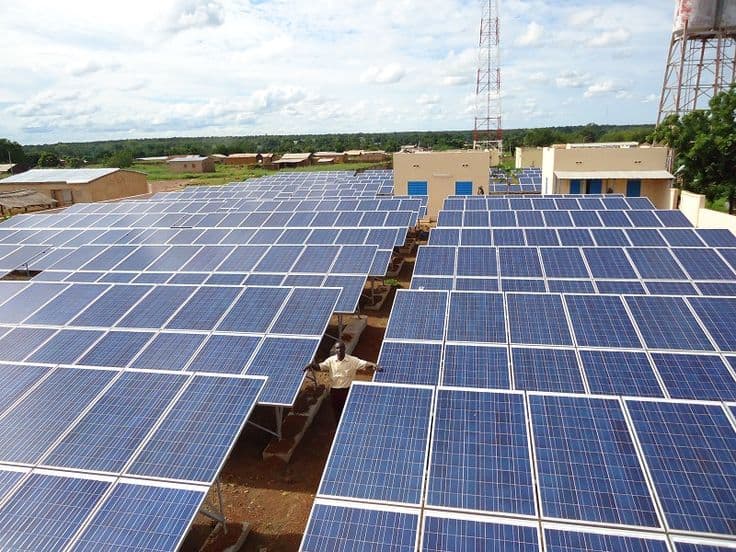
The second shift is that landlords are becoming utilities. Municipal electricity and water are no longer a background cost. They are a vacancy risk. Redefine’s solar fleet has grown to 65.3 MWp from 40.3 MWp in FY23, with another 5.6 MWp in progress. About 23 percent of its electricity demand is already met from renewables. The FY28 target is 40 percent, mixing rooftop plant, traditional wheeling, virtual wheeling and generator-based wheeling.
Battery storage is the new revenue line. First phase: 20 buildings, 20 MWh. Projected first-year savings are about R19 million, with a first-year return of 16.9 percent. The model is simple. Charge off-peak or from own solar. Supply tenants at peak. Cut diesel. Keep the lights on when Eskom or the municipality cannot. Water follows the same logic: a 10 percent reduction in portfolio withdrawal by 2030 through metering and leak detection, because a dry tap empties a centre as fast as a dark one.
The R300 million figure that sometimes attaches to this story is better read as the broader capex around energy and centre upgrades. Redefine has about R285 million of centre upgrades on five shopping centres and R92.4 million of yielding projects in progress. The battery phase is a narrower, high-return slice of that programme. Either way, the landlord is selling reliability, not only floor space.
Technology That fills Space Rather than Replace It
Technology is the quieter revenue line. Redefine reports 76 percent staff adoption of AI tools. More than 47,000 secured payment transactions have run through AI-enabled systems since September 2025. Facilities-management workflows passed 108,000 automated jobs. A lead-generation app has produced more than 2,400 quality leads at a 19 percent conversion rate. WhatsApp for business at Centurion Mall has more than 33,000 active users and a 74 percent read rate. A tenant app has 26,000 users. None of this replaces a supermarket. It lowers vacancy days and the cost of collecting rent.
What a Smaller African Property Developer can Learn
What a smaller African developer can copy without a R101 billion balance sheet is the sequence, not the scale.
First, count rooftops before pouring concrete. Fleurhof worked because 9,000 homes were already there. A 3,000 to 8,000 square metre convenience centre with a grocer, pharmacy, two quick-service restaurants and a clinic will outperform a half-empty fashion mall.
Second, treat food as an anchor, not leftover GLA. One distinctive operator is worth more than three interchangeable franchise boxes. O’Donnell’s point is operational: restaurants set dwell time. Dwell time sets the rent other tenants will pay.
Third, sell power and water as products. A single rooftop array plus a small battery that shifts tenant load off peak is a revenue line and a leasing argument. Tenants sign longer if the lights stay on. Wheeling and municipal delays are complicated; a 100 kW plant on a township box is not.
Fourth, use cheap digital tools before expensive apps. WhatsApp with a 74 percent read rate beats a custom portal nobody opens. Metering, leak alerts and a shared booking link for common areas are startup-scale versions of Redefine’s stack.
Fifth, keep national grocers and pharmacies as the backbone and leave room for local operators. Redefine’s 72 percent national GLA share is a listed-portfolio choice. A small centre that is 100 percent national will feel like every other centre. A small centre with no grocer will not trade.
The mall that survives is the one that shortens the trip
Africa is not reconnecting with the 1990s regional mall. It is connecting housing, work and daily spend in shorter trips, then charging for the infrastructure the city fails to provide. Online retail will keep growing. So will the centre that sits between the taxi rank and the new houses, with a table on the terrace and a battery in the basement.