South Africa's Energy Transition Navigating Towards Sustainability
As the world intensifies its efforts towards decarbonization, South Africa finds itself at a pivotal moment in its energy trajectory. Historically reliant on coal, with abundant natural reserves in regions like Emalahleni, approximately 85% of the nation's electricity—equivalent to around 42 GW—is generated from coal-fired power stations. However, amidst preparations for COP29 in Azerbaijan, there's
South-Africas-Energy-Transition-is-Navigating-Towards-Sustainability
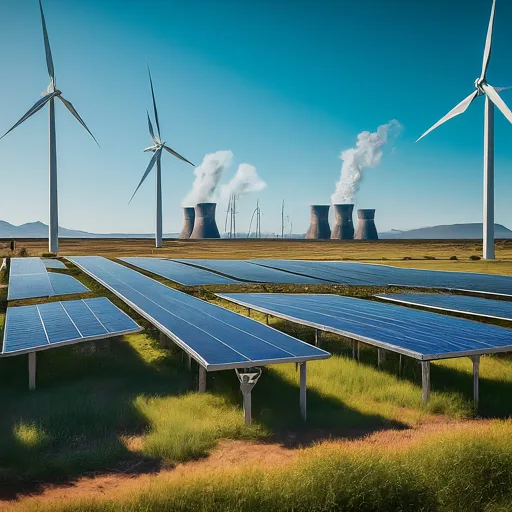
As the world intensifies its efforts towards decarbonization, South Africa finds itself at a pivotal moment in its energy trajectory. Historically reliant on coal, with abundant natural reserves in regions like Emalahleni, approximately 85% of the nation’s electricity—equivalent to around 42 GW—is generated from coal-fired power stations.
However, amidst preparations for COP29 in Azerbaijan, there’s a burgeoning global consensus advocating for decarbonization, with renewable energy emerging as the preferred pathway forward. Institutional funds globally are divesting from fossil fuels, and coal-based power industries no longer enjoy widespread support. In the interconnected global economy, marked by initiatives like the Carbon Border Adjustment Mechanism (CBAM) and the Paris Climate Agreement, businesses must demonstrate commitment to carbon neutrality and environmental sustainability to thrive on the international stage.
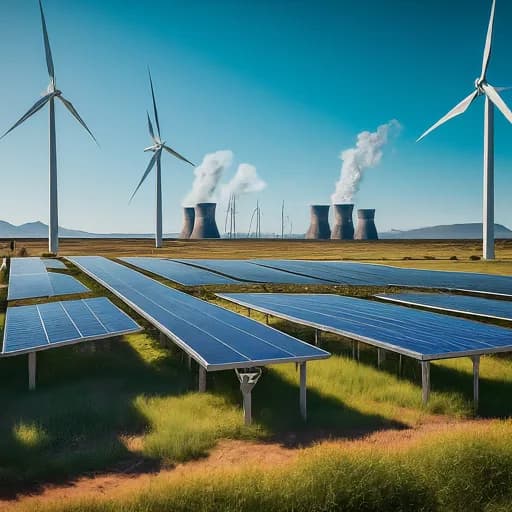
The shift towards renewable energy on a global scale has positioned South Africa uniquely, endowed with vast solar and wind potential, to capitalize on opportunities presented by the energy transition. Furthermore, as a signatory to the Paris Agreement, South Africa has pledged to reduce greenhouse gas emissions, necessitating a transformation of its coal-heavy energy sector.
South Africa’s transition towards a diversified energy mix is propelled by several imperatives: reducing the carbon footprint of the energy sector, meeting escalating energy demands, and ensuring a just socio-economic transition. Balancing the imperative for immediate energy security—amidst challenges like severe load shedding—with the long-term imperative of sustainability poses a complex challenge for the government.
Nevertheless, South Africa is making strides towards realizing its ambition of a technology-neutral energy mix. Leveraging its sophisticated power grid and robust transmission network, the nation is poised to scale up diverse generation sources. Government support for new independent power purchase agreements has catalysed attractive investment opportunities in the energy sector.
The private sector is expected to play a pivotal role in driving growth in renewable energy, with projected investments of approximately R200 billion for private offtake projects and another R200 billion for public programs by 2030. Projections suggest significant growth in the private procurement market for solar PV and wind power, particularly from large-scale industrial off-takers in sectors like mining and commercial and industrial (C&I) enterprises.
While plans for new coal operations persist, future scenarios forecast a substantial portion of South Africa’s power—around one-third—coming from solar and wind sources by 2030. The country’s renewable energy resources and robust infrastructure present substantial opportunities for green investment and economic growth. However, it’s imperative to manage the transition prudently to mitigate potential exacerbation of existing social and economic disparities.
By adopting a technology-agnostic, diversified approach to power generation, South Africa can effectively navigate the transition towards sustainability.