South Africa's Emergency Power Projects Pave the Way for Reliable Energy Solutions
Following the signing of legal agreements with the government this week, two more emergency power projects in South Africa are on the verge of becoming operational. In 2021, these projects were identified as preferred bidders, a significant step forward in addressing the country's urgent power generation needs. Power purchase agreements with Eskom, South Africa's state-owned
South-Africas-Emergency-Power-Projects-Pave-the-Way-for-Reliable-Energy-Solutions
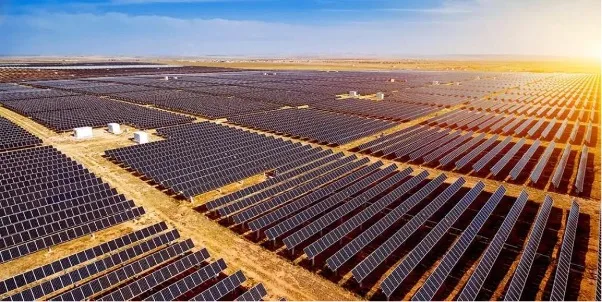
Following the signing of legal agreements with the government this week, two more emergency power projects in South Africa are on the verge of becoming operational. In 2021, these projects were identified as preferred bidders, a significant step forward in addressing the country’s urgent power generation needs.
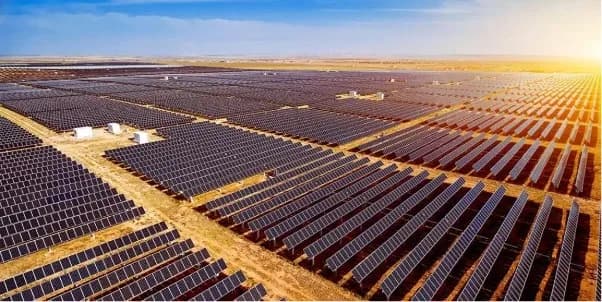
Power purchase agreements with Eskom, South Africa’s state-owned electricity utility, were officially signed on Wednesday, and implementation agreements were established with Mineral Resources and Energy Minister Gwede Mantashe. These hybrid renewable energy projects include solar photovoltaic (PV), wind, and battery storage technologies. They are on track to add an additional 203 megawatts (MW) of electricity to the national grid.
In practise, this power boost will have a significant impact on households. One of the projects is expected to meet the electricity needs of approximately 120,000 households for the next two decades, while the other is expected to provide backup power to up to 320,000 households.
G7 Renewable Energies and ENGIE collaborated on the first project, known as the Oya Energy Hybrid facility. The government has committed to purchasing 128 MW of electricity from this Karoo-based project. EDF Renewables’ Umoyilanga Energy project, on the other hand, is expected to provide 75 MW of power to the grid.
In August 2020, the South African government launched the Risk Mitigation Independent Power Producer Procurement Programme (RMIPPPP) to address the ongoing issue of load shedding. They chose 11 preferred bidders the following year, including Karpowership, whose three bids accounted for the majority of the 2,000 MW tender, totaling 1,222 MW. However, Karpowership has been criticised for its projected costs, which are expected to exceed R200 billion over a 20-year period. Furthermore, it faced environmental authorization challenges as well as legal disputes with the losing bidder, DNG Energy.
Despite the fact that the legal matter was eventually dismissed, it caused delays in the overall emergency procurement programme, preventing other bidders from moving forward with their agreements. These delays were also exacerbated by global economic insecurity caused by factors such as hyperinflation following the COVID-19 pandemic and the Russia-Ukraine conflict.
Only three projects, all of which belong to Scatec, have reached financial close. These three hybrid solar PV and storage projects in the Northern Cape are set to go commercial in November of this year.
Only five of the eleven preferred bidders from the emergency procurement round have successfully signed legal agreements, including the Oya Energy Hybrid Facility and Umoyilanga Energy projects. The two newly announced projects have until December 2023 to finalise their financial arrangements and begin construction, with electricity generation set to begin in 2025.
EDF Renewables expects to reach financial close in the second half of October 2023, with construction beginning soon after. Their project is expected to be operational by May 2025. The project includes two generation facilities: a 115 MW solar plant in Avondale (Northern Cape) with 30 MW of battery storage and a 63 MW wind project in Dassiesridge (Eastern Cape) with 45 MW of battery storage.
Based on an average Eskom residential consumption rate of 3,319 kWh per household, the energy generated by these projects will help meet the electricity needs of approximately 120,000 households for the next two decades. For this project, EDF Renewables has collaborated with Perpetua Holdings, a black-owned investment firm, emphasising empowerment and diversity in the renewable energy sector.
Perpetua Holdings, along with Meadows Energy, is also an empowerment partner for the Oya Energy Hybrid Facility. At the same site, this Karoo-based hybrid project includes 86.4 MW of wind energy, 155 MW of solar PV, and 94 MW or 242 MWh of battery storage. This project is expected to provide backup renewable energy power that can be dispatched on-demand to 240,000 to 320,000 households, significantly reducing load shedding. This estimate is based on the assumption that the average household consumes 9.3 kWh per day.
When completed, both projects are expected to supply power to the grid from 05:00 to 21:30. These projects, according to the Department of Mineral Resources and Energy (DMRE), are expected to attract R14.6 billion in investment and create nearly 3,966 job-year opportunities in both construction and operations. Furthermore, it is expected that these projects will contribute over R610 million to skills development, enterprise growth, and socioeconomic development over a 20-year period, benefiting both local communities and the nation as a whole.