South Africa is getting 43 new electric vehicle charging stations, including the most powerful yet
Audi and Rubicon have announced the installation of 43 new EV charging stations around South Africa, including the country's first 200kW ultra-fast charger. According to Audi South Africa, the stations can charge up to 57 EVs at varied capacities at the same time, independent of model or brand. A 200kW ultra-fast charger, the first of
South Africa is getting 43 new electric vehicle charging stations, including the most powerful yet
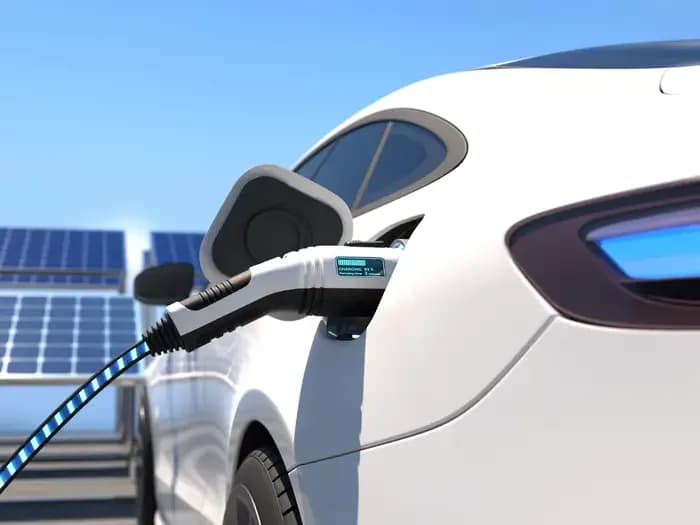
Audi and Rubicon have announced the installation of 43 new EV charging stations around South Africa, including the country’s first 200kW ultra-fast charger.
According to Audi South Africa, the stations can charge up to 57 EVs at varied capacities at the same time, independent of model or brand.
A 200kW ultra-fast charger, the first of its type in South Africa, was erected in the Mall of Africa in Midrand, Gauteng.
EVs that support 200kW or faster DC charging may be completely recharged in minutes utilising this station.
For example, the Audi E-tron GT’s 83.7kWh battery would take just 15 minutes to recharge, according to the company.
The system is supported by the PV solar array at the Mall of Africa, allowing it to run independently of Eskom’s coal-dependent grid.
The remaining stations are spread across six provinces and include four 100kW (DC), eight 60kW (DC), five 25kW (DC), and twenty-five 22kW (AC) rapid EV charging installations.
The distribution of the newly installed EV chargers from Audi South Africa and Rubicon is shown in the table below.
The stations have also been added to the GridCars map, which recently linked with Google Maps, for more exact locations.
| Audi and Rubicon fast charger locations | |
| Province | Number of new stations |
| Gauteng | 15 |
| W Cape | 11 |
| E Cape | 10 |
| KZN | 4 |
| Mpumalanga | 2 |
| Free State | 1 |
| Total | 43 |
The expansion is part of Audi’s second phase of investment in the country’s EV charging network.
In 2022, it will build 70 EV charging stations, including slower chargers, in collaboration with GridCars.
“The commissioning of the first and second phase of charging infrastructure means that Audi and partners GridCars and Rubicon, have installed 76 fast and ultra-fast EV chargers across South Africa, representing about 28% of public charging stations in the country,” Audi South Africa said.
The collaboration also includes a roaming agreement that makes billing cards compatible across the two networks.
In the last two years, Audi and its partners have spent over R45 million on charging station rollouts.
Greg Blandford, director of Rubicon Energy and E-mobility, stated that rising public interest in EVs will necessitate the integration of charging infrastructure, renewable energy, and energy storage technologies.
“Local availability of more and more EVs, coupled with the increase in fossil fuel costs, will be a major catalyst for EV adoption in South Africa,” Blandford said.
Rubicon is also the exclusive South African dealer of Tesla backup power devices and home EV chargers.
Although load-shedding was a problem that would impact the operation of EVs in South Africa, Audi’s charging network also used solar-powered backups whenever feasible to keep stations fully functioning during outages, according to Sascha Sauer, CEO of Audi South Africa.
Furthermore, Sauer stated that the company’s E-tron vehicles will not require daily charging due to ranges of 350-480km on a single charge.
Other EV vehicles supplied in South Africa, such as those from BMW, Jaguar, Mercedes-Benz, and Volvo, often give more than 300km of range per charge.