
PowerGen gets $5m to expand solar mini-grids in Nigeria
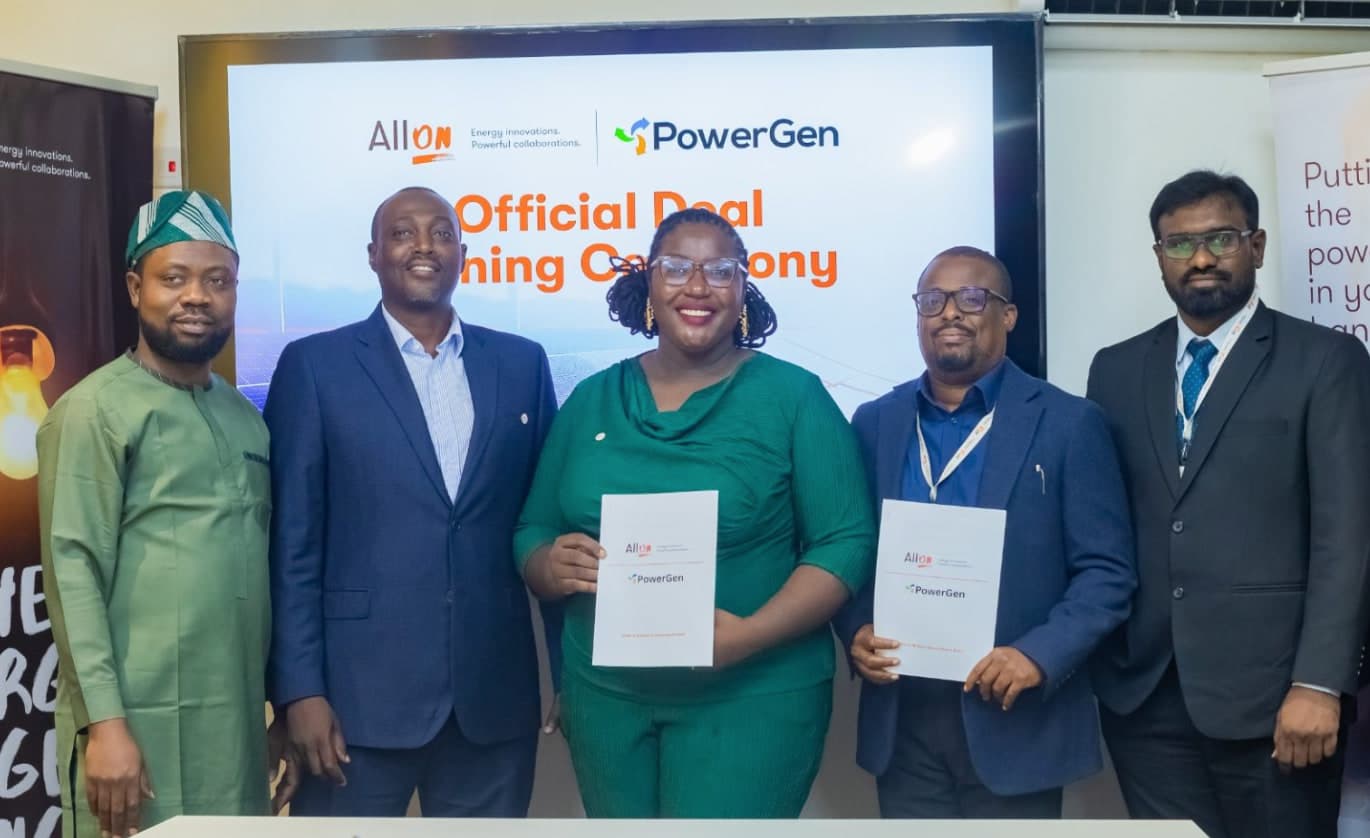
PowerGen Renewable Energy Nigeria is getting $5 million from All On to expand its solar mini-grid operations across Nigeria. The funding will be used for both standalone and interconnected mini-grids serving households, businesses and industrial customers.
PowerGen
PowerGen Renewable Energy Nigeria has secured $5 million from All On to expand its solar mini-grid operations in Nigeria. The funding will support isolated and interconnected mini-grids serving households, commercial customers and industrial users in areas where electricity from the national grid is unreliable. For Nigerian SMEs, the significance is fairly practical. Electricity is one of those costs that can be difficult to avoid, even when the business itself is trying to keep spending under control.
AI-generated summary. It can miss nuance — read the full story above for the complete picture.
PowerGen Renewable Energy Nigeria has secured $5 million from All On to expand its solar mini-grid operations in Nigeria. The funding will support isolated and interconnected mini grids serving households, commercial customers and industrial users in areas where electricity from the national grid is unreliable.
For Nigerian SMEs, the significance is fairly practical. Electricity is one of those costs that can be difficult to avoid, even when the business itself is trying to keep spending under control. A salon needs power for its equipment. A restaurant needs refrigeration. A welding business needs electricity for its tools. A small manufacturer needs to keep machinery running. When the grid cannot provide consistent power, businesses have to find another source. For many, that means a generator.
The generator bill does not end with fuel
“For SMEs, the real measure will be whether businesses can get reliable electricity, how much they pay for it and how much they still need to spend on generators.”
Running a generator is not simply a matter of filling the tank. There is fuel to buy, oil and filters to replace, servicing to pay for and repairs when something breaks. A generator also has to be replaced eventually. For a small business operating on narrow margins, these costs can become difficult to manage.
PowerGen's mini-grids are intended to provide an alternative in communities where grid electricity is not reliable enough for businesses to depend on. Instead of each business producing its own electricity, customers connected to the mini grid receive power generated from a shared local system. That could reduce the amount of time some businesses need to run generators, although the actual saving will depend on the electricity tariff, the amount of power available and how much electricity each business uses.
What the $5m will support
All On says the investment could help PowerGen provide up to 6,000 new electricity connections and reach around 41,000 people. The projects are expected to add as much as 9MW of generation capacity and support approximately 470 jobs. The company already has experience with mini grids in Nigeria. Its Toto Community Mini Grid Project in Nasarawa State is described by All On as Nigeria's first interconnected hybrid solar mini-grid. The new investment is expected to help PowerGen expand its network of projects serving different types of customers.
Where SMEs could feel the difference
The impact will not be the same for every small business. A retailer mainly needs electricity for lighting, refrigeration, charging and other basic operations. A workshop or small factory can have a much higher and more consistent electricity demand. For businesses that rely heavily on equipment, more predictable electricity could make it easier to plan working hours and production. A small food business, for example, cannot afford to have freezers and refrigerators sitting without power for long periods. A business producing furniture or metal products may lose working time when machines cannot operate.
There is also the issue of equipment. Frequent changes in electricity supply can create problems for some electrical and electronic equipment. Businesses therefore have to spend money not only on electricity but also on ways of protecting equipment from unstable supply. A more consistent source could reduce some of those headaches. But it would be wrong to assume that every SME connected to a mini-grid will immediately see a major reduction in costs.
The price still matters
For a mini-grid to work for an SME, reliability is only one part of the equation. The business owner will still look at the monthly electricity bill. If the cost of electricity is too high, the business may continue using a generator for some activities or look for another source of power. That makes the commercial side of the rollout just as important as the infrastructure itself. PowerGen will have to build systems that can provide enough electricity for the businesses in each community while keeping the service affordable enough for customers to use.
More than just keeping the lights on
The potential benefit for SMEs is not limited to avoiding darkness. Reliable electricity can affect how long a business can operate, what equipment it can use and whether it can take on work that requires more power. A small manufacturer that can depend on electricity during normal working hours may have less reason to turn away orders because equipment cannot run. A cold storage business can operate its refrigeration equipment more consistently. A restaurant or food retailer can reduce the risk of losing stock because refrigeration was interrupted. These are relatively small changes individually, but they matter to businesses that operate on tight margins.
PowerGen is part of a wider funding round
The All On investment is part of a wider capital raise by PowerGen's parent company, WindGen Power USA. Other investors include ElectriFI, Impact Fund Denmark, the Sustainable Energy Fund for Africa and InfraCo. The funding gives PowerGen more capital to build and deploy renewable energy infrastructure in Nigeria. For SMEs, however, the real measure will come later.
It will be seen in whether businesses can get reliable electricity, how much they pay for it and how much they still need to spend on generators. If the new mini grids can reduce interruptions without pushing electricity costs beyond what small businesses can afford, they could take some pressure off SMEs that have spent years working around an unreliable power supply. That is where the $5 million investment could have its most noticeable effect not in the funding announcement itself, but in how businesses operate once the new systems are running.