
Petro giant Sasol is yet to quantify impact due to Transnet's industrial action
South African petrochemical company, Sasol, is yet to determine the costs or the impact of the recent strike by Transnet workers. Sasol reacted to this question just after Transnet workers affiliated to United National Transport Union (UNTU) and the South African Transport and Allied Workers Union (Satawu), returned to work this week, explaining it is
Petro giant Sasol is yet to quantify impact due to Transnet's industrial action
South African petrochemical company, Sasol, is yet to determine the costs or the impact of the recent strike by Transnet workers.
Sasol reacted to this question just after Transnet workers affiliated to United National Transport Union (UNTU) and the South African Transport and Allied Workers Union (Satawu), returned to work this week, explaining it is not yet able to quantify the impact on its South African value chains.
The industrial action at Transnet resulted in a railway standstill from October 6 to 17 and the extent of backlogs remains uncertain and which also affected operations at Sasol.
Sasol received a force majeure notice from Transnet, which impacted the movement of certain cargo such as feedstocks and products between Sasol’s inland operations and the ports of Durban and Richards Bay.
In turn, the petrochemical giant Sasol had to declare force majeure on the local supply and export of certain chemical products, with production rates at selected plants in Secunda and Sasolburg having been impacted.
Following negotiations between Transnet and its majority trade union, UNTU on October 17, port and rail activities have restarted, with particular priority having been given to the discharge of container ships in the harbours.
Subsequent to that, Transnet confirmed on Wednesday that worker activity was at 80% as operations started ramping up, with UNTU members returning to work. Employees who are members of Satawu, however, remained on strike until Thursday.
“Transnet announced late on October 19 that it had finally been able to secure a wage agreement with Satawu as well and that workers were due to resume their duties from October 20,” reports Engineering News.
“Meanwhile, Sasol has also advised in a production update for the three months ended September 30, that a fire had occurred at the new Ziegler alcohol unit, at the group’s Lake Charles Chemicals Complex, in the US. The fire had been contained quickly, with no injuries reported.
“Sasol has launched an investigation to determine the cause of the fire, the extent of the damage, and the timeline of repair at the complex.”
Checking out a previous report on Sasol, BusinessTech Africa posted that the company announced a partnership with ArcelorMittal South Africa to explore carbon capture technology.
BusinessTech Africa has gathered that Sasol and steelmaker ArcelorMittal South Africa will also explore steel production using green hydrogen – Sasol announced on Tuesday.
Green hydrogen, produced from splitting water into hydrogen and oxygen using renewable energy sources such as solar and wind, is considered a cleaner energy source for the future, but the technology is still in its infancy and relatively expensive.
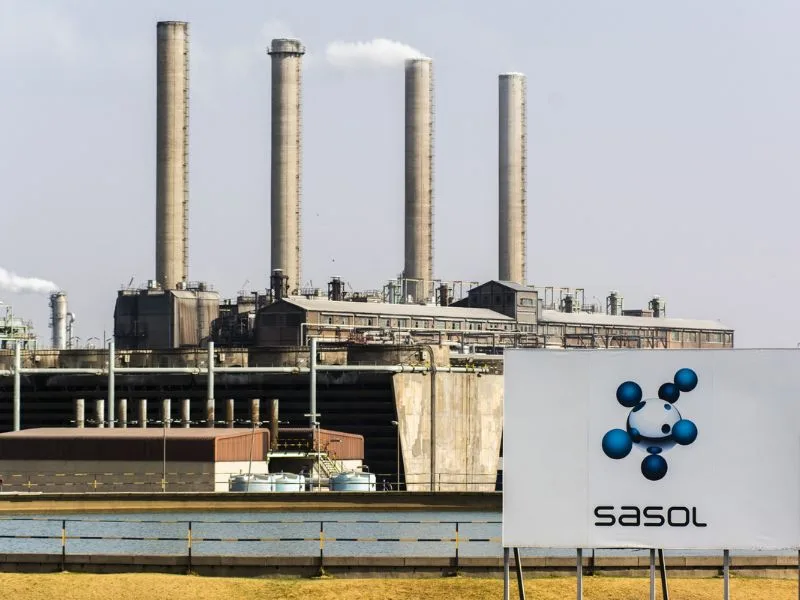
Main Image: SASOL PLant/SASOL