'Permanent blackouts are Ramaphosa's legacy'
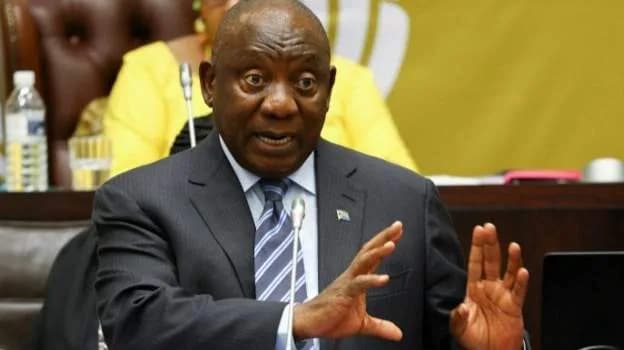
The debate over President Cyril Ramaphosa's State of the Nation Address (Sona) at Cape Town City Hall on Tuesday focused on South Africa's energy situation. MPs from both Houses took part in the discussion, with ANC members defending Ramaphosa's pledges as opposition parties ripped into his address. Last Thursday, Ramaphosa proclaimed a state of disaster
'Permanent blackouts are Ramaphosa's legacy'
The debate over President Cyril Ramaphosa’s State of the Nation Address (Sona) at Cape Town City Hall on Tuesday focused on South Africa’s energy situation.
MPs from both Houses took part in the discussion, with ANC members defending Ramaphosa’s pledges as opposition parties ripped into his address.
Last Thursday, Ramaphosa proclaimed a state of disaster in response to the energy issue and announced his intention to appoint minister of electricity.
Opening the debate, ANC chief whip Pemmy Majodina stated that the ANC recognised that the national government alone could not handle the country’s numerous issues and concerns.
Majodina said that opposition parties were blowing hot air over the proclamation of a state of calamity.
“Critics of this miss the most important element of intervention: the strong co-ordination and decisive actions to deal with the crisis of energy,” she said.
“The president and the government are heeding calls made by the citizens of South Africa that this government must end load shedding, and that this government must stabilise energy throughout by intervening.”
She stated that the comprehensive plan to address power difficulties should be adopted immediately, and that the incoming minister of electricity should move quickly on the topic.
According to DA leader John Steenhuisen, Ramaphosa presided over five terrible years during which continuous power shortages became a constant fixture of life.
“Instead of deregulating and unleashing private sector electricity generation, he centralised even more power in his super-presidency.
“Instead of deregulating and nleashing private sector electricity generation, he centralised even more power in his super-presidency.
“Instead of privatising failed stateowned enterprises, he created a massive new SOE to provide fresh looting opportunities to cadres,” he said.
According to Steenhuisen, Ramaphosa failed to remove Mantashe, and Gordhan instead added another portfolio to his already-bloated cabinet.
“By once again expanding rather than shrinking the role of the State, the president has all but guaranteed that load shedding and all the other terrible crises we face will only get worse,” he said.
Julius Malema, leader of the EFF, laughed at Ramaphosa’s proposal of a Ministry of Electricity, saying they wanted to see ministers of trains, lights, Denel, potholes, and GBV. Malema said Ramaphosa defied the EFF’s guidance.
He said Ramaphosa constructed the ministry in his kitchen cupboard, rather than from ANC conference decisions.
Malema was perplexed as to why Minister Pravin Gordhan was not removed from the cabinet.
“I don’t (know) why you are scared of Pravin Gordhan. I don’t know whether he has a list of impimpis or sell-outs from apartheid, the way you are scared of him,” Malema said.
Gwede Mantashe, Minister of Mineral Resources, said Ramaphosa had recognised load shedding as an issue, but said it was manageable.
He explained that the strategy was to convey a sense of urgency and a determination to fix the energy situation.
“We do not have 24 months to resolve load shedding. That is how serious the president takes this crisis,” Mantashe said.
He slammed opposition parties, saying they never intended to be involved in crisis resolution, but that opposition was about rejecting whatever put on the table by the ANC and its leadership. “Parties should contribute to finding solutions to problems and crises.”
Ramaphosa talked of South Africa being defined by optimism and resilience in a speech made on his behalf by IFP president emeritus Prince Mangosuthu Buthelezi, but anyone on the street would argue the definition should be load shedding, unemployment, and crime.
He expressed concern after hearing Ramaphosa claim that he had noticed a lack of technical and management abilities throughout government.
“We have been warning for years that cadre deployment, at the cost of skills employment, would have its effect.”
Mantashe’s words that the soon-to-be appointed minister of energy would be a “project manager,” according to Freedom Front Plus leader Petrus Groenewald, meant something.
”The minister does not see the new minister as an equal but only as a project manager,” Groenewald said.
He also stated that BEE and black affirmative action were contributing factors to Eskom’s difficulties.
He stated that Eskom’s employment equality strategy was to eliminate white technicians within the next three years.
Western Cape Premier Alan Winde said the declaration of state of disaster was “about lavish spending, no detail and contradictory information on sorting an absolutely disastrous problem every citizen is facing.”
He bemoaned the fact that no regulations had been issued out five days after Sona.
“If we don’t get the regulation right, the whole thing will fail. This province will play its part,” Winde said.