Northern France Transformed: The Rise of the Electric Valley
Battery manufacturers are transforming the northern French region of Hauts de France into a thriving centre for 21st-century manufacturing and a key European hub for new energy technology. This region, which was previously burdened by the collapse of the local steel and mining industries, is now attracting global battery players. Taiwanese battery maker Prologium, which
Northern France Transformed: The Rise of the Electric Valley
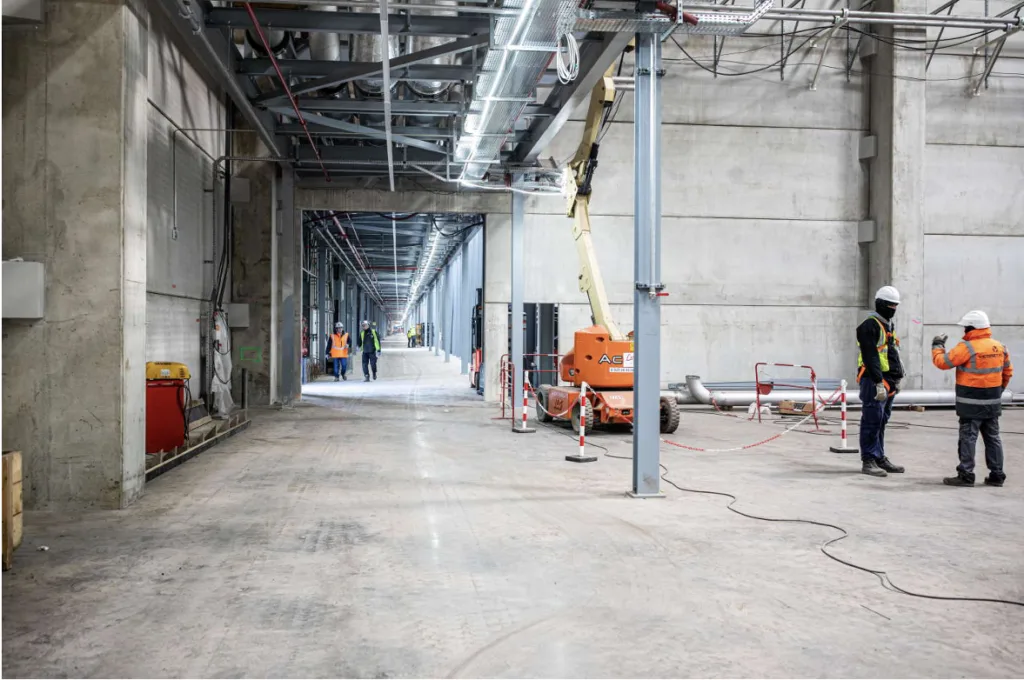
Battery manufacturers are transforming the northern French region of Hauts de France into a thriving centre for 21st-century manufacturing and a key European hub for new energy technology. This region, which was previously burdened by the collapse of the local steel and mining industries, is now attracting global battery players.
Taiwanese battery maker Prologium, which recently announced plans to establish a plant in the port of Dunkirk with a staggering investment of 5.2 billion euros ($5.7 billion), is the most recent addition to the region’s growing battery ecosystem. Prologium joins other prominent battery manufacturers in the area, capitalising on the region’s advantageous location, which includes proximity to Belgium as well as excellent road and port connectivity.
ACC, a collaboration between Stellantis, TotalEnergies, and Mercedes, is one of the companies establishing battery manufacturing facilities in Hauts de France. It has chosen Billy-Berclau as the location for its plant. Envision, a Chinese-Japanese conglomerate, has chosen Douai, which is about 30 kilometres south of the regional hub Lille. Furthermore, Verkor, based in France, has chosen Dunkirk, a deep-sea port famous for its role in the chaotic Allied retreat during World War II, as its manufacturing site.
The emergence of this developing battery ecosystem in northern France has piqued the interest of French President Emmanuel Macron, who visited Dunkirk to highlight his plans to revitalise France’s industrial sector. Since taking office in 2017, Macron, a pro-business advocate, has implemented measures such as tax cuts, labour law reforms, and investment incentives, with the goal of reducing unemployment and attracting businesses back to France.
Macron also announced a new 1.5 billion euro investment from French nuclear group Orano and Chinese firm XTC during his visit to Dunkirk. This investment aims to establish a facility for producing cathode components used in lithium batteries. The president emphasised the importance of reopening factories and re-industrializing the region, which has seen significant job losses in countries such as China in recent decades.
According to Macron’s office, France has lost an average of 50,000 industrial jobs per year over the last 40 years. Despite multiple plant closures, the Hauts de France region has managed to sustain its automobile manufacturing industry, becoming France’s largest source of vehicles today. This region is home to seven car manufacturing plants, including Toyota, Renault, and Stellantis, as well as a large network of component suppliers. Because of the presence of this automobile cluster, the region has become very appealing to battery manufacturers, who recognise the strategic advantage of being close to the automotive industry.
The Hauts de France region’s head, Xavier Bertrand, emphasised the importance of having a diverse sector in the area, saying, “It’s strategic to have all of the sectors.” We’re in a decade of transformation,” as quoted by Le Monde newspaper.
These investments in battery manufacturing could benefit ambitious politicians in the region. This economic growth could benefit Xavier Bertrand, a conservative politician who ran as a Republican Party presidential candidate last year. Similarly, President Macron, who is from the Hauts de France region, has a vested interest in revitalising the region and positioning himself as a leader committed to reviving the French industry.
The region has seen a significant decline in unemployment rates in recent years, with a rate of 8.7% in the fourth quarter of 2022, which is slightly higher than the national average of 7%. According to 2018 data from the French statistical agency INSEE, Hauts de France has historically had the highest poverty rate in mainland France, with 18% of the population classified as living below the poverty line.