
Mini China responds to racism accusations at Shanghai Auto Show
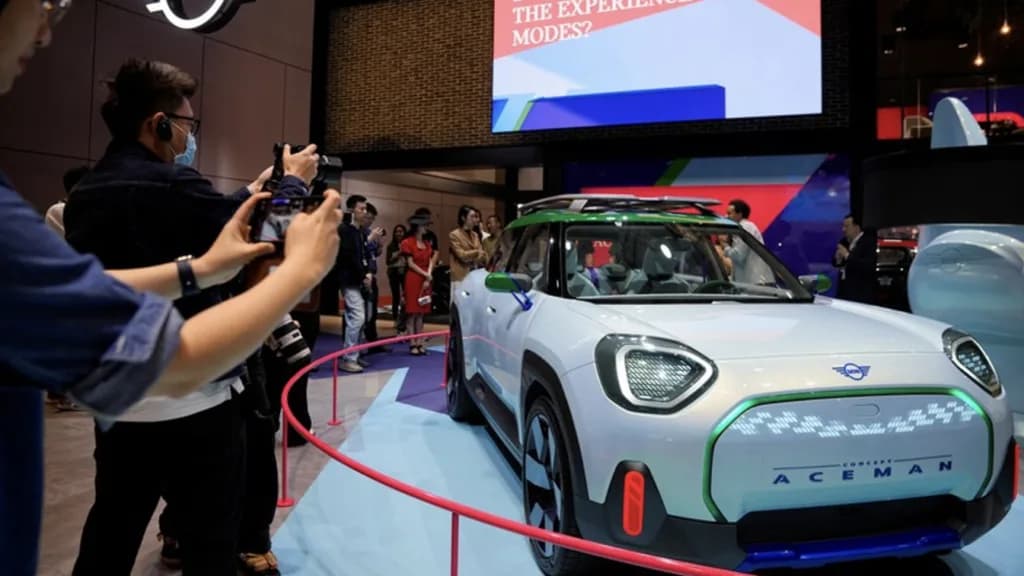
Mini, based in the United Kingdom, has become embroiled in a controversy in China after a video from the Shanghai Auto Show went viral on Chinese social media platforms. The video appeared to show Mini employees serving ice cream to foreign visitors but refusing to serve it to Chinese visitors. The incident has sparked outrage
Mini China responds to racism accusations at Shanghai Auto Show

Mini, based in the United Kingdom, has become embroiled in a controversy in China after a video from the Shanghai Auto Show went viral on Chinese social media platforms. The video appeared to show Mini employees serving ice cream to foreign visitors but refusing to serve it to Chinese visitors. The incident has sparked outrage on Chinese social media, with many accusing the car manufacturer of racism. Mini China, which is owned by BMW of Germany, has since responded to the allegations, stating that the workers were distributing the treats to company employees and that it was “deeply sorry for the negative mood the incident brought on everyone.”
Mini China said in a statement posted on the Chinese social media platform Weibo that it distributed 600 ice creams during the show on April 18 and 19. “In addition to distributing 300 portions of ice cream per day, we reserved a very small portion for our hardworking colleagues on-site,” Mini China explained. “The four to five foreigners you see in the video are colleagues wearing employee badges,” the statement continued. The company also stated that the incident was caused by lapses in management and training and that the video should be considered by employees.
Regardless of Mini China’s explanation, the incident has sparked widespread outrage on Chinese social media platforms. With over 93 million views, the topic “BMW Mini” quickly became one of the most popular searches on Weibo. Many users on the platform chastised the carmaker, with one user writing, “You should have specified that the initial purpose was to give “foreign” big and small friends sweetness,” which received over 165,000 likes. “I feel ashamed as a Mini owner,” another user said.
Some Chinese vloggers were even inspired to hand out ice cream in front of Mini’s auto show booth, with one vlogger telling Chinese media outlet Jimu News, “I was just angry, and I only gave it to Chinese people.” Other social media users, on the other hand, urged restraint, with one post saying, “Let’s treat this reasonably.” “No matter what kind of explanation [Mini] provides, there will always be people who disagree.” Hu Xijin, the former editor-in-chief of the state-owned newspaper Global Times, also urged people not to exaggerate the problem, saying, “Let the staff learn their lessons and let their future events return to normal as much as possible.” “Let’s avoid making other vendors nervous as a result of this.”
Other international companies have also been accused of racism in China, so this is not an isolated incident. Last week, Dior, a French luxury label, was accused of racism on Chinese social media for an advertisement depicting an Asian model pulling up the corner of her eye. The image, which was promoting Dior’s new makeup collection, was quickly removed. This was not Dior’s first brush with controversy in China, one of its most important markets. It was charged in 2022 with “culturally appropriating” a Chinese traditional design for one of its skirts. Earlier that year, a Chinese snack brand was also chastised for using a model with narrow eyes in its advertisements.
The Mini incident emphasises the importance of cultural sensitivity and awareness for international companies operating in China. In recent years, China has seen an increase in nationalist sentiment, and internet users have become increasingly vocal about how Chinese people are portrayed in advertisements and other media. Companies must be aware of these cultural sensitivities and take appropriate steps to ensure that their marketing and other activities are culturally appropriate. This includes hiring people who are familiar with Chinese culture and customs and training them to be culturally sensitive.