Manufacturing Momentum Fades as Absa PMI Drops to 50.8 in May 2026
South Africa’s manufacturing sector lost steam in May, with the Absa Purchasing Managers’ Index (PMI) declining by 1.8 points to 50.8, according to data released on 1 June 2026. While the headline index remained above the crucial 50-point expansionary threshold for a second consecutive month, the sharp deterioration in underlying activity signals that the brief
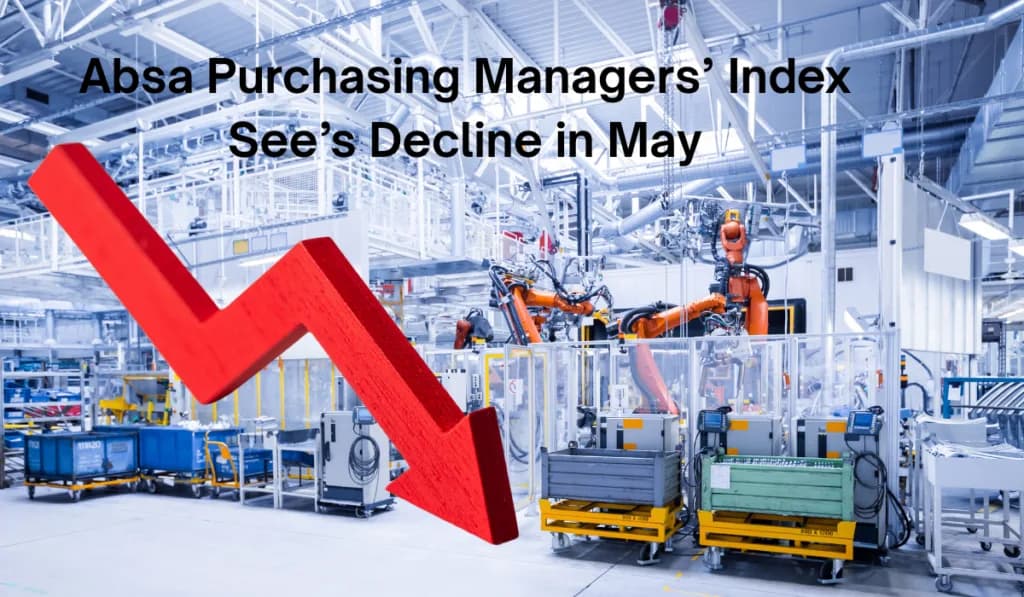
Manufacturing Momentum Fades as Absa PMI Drops to 50.8 in May 2026
South Africa’s manufacturing sector lost steam in May, with the Absa Purchasing Managers’ Index (PMI) declining by 1.8 points to 50.8, according to data released on 1 June 2026. While the headline index remained above the crucial 50-point expansionary threshold for a second consecutive month, the sharp deterioration in underlying activity signals that the brief recovery seen in April was short-lived.
The latest reading highlights the fragile nature of South Africa’s industrial recovery amid persistent cost pressures, weak domestic demand, and global uncertainties.
Key PMI Highlights for May 2026
The most concerning development from the May data, was a sharp 9.3-point drop in the business activity index to 43.5, pushing the sector back into contractionary territory. This suggests that the improvement in production seen at the start of the second quarter was largely driven by front-loaded demand in April and could not be sustained.
New sales orders also retreated significantly, falling 8.3 points to 44.6. Respondents noted that much of April’s demand surge was brought forward ahead of anticipated price increases, and this effect faded quickly in May. Export sales however showed some improvement but remained in negative territory.
Encouragingly, the employment index rose for the second consecutive month, climbing 4.6 points to 48.4 — its strongest level since mid-2025. This indicates that manufacturers are becoming slightly more optimistic about future labour needs, even as current activity softens.
Cost pressures remained elevated, with the purchasing price index easing only marginally to 84.8. While diesel price relief may provide some near-term breathing room, manufacturers continue to face rising costs across logistics, services, and raw materials.
On a more positive note, theAbsa business confidence index (six-month outlook) improved from 47.4 to 52.9, moving back into expansionary territory. This suggests purchasing managers expect conditions to improve by year-end.
Broader Economic Context
The May PMI comes at a challenging time for the South African economy. The South African Reserve Bank recently increased the repo rate by 25 basis points, citing rising inflationary pressures. April’s headline inflation rose to 4.0% from 3.1% in March, largely driven by fuel and food costs.
Manufacturing, which contributes around 13% to South Africa’s GDP, remains a critical sector for employment and export earnings. However, the sector continues to face structural headwinds, including unreliable electricity supply (despite recent improvements), logistical bottlenecks at ports, and subdued domestic demand due to high interest rates and cost-of-living pressures on consumers.
“The moderation in May after a promising April reading shows just how fragile the recovery remains,” said one economist. “While manufacturers are holding onto some optimism for the second half of the year, sustained demand weakness and elevated input costs could weigh on output in the coming months.”
Outlook and Implications
The Absa PMI results suggest that while manufacturing conditions are better than the dire first quarter of 2026, the momentum is not yet strong enough to drive a robust industrial recovery. The improvement in employment expectations and business confidence offers some hope, but this will need to be supported by stronger demand and easing cost pressures.
For South Africa’s broader economy, a sustained manufacturing recovery is vital. The sector plays a key role in job creation, especially for semi-skilled workers, and contributes significantly to export revenues. With GDP growth forecasts for 2026 remaining modest (around 1.2%–1.6%), any further weakness in manufacturing could put additional pressure on an already fragile economic recovery.
The coming months will be critical. Stabilisation in demand, combined with successful implementation of energy and logistics reforms, could help the sector build on the modest gains made so far in 2026.