
Last Emperor of China's Watch Sells for Record $6.2 Million at Auction
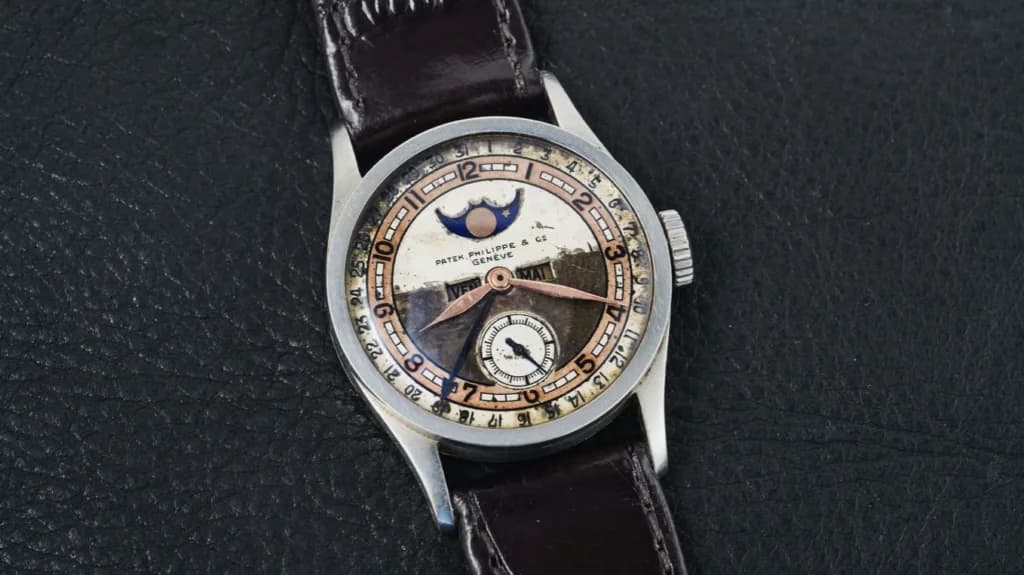
The Patek Philippe Ref 96 Quantieme Lune, once owned by the last emperor of China's Qing Dynasty, Aisin-Gioro Puyi, has fetched a staggering 49 million Hong Kong dollars ($6.2 million) at auction, setting a new record. Phillips, a London-based auction house, revealed that the winning bid for this rare timepiece was placed over the phone
Last Emperor of China's Watch Sells for Record $6.2 Million at Auction
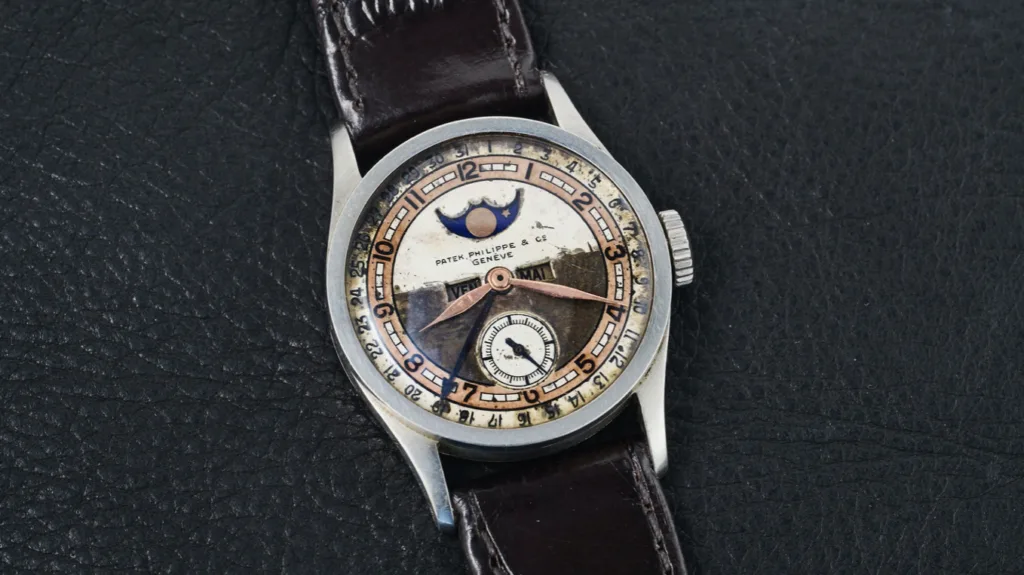
The Patek Philippe Ref 96 Quantieme Lune, once owned by the last emperor of China’s Qing Dynasty, Aisin-Gioro Puyi, has fetched a staggering 49 million Hong Kong dollars ($6.2 million) at auction, setting a new record.
Phillips, a London-based auction house, revealed that the winning bid for this rare timepiece was placed over the phone by an Asian collector in Hong Kong. The Patek Philippe Reference 96 Quantieme Lune has a distinctive crown-like moon phase and is historically significant because it was once owned by China’s last emperor, Aisin-Gioro Puyi. Puyi gave the watch to his Russian interpreter while imprisoned by the Soviet Union. It is one of only a few known Patek Philippe Reference 96 Quantieme Lune models. The watch’s hammer price exceeded its pre-sale estimate of $3 million, reaching 40 million Hong Kong dollars ($5.1 million). Including the buyer’s premium, the total price paid for the timepiece was approximately $6.2 million.
According to Thomas Perazzi, head of watches at Phillips Asia, this sale represented the highest price ever achieved for a wristwatch that once belonged to an emperor. Notably, other emperors’ watches have been auctioned off, including a Patek Philippe timepiece owned by Ethiopia’s last emperor, Haile Selassie, which sold for $2.9 million in 2017. A Rolex watch owned by Vietnam’s last emperor, Bao Dai, fetched $5 million at auction the same year.
Aisin-Gioro Puyi, the final emperor of China’s Qing Dynasty, was born in 1906. He ascended to the throne at the age of two, but was forced to abdicate in 1912. He was installed as the puppet leader of Japanese-occupied Manchuria, an area described as a “puppet state” established by Japan following its invasion of northeast China, more than two decades after his abdication. Puyi was apprehended by the Soviet Red Army at China’s Shenyang Airport in 1945, following Japan’s defeat in World War II. He was later imprisoned as a war prisoner in a detention camp in Khabarovsk, Russia, for five years. Puyi spent nearly a decade in Chinese jails after his release before gaining his freedom. He worked as a gardener in what is now China’s National Botanical Garden in Beijing after being released from prison. Puyi died in 1967, at the age of 61.
Phillips, the UK auction house, has documentation proving Puyi brought the watch to the prison camp. Over the course of three years, they conducted extensive research in collaboration with watch specialists, historians, journalists, and scientists to authenticate the watch’s history and provenance.
In 2001, journalist Russell Working interviewed Puyi’s interpreter, Georgy Permyakov, and learned that Puyi gave Permyakov the watch on his last day in the Soviet Union, just before being extradited back to China. Working explained that such gestures were typical of Puyi, indicating his deep appreciation for those close to him. The elderly interpreter, unaware of the timepiece’s value, had stored it in a drawer until its recent discovery by the auction house’s research team.
According to Perazzi, the Patek Philippe Ref 96 was considered the finest watch of its time. This model is distinguished by its simplicity when compared to the opulent luxury pieces commonly found at auction houses. Patek Philippe produced the first “complication wristwatch” in large quantities. There are only three known examples of this watch in the world today.
According to Puyi’s nephew, Aisin-Gioro Yuyuan, the watch held personal significance for the deposed emperor. When Puyi left the prison camp, he entrusted the timepiece to his Russian interpreter, Permyakov, for safekeeping. Permyakov’s family sold the watch, along with other items belonging to Puyi, to an anonymous European collector several years ago.
A red paper fan adorned with a poem written by Puyi and dedicated to his comrade Permyakov was also auctioned off. The fan sold for more than $77,800, six times its pre-sale estimate.
While Puyi’s watch is historically significant, it falls short of being the most expensive timepiece ever sold at auction. This distinction is held by a Patek Philippe “Grandmaster Chime,” which sold for $31 million in 2019. The Grandmaster Chime is regarded as the most complex watch ever created by a luxury watchmaker, boasting 20 complications.