How much it costs to sell your own items on Takealot – and what to look out for in hidden fees
Takealot, South Africa's largest online retailer, began as a typical retail business, offering things it sourced directly and privately to the general public. It modified its business strategy in 2015 to stay up with global online retailers, allowing third-party merchants to offer items through its marketplace solution platform. To the casual consumer, it made little
How much it costs to sell your own items on Takealot – and what to look out for in hidden fees
Takealot, South Africa’s largest online retailer, began as a typical retail business, offering things it sourced directly and privately to the general public.
It modified its business strategy in 2015 to stay up with global online retailers, allowing third-party merchants to offer items through its marketplace solution platform.
To the casual consumer, it made little difference, and many may still be unaware that the majority of their items aren’t from Takaelot, but from a variety of tiny firms.
For customers, it was mainly a good thing; it meant that the choice of products offered on Takealot had expanded, as well as some pricing rivalry on popular items.
That wasn’t, however, a novel concept. In the year 2000, Amazon established their own offering, Amazon Marketplace. Although founder Jeff Bezos was chastised at the time, when he stepped down as CEO 21 years later, Amazon Marketplace was producing a fortune for the firm.
Marketplaces as cash cows for online stores
According to reports at the time, Amazon’s third-party marketplace may have produced $24 billion in operational profits, the majority of which came from seller fees and fulfilment expenses.
As a result, it was predictable that Takealot followed the worldwide online marketplace trend – and has since reaped enormous benefits.
Despite a loss of R223 million in the six months to end-September last year, Takealot stated on the release of these figures that third-party marketplace sales continued to surpass first-party sales.
These marketplace sales accounted for 52% of Takealot’s total gross merchandise value in 2022, and they are likely to expand further.
Not without reservations
These gains are generated directly by small company owners who earn marginal profits on often hazardous ventures. Takealot charges a monthly platform fee in addition to success fees when things sell, storage costs if they do not sell quickly enough, and penalties if they run out of stock.
Some sellers may pay in on their things if they do not exercise prudence owing to connected costs.
Most global internet marketplaces promote themselves as mutually beneficial venues for small firms, although they have been chastised. Others have accused Amazon of exploiting third-party marketplace merchants in order to boost its revenues.
Similarly, Takealot’s Marketplace has been criticised in closed Facebook groups, on YouTube, HelloPeter, and, most importantly, in a 2022 Competition Commission probe.
Platform for volunteers with (mostly) clear costs
Yet, membership on the network is entirely optional, and Takealot’s seller platform website plainly reveals the majority of its costs. Certain expenses, including penalties, are not listed on their seller website, but rather in a 4,000-word service level agreement obtained by Business Insider SA.
The seller trip is intended to be beneficial to both parties. Takealot stands to gain more if marketplace items sell. It does, however, charge a number of fees at various times that will deplete sellers’ bank accounts even if they do not sell.
A flat-rate subscription charge is the first expenditure vendors face on Takealot Marketplace. This monthly subscription costs R460 regardless of whether you make money or not.
Many of the subsequent fees are based on a percentage, which is where things become tricky.
Takealot fees Marketplace vendors are charged a percentage-based fee based on the product category, which varies depending on the goods. If your goods sells, you will be charged a minimum of 4%. Maximum fees might reach 18%.
They also scale fees according to the package size – and how long it sits in Takealot’s warehouse.
This makes determining an exact cost for your items difficult – and puts pressure on you to only sell things that you expect to move quickly through their system.
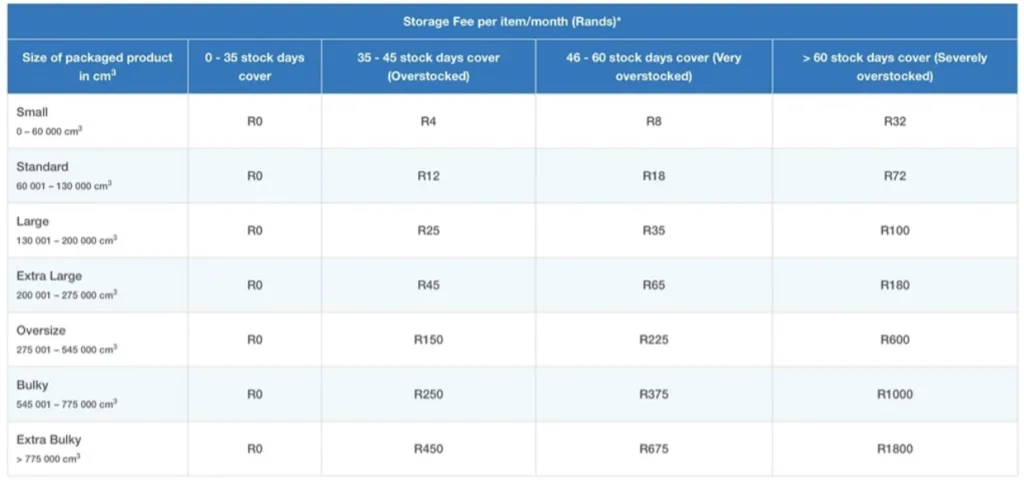
These are some examples of success and fulfilment fees for popular goods on Takealot Marketplace:
- An average size paperback book that you’re selling for R300
You’ll likely pay Takealot R48.30 in success fees and R41.40 in fulfilment fees – a total of R89.70.
This leaves you with R210.30 to cover the book’s wholesale cost and other expenses, and make a profit.
- A 6-litre air fryer that you’re selling for R1,500
You’ll likely pay Takealot R172.50 in success fees and R52.90 in fulfilment fees – a total of R225.40.
This leaves you with R1,327.50 to cover the air fryer’s wholesale cost and other expenses, and make a profit.
- An off-brand iPhone charger and cable for R200
You’ll likely pay Takealot R32.20 in success fees and R34.50 in fulfilment fees – a total of R66.70.
This leaves you with R133.30 to cover the wholesale cost of the product and other expenses, and make a profit.
- A budget three-piece luggage set for R1,500
Takealot charges sellers a high success fee for luggage. For a three-piece set costing just R1,500, you’ll likely pay around R258.75 in success fees, and R57.50 in fulfilment fees.
This leaves you with R1,183.75 to cover the wholesale cost of the product and other expenses, and make a profit.
Only a portion of the tale is concerned with success and fulfilment fees.
The aforementioned amounts are simply estimates based on Takealot’s online charge calculator. There are also a number of other Takealot costs to consider.
You may be charged storage costs in addition to the R460 monthly flat membership price.
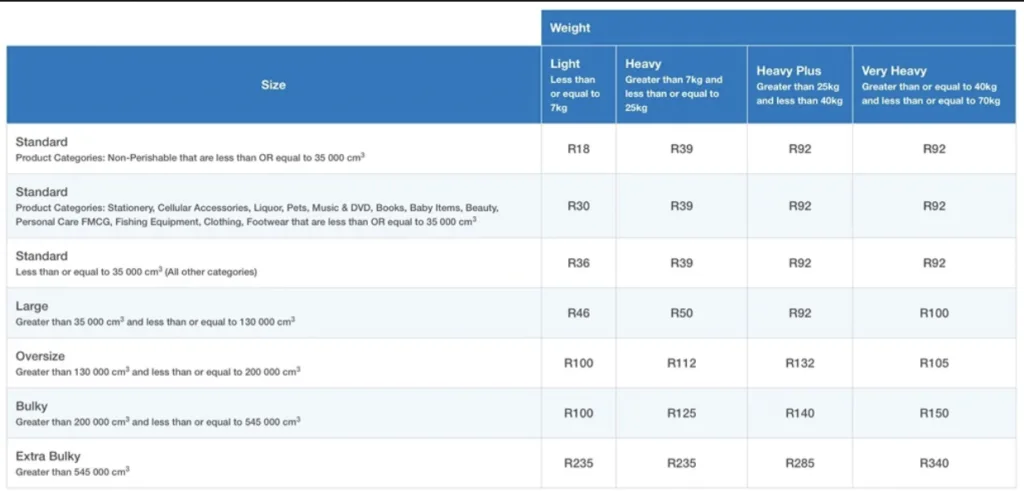
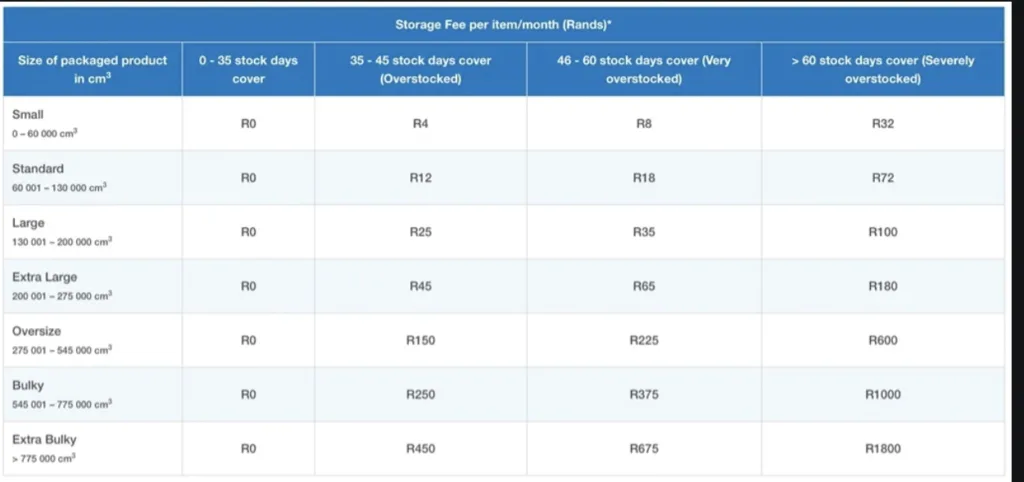
Takealot does not charge sellers for the first 35 days of stock, so products that sell quickly incur no storage fees. If your goods does not sell within the first month, you might be charged R4.60 to R2,070 in storage costs, including VAT, for each following month, depending on the size of your product and how long it stays in the Takealot warehouse.
Takealot also charges sellers penalties for some infractions, such as a R75 cost for products that are out of stock or arrive late.
You’ll also have to pay for shipping your merchandise to the Takealot distribution centres, which are normally located in both Johannesburg and Cape Town.
As a result, many vendors bundle things and send them in bulk to distribution centres to avoid paying for individual shipping charges.
Online courses and social media
Considering the risks, a growing community of local social media users and YouTubers has built platforms to extol the joys of making money on Takealot Marketplace – and then, paradoxically, try to sell lessons on how to succeed.
Takealot Marketplace self-help courses have appeared all over the internet, including the site itself.
Despite the expenses and complications of selling on Takealot Marketplace, the company’s dominance in the local market makes it an appealing outlet for many small firms who can properly manage the logistics and fees.