Green hydrogen can turn South Africa into an energy powerhouse: banking CEO
South Africa has traditionally been a net importer of energy, but a relatively new clean technology could be pivotal in turning South Africa to an exporter, and help to dramatically cut the country’s carbon emissions. This is view of RMB chief executive James Formby, who says that although green hydrogen is yet to be widely
Green hydrogen can turn South Africa into an energy powerhouse: banking CEO
South Africa has traditionally been a net importer of energy, but a relatively new clean technology could be pivotal in turning South Africa to an exporter, and help to dramatically cut the country’s carbon emissions.
This is view of RMB chief executive James Formby, who says that although green hydrogen is yet to be widely adopted around the world, it is one of several potential low-carbon fuels that could take the place of today’s fossil fuels.
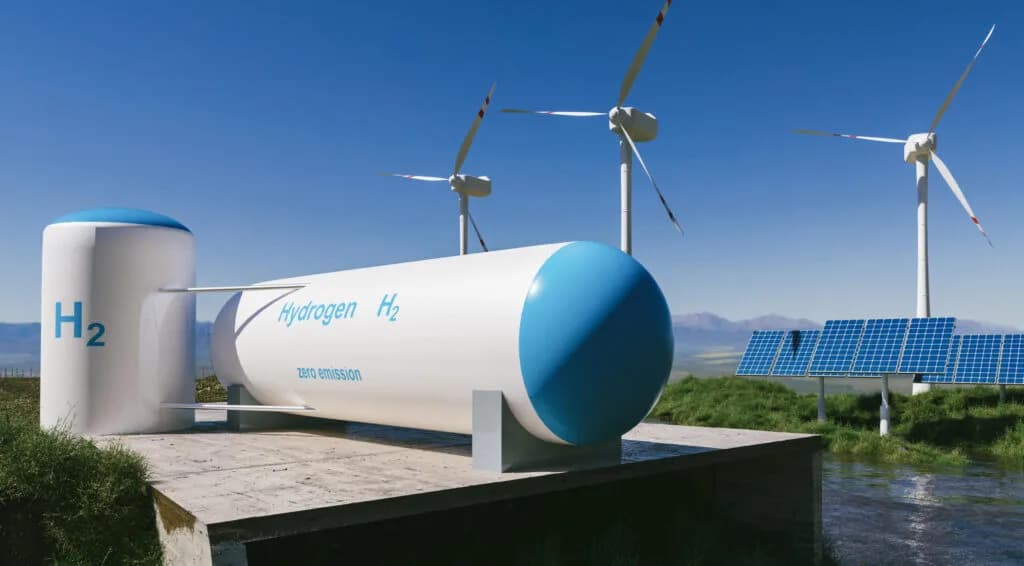
Green hydrogen is produced by splitting water molecules using electricity. When the electricity is generated by renewable sources like wind and solar, emissions from the process are reduced to zero. Green hydrogen does not come from any type of fossil fuel.
“South Africa is exceptionally well placed to stand to benefit economically, environmentally and socially from the rapid development of new hydrogen technology,” he said.
“We could become a key player – and indeed an exporter – in an emerging global hydrogen economy which has major applications in providing fuel for transport, electricity plants, fuel cell batteries as well as heating for industry, residential and commercial property.”
This was echoed by Daniel Zinman, head of Power and Infrastructure Sector Solutions at RMB, who said that South Africa has excellent renewable resources.
It also has one of the world’s largest – if not the largest – platinum group metals (PGM) reserves, and PGM catalysts are needed to make both hydrogen and fuel cells, he said.
Another advantage is that the existing natural gas pipelines across SA, albeit limited, could be repurposed for the transportation of hydrogen. This could significantly reduce the costs associated with green hydrogen development.
“It means renewable electricity could be produced at a significantly lower cost than in other parts of the world,” Zinman said.
He added that green hydrogen is likely to leapfrog hydrogen made with gas and coal as the most cost-effective form of the energy before the end of the decade, and by that time an industry could be developed at scale, both for local consumption and export.
Green hydrogen currently only accounts for approximately 4% of hydrogen production worldwide.
In addition, green hydrogen’s capacity to act as a storage system for excess renewable energy can help overcome the irregularities and current weaknesses in renewable energy supply and provide remote communities with permanent energy access.
“Encouragingly, the South African government, through its Hydrogen South Africa initiative, is currently working to develop hydrogen technology in order to bring tangible benefits to the local economy, reducing our energy deficit while ushering in a cleaner energy environment.
It has also been looking at potential export opportunities with countries like Japan and Germany.
“A hydrogen economy also offers significant potential for job creation and would help attract international investment into South Africa and Africa overall,” Formby said.
He added that with our resources and growing interest in hydrogen technology, South Africa could have a solid claim to be a major player in the new hydrogen economy – joining the likes of Australia, Saudi Arabia and Chile, which also have high renewable energy potential.
“Hydrogen’s versatile application makes it a leading solution to the carbon challenge of our times,” Formby said.
Main Image: Chemindigest