Good news! petrol price is expected to fall in January
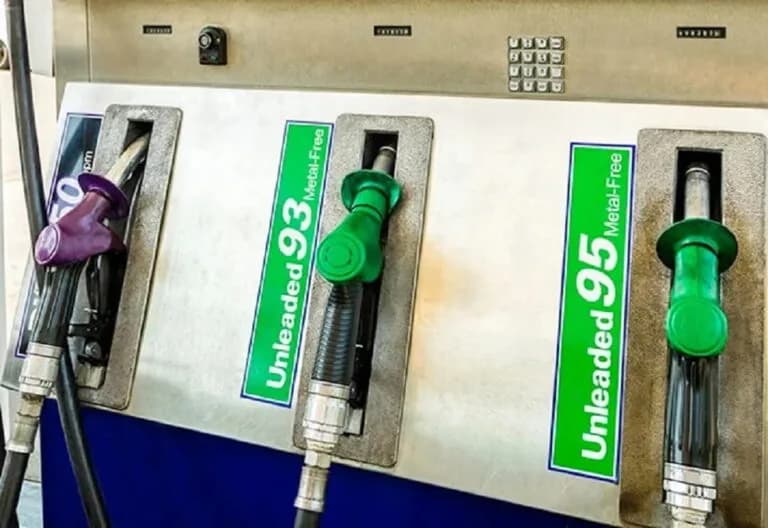
Weekly data from the Central Energy Fund (CEF) reveals that motorists in South Africa will be entering the new year with a substantially lower petrol price – and an even greater decrease on the cards for diesel. According to CEF statistics for 16 December 2022, motorists may expect an R1.93 per litre drop in petrol
Good news! petrol price is expected to fall in January
Weekly data from the Central Energy Fund (CEF) reveals that motorists in South Africa will be entering the new year with a substantially lower petrol price – and an even greater decrease on the cards for diesel.
According to CEF statistics for 16 December 2022, motorists may expect an R1.93 per litre drop in petrol prices in January 2023, while diesel prices might drop by as much as R2.83 per litre.
Reduced pricing are being driven by significantly lower foreign product prices as well as rand strength compared to the US dollar.
This is what you may expect at the end of Week 2 in December.
- Petrol 93/95: decrease of R1.93 per litre
- Diesel 0.05%: decrease of R2.73 per litre
- Diesel 0.005%: decrease of R2.83 per litre
- Illuminating paraffin: decrease of R2.16 per litre
The main contributor to the equation is a decline in oil costs, which reduces international product prices by between R1.80 and R2.70 per litre in the local formula. The rand, which has rebounded from recent political unrest, is contributing to a decline of 12 to 15 cents per litre.
According to Bloomberg experts, oil markets had a turbulent start to the week as investors balanced the prognosis for global growth in the face of interest-rate rises against China’s commitment to stimulate consumption as Covid-Zero is phased out.
After dropping more than 4% in the final two days of last week, Brent crude wavered and traded near $80 per barrel. Trading volumes for both the global benchmark and West Texas Intermediate were lower than the 30-day average, according to the organisation.
In recent months, oil markets have been driven by two opposing narratives: the prospect of supply limits owing to sanctions on Russia and OPEC+ nations lowering output (favouring higher prices), and low demand from China with no supply difficulties due to Russian actions (favouring lower prices).
According to Bloomberg, despite anticipated increased Chinese demand, oil is still on track for a second monthly loss as fears about recessions in the United States and Europe grow, and central banks continue to tighten policies.
Furthermore, Russian flows have shown to be robust thus far, since a price restriction set by the Group of Seven and the European Union has not caused severe difficulties. Among large purchasers, India stated that it does not anticipate any issues.
“The prospect of further rate rises will hit economic growth in the New Year and, in doing so, curb demand for oil,” said Stephen Brennock, an analyst at brokerage PVM. “China’s recovery will not be a swift affair, with the situation likely to get worse before it gets better.”
Meanwhile, the rand’s tale is good for local pricing.
Despite the local unit’s recent struggles with rising political instability, president Cyril Ramaphosa’s excellent success at the ANC’s 55th elective conference, when he gained a second term as party president, has soothed market fears.
Following the statement on Monday (19 December), the rand regained almost 2%, returning to the R17.20 area.
While the rand is still far from the sub-R17 levels experienced before Ramaphosa’s position was called into doubt by the Phala Phala report, it is also far from the R18.30-plus levels witnessed in October and early November.
The rand will continue to support lower gas prices as long as the currency maintains stable or strengthens versus the dollar.
There will be two more weekly projections through the end of 2022, with the Department of Mineral Resources and Energy scheduled to make a statement on the formal modifications before they take effect on Wednesday, January 4, 2023.