Fuel shortage at Cape Town International Airport, a grave concern for flight operators
With reports that the Cape Town International Airport is experiencing fuel shortages, the Airlines Association of Southern Africa (AASA) has expressed concerns. Despite AASA taking note of the announcement, it said it remains gravely concerned with the imposition of jet fuel rations at Cape Town International Airport. Airports Company of South Africa headed to social
Fuel shortage at Cape Town International Airport, a grave concern for flight operators
With reports that the Cape Town International Airport is experiencing fuel shortages, the Airlines Association of Southern Africa (AASA) has expressed concerns.
Despite AASA taking note of the announcement, it said it remains gravely concerned with the imposition of jet fuel rations at Cape Town International Airport.
Airports Company of South Africa headed to social media to allay fears that planes will be grounded thus leaving passengers stranded in Cape Town.
With such measures due to fuel shortages, the restrictions are now likely to result in disruptions to airline schedules and possibly cancelled flights at a time when the industry and the economy can ill afford it.
“We appreciate the efforts being made by the Airports Company South Africa to manage fuel stocks at the Cape Town International airport. However, the escalation of jet fuel rations throws into sharp focus South Africa’s vulnerability because of its reliance on imported jet fuel,” AASA said on Wednesday.
https://twitter.com/Airports_ZA/status/1574678171240185857
“We call on the government and fuel suppliers to move with urgency and put in place a far more robust resilience plan to ensure sufficient stocks of aviation fuel are always available for our airlines.
“Although our local and regional short-haul airlines are able to tanker fuel (i.e. carry more than optimally required for a single flight) to maintain their schedules, in doing so they must incur additional costs as the extra fuel load increases the overall weight of each plane, in turn burning more fuel just to carry the extra contingency supply.
“This puts further cost pressures on airlines at a time when they are already struggling with a more than 100 percent rise in the price of jet fuel, higher finance charges and interest rates as well as increased labour and other costs.”
Despite the fuel shortage at South Africa’s second-largest airport, flights are arriving and departing as scheduled as per an IOL report.
This comes after the airport asked airlines on Monday to limit fuel intake in Cape Town but ACSA said on Twitter that it has a contingency plan to tackle the issue.
As local airlines also heavily rely on feed traffic to and from long-haul inter-continental carriers, those flight operators may be forced to resort to intermediate en-route refuelling stops, or fly to Johannesburg or Durban to fill up before starting their long north and east-bound return flights.
“In such instances, we urge the government to waive the additional en-route air navigation and airport fees airlines will incur in order to comply with the fuel rations at Cape Town and continue to provide the inter-continental connectivity that local airlines and the entire region’s economy depend on,” AASA added.
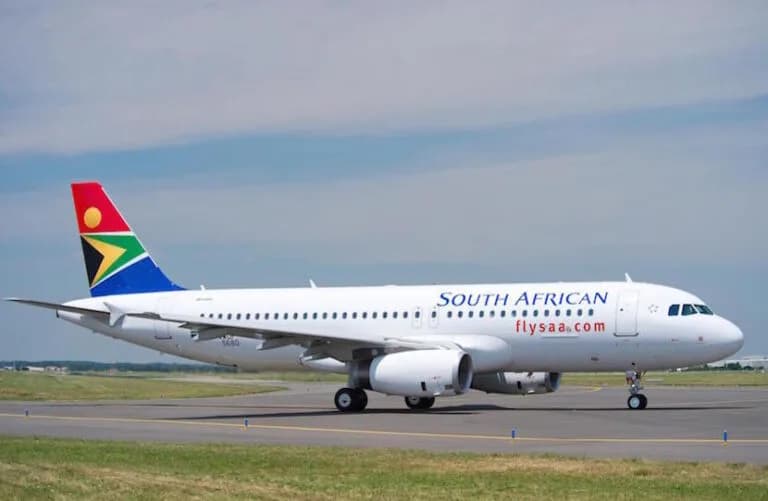
Main Image: SAA Planes/Mail & Guardian