
Ford Considers Workforce Reduction at South African Plants
Ford Motor Company’s South African plans to cut more than 470 jobs in a restructuring move aimed at aligning production with shifting market demands. The decision, confirmed by both the company and the Solidarity union, underscores the mounting challenges facing South Africa’s automotive industry. According to the union, the retrenchments will affect 391 operator roles
Ford Considers Workforce Reduction at South African Plants
Ford Motor Company’s South African plans to cut more than 470 jobs in a restructuring move aimed at aligning production with shifting market demands. The decision, confirmed by both the company and the Solidarity union, underscores the mounting challenges facing South Africa’s automotive industry.
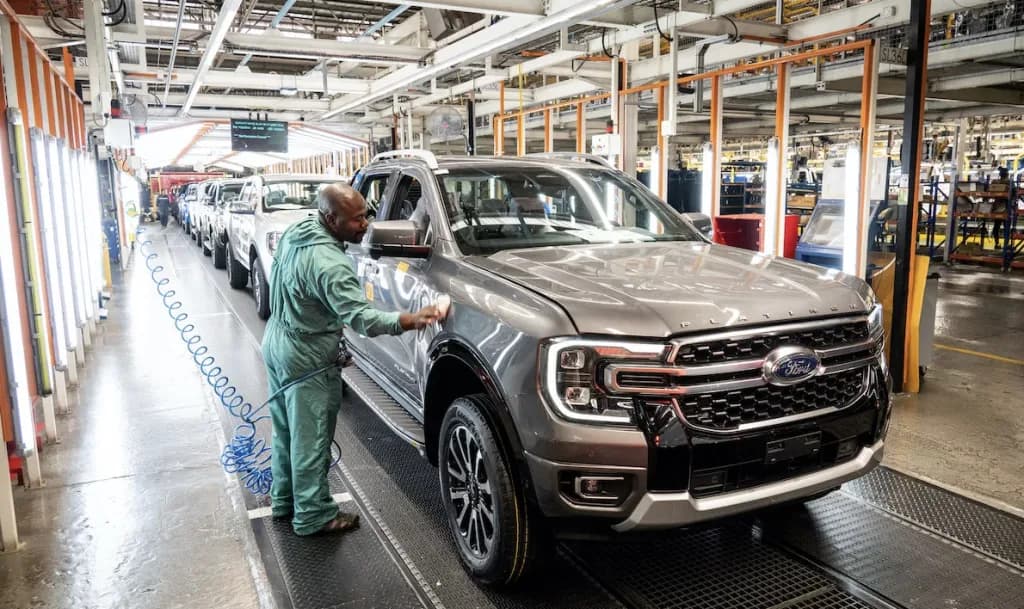
According to the union, the retrenchments will affect 391 operator roles at the Silverton assembly plant in Pretoria, 73 jobs at the Struandale engine plant in Gqeberha, and 10 administrative posts. Ford explained that the changes are intended to optimize production and ensure the sustainability of its operations under current market conditions.
“These changes are part of our ongoing efforts to respond to evolving market conditions while maintaining efficiency across our plants,” Ford said in a statement.
A Warning Sign for the Sector
Solidarity deputy general secretary Willie Venter described the decision as a clear warning for the broader industry. He highlighted a combination of economic pressures, global uncertainty, and what he called “unfavourable government policies” as factors steadily eroding competitiveness.
“When an automotive giant like Ford takes such drastic steps, it is a warning to the entire industry,” Venter noted. “We fear that further retrenchments may be inevitable if conditions do not improve quickly.”
He cautioned that without decisive reforms, South Africa may face a deeper employment crisis in the automotive sector.
Industry Under Pressure
The retrenchments arrive during a period of severe strain for the motor industry. The sector employs around 115,000 people directly, with more than 80,000 working in component manufacturing. Weak local demand for vehicles, rising imports, and declining local content have weakened the sector’s foundations.
The trade minister recently revealed that 12 companies in the motor and parts subsector have closed in the past two years, resulting in more than 4,000 job losses. The Ford cuts add fresh concern about the long-term viability of a sector that has been a major source of manufacturing employment.
The path forward for South Africa’s automotive industry depends on immediate reforms and stronger collaboration between government, manufacturers, and labour unions. Investment in innovation, skills development, and local supply chains can help rebuild resilience. Clearer policy direction on trade and industrial support will also play a vital role in protecting jobs and sustaining competitiveness.
If such steps are taken, the current retrenchments could trigger a broader shift toward a more adaptive and future-ready automotive sector rather than serve as another chapter in a story of decline.