
For the time being, the public sector strike has ended
But unions and federations aim to boost the ante in 2023, with Popcru stating they are 'important services employees without vital income'. Labour groups representing public-sector employees plan to escalate their campaign against the government's pay offer after the holidays, with some pushing for a full-fledged walkout. Workers have flatly rejected the government's 3% baseline
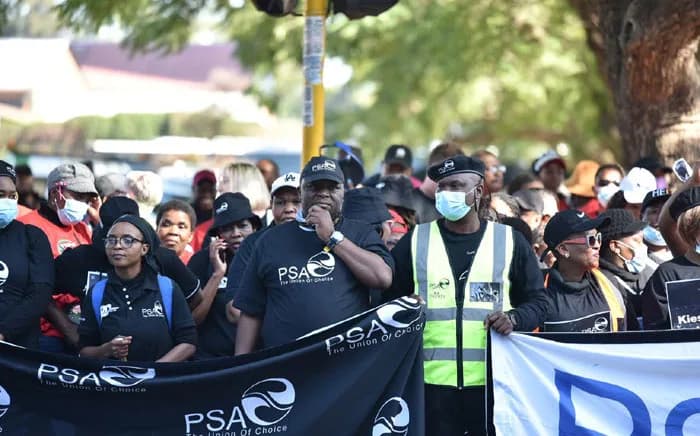
For the time being, the public sector strike has ended
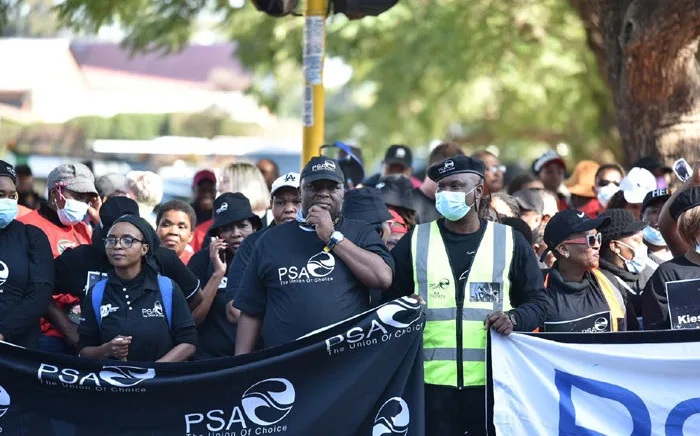
But unions and federations aim to boost the ante in 2023, with Popcru stating they are ‘important services employees without vital income’.
Labour groups representing public-sector employees plan to escalate their campaign against the government’s pay offer after the holidays, with some pushing for a full-fledged walkout.
Workers have flatly rejected the government’s 3% baseline and 4.5% non-pensionable pay rise, resulting in a lengthy wage standoff.
The Police and Prisons Civil Rights Union (Popcru), which represents over 155 000 police, traffic, and penitentiary officials, repeated its position this week, stating it opposes the government’s unilateral 3% raise.
Negotiations for the fiscal year 2022/2023 have been completed, and the offer has been implemented, according to the Department of Public Service and Administration. It now wants to return to the negotiation table to negotiate pay for the fiscal year 2023/2024.
It has repeatedly said that it cannot give a better offer than the 3% baseline pay rise and the 4.5% non-pensionable increase on the existing R1 000 monthly stipend paid to federal officials.
The unions demand 10%.
The government claims that this offer amounts to a 7.5% raise, but the unions disagree.
In response to growing inflation and greater living costs, they are seeking 10% raises in pay.
Richard Mamabolo, who is media and communication officer for Popcru and spokesperson for the Congress of South African Trade Unions (Cosatu), says the unions as well as the SA Federation of Trade Unions (Saftu) and the Federation of Unions SA (Fedusa) are due to meet to devise a plan of action for next year.
“Our programmes that we started this year are still going ahead in the next year, and of course next year we will mobilise even further and there is the possibility of increasing our demands,” says Mamabolo.
Workers linked with Popcru conducted a march in September to express their concerns about the criminal justice cluster, which remain unsolved, he says.
“We have not received any good feedback and there hasn’t been much change, so as a union, our plan of action [is that] we’re going to be camping outside parliament early in the next year.”
Mamabolo earlier told Moneyweb that workers would not strike over the holiday season for fear of losing their incentive payouts.
But strike action in 2023 is likely to be extended – and won’t follow the marches that were staged over a single day this year in what the federations named a ‘National Day of Action’.
“It will be prolonged, we’re planning on camping outside parliament regardless of the time it takes,” says Mamabolo. “These are your so-called essential services workers where it matters, without essential salaries.”
Workers in other critical services
Mbuso Shozi, Gauteng provincial spokesman for the Health & Other Services Personnel Trade Union of SA (Hospersa), says the union’s members will go on strike if the Cosatu/Sadtu (South African Democratic Teachers Union) alliance supports them.
“It’s either we go on a full-blown strike or else we don’t strike … we’re still consulting our members,” says Shozi.
“We want a full-blown strike. We don’t want these one- or two-day marches.”
If the government’s offer is adopted at the 7.5% rise, the public sector salary bill will nearly triple to R700 billion.
If the government grants the unions’ 10% salary increase, it will add R49 billion to the state’s wage cost, bringing the entire public wage expenditure to R714 billion.