
Even a R254-billion Eskom bailout would not be sufficient to end load shedding this year
A 254 billion-rand ($14 billion) state bailout for South Africa's cash-strapped power provider will help stabilise its finances, but it will not instantly enhance its operations or ease the country's acute electricity shortage. Eskom Holdings SOC Ltd.'s three-year debt-relief plan, outlined in Finance Minister Enoch Godongwana's budget address on Wednesday, is conditional on the firm
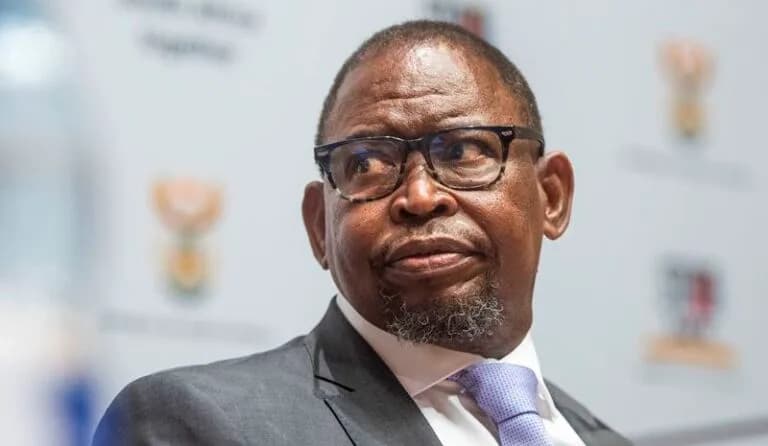
Even a R254-billion Eskom bailout would not be sufficient to end load shedding this year
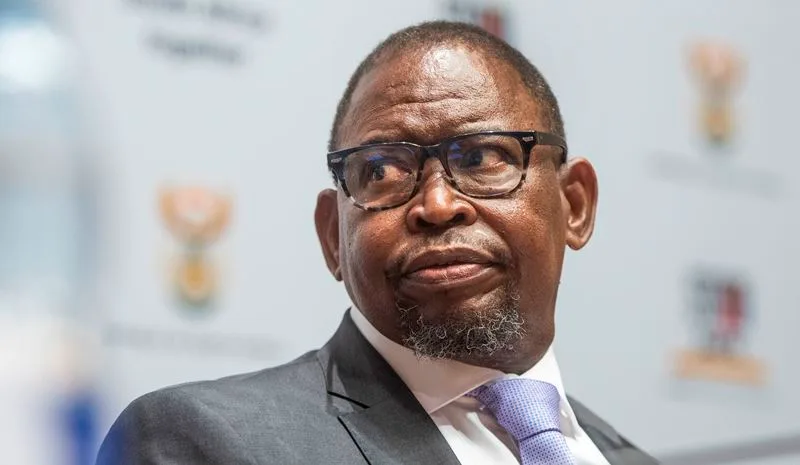
A 254 billion-rand ($14 billion) state bailout for South Africa’s cash-strapped power provider will help stabilise its finances, but it will not instantly enhance its operations or ease the country’s acute electricity shortage.
Eskom Holdings SOC Ltd.’s three-year debt-relief plan, outlined in Finance Minister Enoch Godongwana’s budget address on Wednesday, is conditional on the firm bringing in private operators to assist manage its facilities and transmission network, as well as satisfying other performance benchmarks.
The National Treasury has warned that rolling blackouts that began in 2008 would continue until at least the end of 2024.
The scope of the energy crisis was highlighted on Tuesday, when Eskom removed a record 7,000 megawatts of power from the national system to avert its collapse – the 115th consecutive day of disruptions.
The utility said the next evening that Chief Executive Officer André de Ruyter will step down immediately, rather than at the end of next month as previously scheduled.
He made the declaration soon after criticising the administration and the ruling African National Congress for corruption.
According to Lumkile Mondi, an economics expert at Johannesburg’s University of the Witwatersrand, power shortages will only gradually lessen as Eskom’s near-monopoly dwindles and enterprises and families install more of their own generation capacity.
“South Africa as an investor destination, forget it,” he said. “We’re in this period of slow growth for many, many years to come.”
Eskom’s downturn can be attributed to a variety of factors, including delays in obtaining government approval to add additional capacity, major cost overruns at two new coal-fired facilities, ongoing managerial turbulence, and political involvement in its operations.
In addition, a lack of cash and spare capacity prompted the utility to reduce maintenance, which increased plant malfunctions and outages.
Yet it has been a victim of theft and graft, with De Ruyter saying that 1 billion rand is taken from its coffers each month, frequently by ANC supporters.
In response to De Ruyter’s charges, ANC Secretary-General Fikile Mbalula stated that the party’s attorneys will write to the former CEO asking that he either prove or withdraw his claims.
He also accused De Ruyter of neglecting to address the country’s energy issue.
President Cyril Ramaphosa announced intentions to nominate an electrical minister to lead the response to the outages on February 9, but no appointment has been made.
The government hasn’t said whether Eskom would continue to report to the public enterprises ministry or be transferred to the energy ministry, which the ANC has endorsed but which Godongwana argues will complicate debt relief payments.
Ramaphosa is still evaluating such issues, as well as making changes to his cabinet, according to Mbalula.
“He is not a fanatic of doing things just for the sake of doing it and for populist stances,” Mbalula said. “He doesn’t take quick decisions, he applies his mind and when he takes decisions you can be confident in those decisions.”
While cabinet choices are the president’s prerogative, Godongwana believes Eskom’s board could have acted faster to identify a replacement for De Ruyter, who announced his desire to go in mid-December after three years on the job.
However, the board must verify that the utility satisfies all of its responsibilities in order to qualify for debt relief, and if it does not, “heads will have to roll,” he warned.
Public Enterprises Minister Pravin Gordhan said on Thursday that the nomination of an acting CEO is being completed and that an announcement would be made soon to avoid a leadership vacuum.
For the time being, some Eskom investors are giving the government the benefit of the doubt, since the yield on the utility’s unsecured 2028 notes has dropped 90 basis points since Tuesday.
“While there is some execution risk, we believe it seems to be a credible plan that — if executed with ruthless focus and urgency — can provide Eskom with a path to return to financial and operational sustainability,” said Olga Constantatos, head of credit at Cape Town-based Futuregrowth Asset Management, which manages about $11.3 billion in fixed-income investments.
The budget documents show that the administration recognises that “a different approach is required,” which she views as good.