
Eskom warns of an R20 billion loss this year after an audit uncovers fraud, with tender documents set on fire
Eskom reported its sixth consecutive deficit and warned that the gap might increase, while its auditor stated it might not be able to continue as a continuing concern. Eskom's deficit decreased to R12.3 billion in the fiscal year to March, down from a restated R25 billion a year earlier, according to departing CEO Andre De
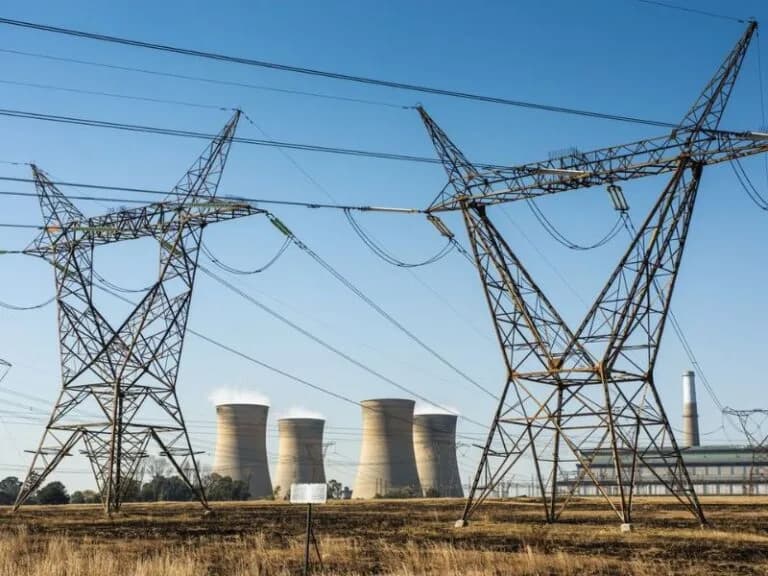
Eskom warns of an R20 billion loss this year after an audit uncovers fraud, with tender documents set on fire
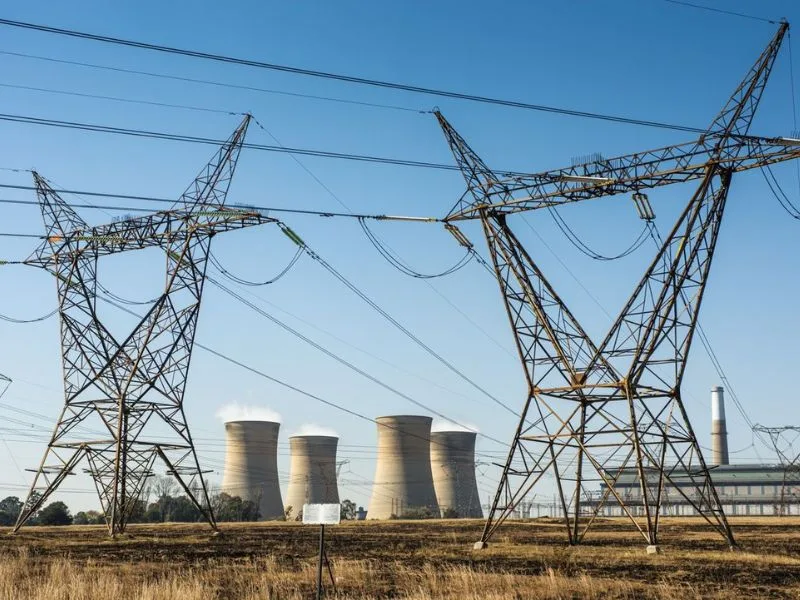
Eskom reported its sixth consecutive deficit and warned that the gap might increase, while its auditor stated it might not be able to continue as a continuing concern.
Eskom’s deficit decreased to R12.3 billion in the fiscal year to March, down from a restated R25 billion a year earlier, according to departing CEO Andre De Ruyter during an online results conference on Friday. The utility’s debt, which delivers more than 90% of the country’s power, declined 1% to R396.3 billion at the end of March, he added.
According to De Ruyter, the current fiscal year will result in a deficit of R20.1 billion. The government has agreed to assume a portion of Eskom’s debt and has stated that it would not allow company to fail.
“Without government support, Eskom will not be able to meet all its debt-service commitments,” Calib Cassim, Eskom’s chief financial officer, said at the results presentation. The utility repaid loans of R38.9 billion during the financial year, while raising R33 billion, he said.
On Friday afternoon in Johannesburg, the yield on Eskom’s 2028 eurobonds, which do not include a government guarantee, jumped four basis points to 11.43%. The benchmark 10-year rand bond yield in South Africa remained unchanged at 11.78%.
This year, Eskom has implemented load shedding for a record 197 days to preserve the national system as it fights to reduce frequent outages at its ageing and badly maintained coal-fired facilities. The utility does not produce enough money to pay its operational and financing costs, making it reliant on governmental bailouts to stay afloat.
Eskom’s auditor, Deloitte & Touche, voiced worry that the firm would not be able to continue operations, claiming that it had discovered irregular expenditure, useless and wasteful expenses, and losses owing to criminal activity.
Eskom stated in a stock-exchange statement that the auditor’s report found evidence of the company failing to take measures to remedy violations of the National Environment Management Act or comply with the Public Finance Management Act. Other abnormalities discovered included the willful destruction of tender papers in a fire, suspected document reconstruction or fabrication, and a failure to investigate and disclose financial malfeasance and irregularities.
According to the petition, there is “material uncertainty relating to Eskom’s ability to continue as a going concern,” according to Deloitte.
Eskom is likewise dealing with a leadership vacuum. De Ruyter, who has been CEO for over three years, is to step down at the end of March, Chief Operating Officer Jan Oberholzer expects to retire in April, and numerous other senior management roles are open.
The oil crisis has stifled development and discouraged investment in Africa’s most developed economy. According to De Ruyter, the power supply prognosis for next year will be severely tight, and blackouts will persist until an extra 4000 to 6,000 megawatts of generating capacity is added to the system.
The government said in October that it would assume one-third to two-thirds of Eskom’s debt in order to assist it become financially sustainable, with specifics to be published in the February budget.
The utility’s most recent financial statements were delayed for many months due to a delay in obtaining a new external auditor.