Eskom must hike prices or die — André de Ruyter
Eskom Holdings SOC Ltd. requires debt relief in addition to price rises to survive, according to departing CEO Andre de Ruyter, who has managed the company for three years while South Africa's power outages have worsened. The continent's largest industrialised nation has experienced 100 consecutive days of power outages due to supply problems caused mostly
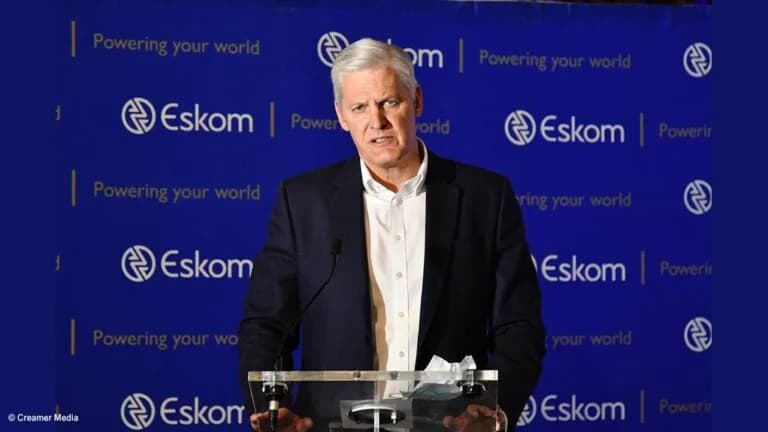
Eskom must hike prices or die — André de Ruyter
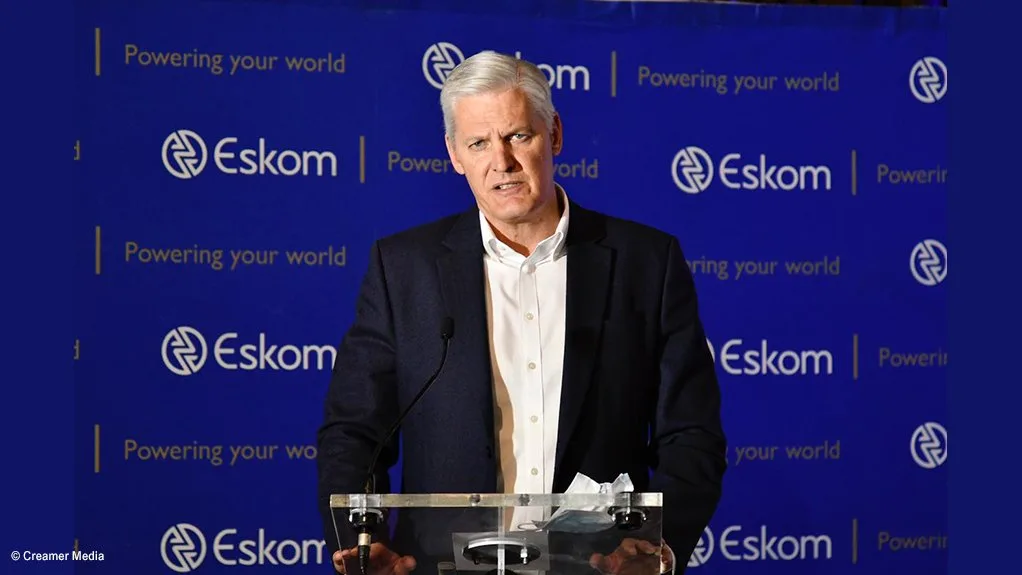
Eskom Holdings SOC Ltd. requires debt relief in addition to price rises to survive, according to departing CEO Andre de Ruyter, who has managed the company for three years while South Africa’s power outages have worsened.
The continent’s largest industrialised nation has experienced 100 consecutive days of power outages due to supply problems caused mostly by unreliable coal-fired power facilities.
Fixing the economy’s energy issue has become a top priority for President Cyril Ramaphosa’s administration.
Eskom’s financial restrictions, along with failures, theft, and sabotage at its facilities, have prompted the company to impose blackouts for roughly 15 years, but they’ve gradually deteriorated in the last five months, with Ramaphosa’s administration rushing to find a way out of the situation.
According to the central bank, blackouts, also known as load-shedding, cost the South African economy up to 899 million rand every day.
“We need cost-reflective tariffs,” De Ruyter said in an interview with Bloomberg TV from Cape Town.
“If debt relief isn’t accompanied by reform to the tariff then we will back with our begging bowl at the National Treasury’s door in three to five years time.”
The National Treasury has agreed to assume up to two-thirds of Eskom’s debt later this year, with specifics to be published in Finance Minister Enoch Godongwana’s budget statement later this month.
Last month, South Africa’s energy regulator decided to allow Eskom to boost electricity prices by about 19%, far less than the 32% increase proposed by the firm.
The high rise led Ramaphosa to request that the judgement be stayed, especially as Eskom has been unable to produce power on a consistent basis.
Crisis Intervention
Over the last two years, South Africa’s government has responded to the energy crisis with measures such as procuring emergency power generation from private firms and accelerating and extending an existing programme to purchase electricity from renewable sources.
Those efforts have encountered legal stumbling blocks and delays, however certain regulatory measures to boost private generating have made headway.
Outages are expected to last at least another two years while Eskom overhauls its fleet.
The utility is attempting to increase its energy availability factor — a measure of how much capacity may be used — from around half to 70% by March 2025, and needs to add 4,000 to 6,000 megawatts of producing capacity.
When De Ruyter took over as CEO in 2020, he became the utility’s 13th CEO in a decade.
He attempted to persuade the utility to create more green energy when its old coal-burning facilities were decommissioned, and he contested tariff choices made by the energy regulator, claiming that the firm needed to charge more to pay its costs.
Repairing the generation’s backbone — older plants that use the dirtiest fossil fuel — has proven to be one of the most difficult challenges.
De Ruyter’s “philosophy maintenance” strategy failed to avoid malfunctions, resulting in ever greater power outages.
According to his interview on Tuesday, some relief from the shortages will begin to surface by next year as additional private power projects are completed.
He also stated that the corporation is trying to outsource parts of its activities in order to bring in scarce expertise.
‘tough Job’
Energy Minister Gwede Mantashe has openly attacked Eskom’s performance, coal transition plans, and failure to enhance plant performance.
Later Tuesday, Eskom will address a legislative committee on possible solutions to the power shortages.
The utility needs to operate quicker and ideally “avoid some of the bureaucratic encumbrances that we’ve suffered in terms of procurement regulations, in terms of the skills that we need to recruit, in terms of how we have to account to various oversight bodies which of course takes up an enormous amount of time,” De Ruyter said.
De Ruyter left the firm at the end of March after resigning in December. A replacement has not yet been named.
“It’s a difficult job,” De Ruyter stated. “Not for the faint of heart”