Eskom blames lack of quality maintenance for continued power cuts
As the rolling power cuts continue to hit South African households and businesses, Eskom has apologised and said the quality and standard of maintenance are below par. Speaking on Monday, chief operating officer Jan Oberholzer said this while addressing the media together with acing head of generation Rhulani Mathebula. He said the power utility's maintenance programme
Eskom blames lack of quality maintenance for continued power cuts
As the rolling power cuts continue to hit South African households and businesses, Eskom has apologised and said the quality and standard of maintenance are below par.
Speaking on Monday, chief operating officer Jan Oberholzer said this while addressing the media together with acing head of generation Rhulani Mathebula.
He said the power utility’s maintenance programme is not yielding the required results, with many generating units suffering breakdowns after returning to service.
Oberholzer was speaking after Eskom implemented stage 2 last week, which escalated to stage 4 over the weekend.
“We find the maintenance we are doing is not yielding the required results and effects. Many generating units return from planned maintenance only to suffer breakdowns again,” said Oberholzer.
“The standard and quality of work being done are not what it should be, owing to lack of skills, particularly artisan skills, and skilled operators both in Eskom and some of our partner contractors.”
In total, the power utility lost 42 units last week, adding up to about 24 000MW. It has returned 37 units to service – about 22 000MW. Generally, demand in the winter months is approximately 33 000MW and in summer, it is around 31 000MW.
Despite the shortcomings, Oberholzer vowed that Eskom plans to ramp up maintenance over the summer months, but the utility can’t take as multiple units as it wants offline simultaneously, as there is not enough generation capacity.
News24 has it that at Kusile power station, for example, there are challenges with getting workers with appropriate experience to be able to maintain the plant, which has technologies like flue-gas desulphurisation to remove sulphur dioxide emissions.
Meanwhile, Mathebula said among other factors was the high failure rate and that can be credited to lack of funding to source the rquired parts and components.
“We have seen a high failure rate than what we have expected. We are still optimising the plant to be able to ensure that we can get really longer running hours from most of the components from that plant,” said Mathebula.
“The majority of spares for the plant is overseas. In the recent past, we found ourselves in a situation where we could not have outages fully funded before the time we had to take them offline… And that resulted in outages being deferred and in some cases, scopes not being executed as planned due to funding.”
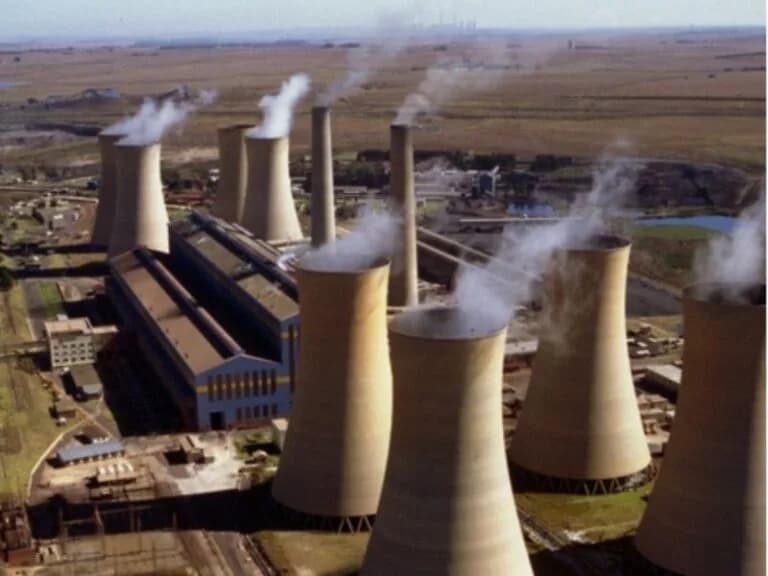
Image: Komati Power Station/Eskom