How Is Smart Mining Transforming Emergency Preparedness and Rescue in African Mines?
Emergency response in African mining has in recent years changed significantly with the adoption of new technologies that have enhanced coordination, speed, and safety during critical incidents. Traditionally, rescue teams relied on manual systems, limited communication, and delayed access to real-time information. However, advances in connectivity, data analytics, and remote sensing have redefined how emergency
How Is Smart Mining Transforming Emergency Preparedness and Rescue in African Mines?
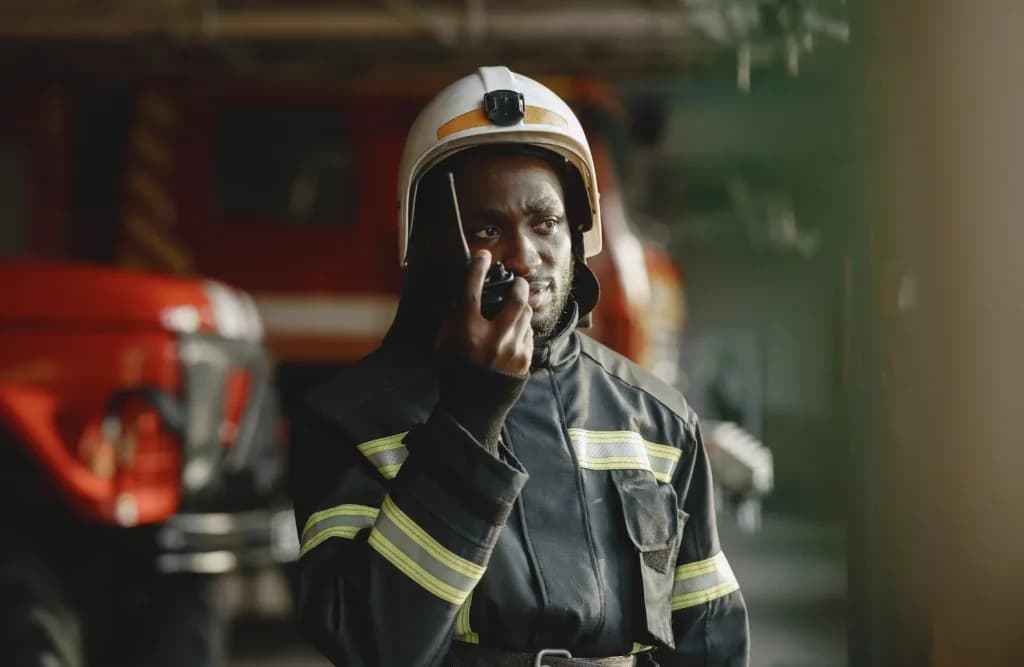
Emergency response in African mining has in recent years changed significantly with the adoption of new technologies that have enhanced coordination, speed, and safety during critical incidents. Traditionally, rescue teams relied on manual systems, limited communication, and delayed access to real-time information. However, advances in connectivity, data analytics, and remote sensing have redefined how emergency response teams prepare for and manage emergencies, both underground and on the surface.
Improved Communication and Coordination
At the core of effective mine rescue operations lies clear and reliable communication. During emergencies, every second counts, and miscommunication can escalate already dangerous situations. Modern ERT now depend on integrated systems that connect underground teams directly to surface command centres, ensuring uninterrupted information flow.
Digital radio networks and wireless mesh systems make this possible even in deep level mines, allowing rapid coordination between responders, medical staff, and control room operators. ABB South Africa, for example, has deployed digital control and automation systems that maintain real time voice and data links throughout rescue operations. These platforms help synchronize activities and reduce confusion during high pressure events.
In many mines, these systems are complemented by centralised dashboards that integrate environmental readings, personnel tracking, and equipment status. This real-time visibility enables ERT leaders to make quick evidence-based decisions rather than relying on delayed or fragmented updates.
Tracking and Wearable Devices Enhancing Safety
As communication improves, so too does personnel tracking another key element of modern mine rescue operations. Tracking and wearable technology now allow ERT to know precisely where each worker is located during an emergency, an essential advantage in incidents involving collapses, fires, acid spills, or gas leaks.
Companies such as Booyco Electronics have introduced proximity sensors and wearable tracking tags that alert both miners and rescuers to nearby hazards. These tools not only prevent collisions but also enable rapid identification of trapped or injured individuals. By pinpointing exact locations, ERTs can plan safer and more targeted interventions.
Additionally, wearable health monitors are being integrated into rescue gear, allowing teams to track vital signs such as heart rate and oxygen saturation. This real-time physiological data helps manage stress and fatigue levels among rescuers working in hazardous or oxygen-deficient environments including assistance in how emergency personnel prepare for Emergencies.
Use of Drones and Remote Technologies
The use of drones and remotely operated equipment has become a practical solution in situations where conditions are too dangerous for human responders. Drones can quickly assess damage, detect hazardous gas concentrations, and locate missing personnel without putting rescuers at risk.
Firms like Rocketmine provide aerial mapping and monitoring services that have proven valuable during emergency response planning. Equipped with high definition and thermal cameras, these drones transmit live visuals to command centres, allowing teams to assess inaccessible zones and identify safe entry points. This capability has made decision making during mine rescues faster and more data driven.
Automation and Command Systems
Automation has further strengthened the coordination between mine safety systems and ERT operations. Today, integrated mine control centres can connect sensors, ventilation systems, and power networks into unified platforms. During an emergency, automated systems can trigger alarms, cut power to affected areas, and adjust airflow to clear gases or smoke.
ABB’s automation frameworks are examples of such technology, offering modules that consolidate safety data from across Mining networks. By streamlining data collection and response actions, these systems reduce reliance on manual decisions and enhance the speed and accuracy of ERT interventions.
Training and Simulation Technology
Technology is not only transforming on site responses but also how teams prepare for them. Virtual reality VR and simulation-based training programs now allow ERT to practice responding to complex emergencies such as underground explosions or fires in a safe, controlled environment.
Through realistic VR simulations, rescuers can learn how to navigate blocked tunnels, manage equipment under pressure, and coordinate evacuations efficiently. Training institutions in South Africa and Botswana have already begun adopting these digital tools to improve readiness and teamwork in real world rescue operations.
Despite notable progress, the integration of technology in mine emergency response still faces hurdles. Many small or remote mines lack the infrastructure to support advanced systems due to high costs, unstable power, or limited network coverage. Maintenance of sophisticated devices can also be challenging in harsh mining environments. Furthermore, interoperability between technologies from different suppliers remains limited, making seamless data sharing across mines and countries difficult.
While technology cannot eliminate the risks inherent in mining, it continues to improve how emergency response teams operate when disasters occur. The adoption of integrated communication systems, tracking devices, drones, and automation tools has made rescue operations more informed, coordinated, and efficient. However, it is important to note that the first line of defense in hazard evaluation remains administrative, which addresses human behavior, followed by engineering controls, and finally, personal protective equipment (PPE).