Elon Musk’s cousin drives Tesla from Cape Town to Jozi for 14kms
American businessman Elon Musk’s second cousin, Hilton, recently test-drove the Tesla Model X from Cape Town to Johannesburg where he made stops in various locations to charge his battery. Hilton drove for more than 1400 kilometres to reach his destination and said he stopped about seven times to recharge his electric car. The drive comes
Elon Musk’s cousin drives Tesla from Cape Town to Jozi for 14kms
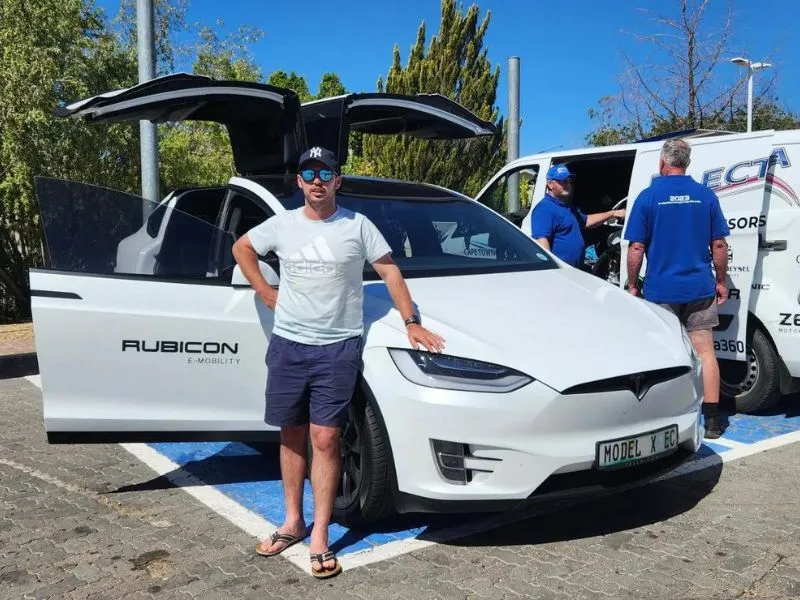
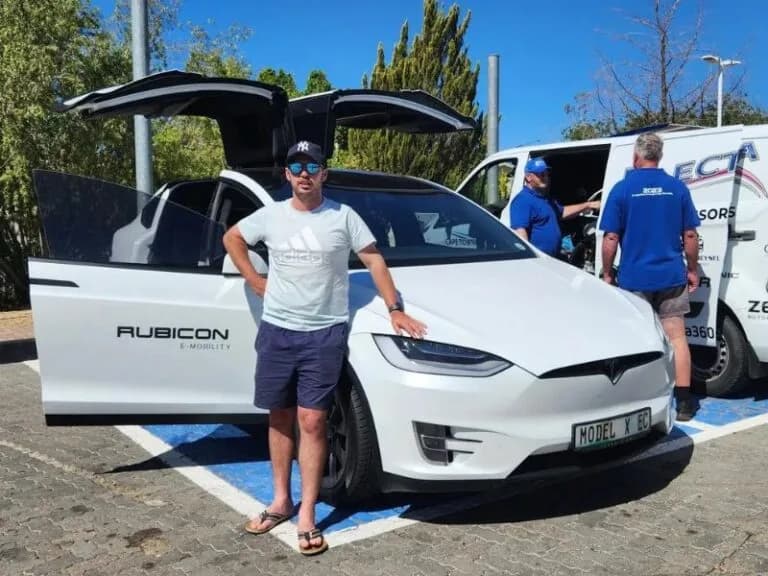
American businessman Elon Musk’s second cousin, Hilton, recently test-drove the Tesla Model X from Cape Town to Johannesburg where he made stops in various locations to charge his battery.
Hilton drove for more than 1400 kilometres to reach his destination and said he stopped about seven times to recharge his electric car.
The drive comes as Tesla vehicles are not yet available for people to buy in South Africa and he charged at locations such as Laingsburg, Worcester and Colesberg among others.
However, Rubicon, the largest supplier of solar systems and components to the commercial, industrial and residential sectors in South Africa, had the honour of bringing in the first-ever Tesla vehicle to South Africa.
Rubicon is also rolling out an electric vehicle charging network in collaboration with several partners, such as Audi South Africa.
Hilton is actually the Tesla owner’s second cousin and he chatted with CleanTech Africa after his odyssey.
“We started our journey in Century City, Cape Town, and ended at Mall of Africa, Johannesburg. We stopped seven times to charge, mostly brought about by the fact the rear wheel alignment on the Tesla was out after a tyre change, so we didn’t have cruise control or any of the driver aids, which cost us around 30% range per charge initially,” he said.
“This was also exacerbated by the fact we either could only charge AC at some stations or we got caught by load shedding* or we found that another driver that scheduled a charge at the same time we arrived at a charging station.
“For the first leg, we drove between 90–100 km/h due to the wheel alignment issue we had. We had to manage our speed to ensure we had enough range left to reach the next charging station. After we got that sorted out, we managed a much better average of 120 km/h (speed limit in South Africa) for the rest of the journey.”
While the car was being charged, Hilton decided to go for his shopping and met the public.
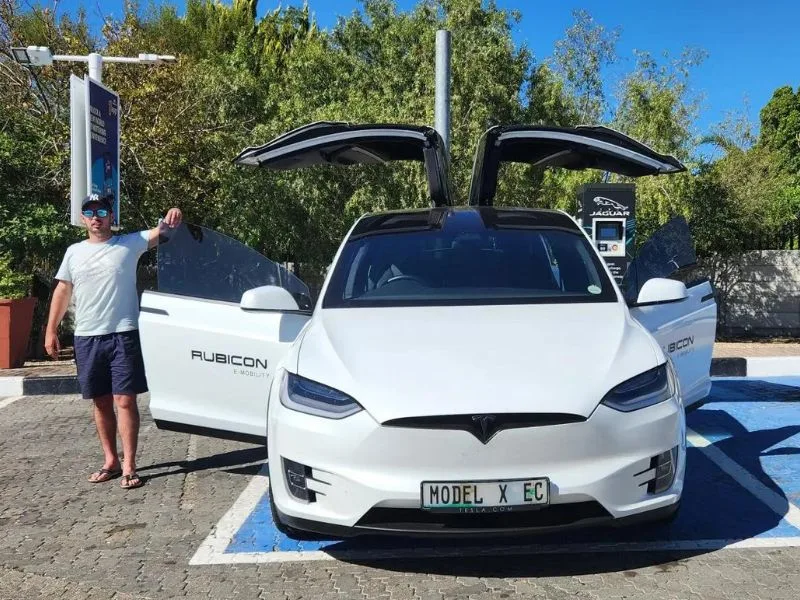
“At Worcester, we did some shopping and chatted to the public about the Tesla and other EV drivers (especially the crew from Electronia with the electric bike) during this time,” he added.
“It was a mixed experience. Some of the charging stations didn’t allow us to charge DC, which cost us around 3 hours of our trip time at these stations. The rest of the charging stations worked well, except when load shedding hit us at Colesberg (which was expected).
“The max kW we got was at Mall of Africa, which was 150kW. At the ones we could only charge AC, we maxed out at 16kW (limited by the car itself). The rest were between 30–50kW max.
“We left Cape Town at 9h00 on 26 Feb and arrived in Joburg at 16h00 on 28 Feb, so the total trip took us 55 hours. Of this, we drove for roughly 30 hours. The rest of the time was when we slept over at Beaufort West and Bloem.”
The driver said this was the first long distance trip he had done in the Tesla with his partner, Nick.
“The knowledge we gained from this experience and the people we met along the way were the highlights of the trip for us and are invaluable to how we approach the customer experience at our own charging stations across the country,” he concluded.