BAIC Gears Up for Full SA Local Assembly of B30 SUV in 2026
Beijing Automotive Group (BAIC) South Africa will start assembling its newly launched B30 off-road SUV at its Eastern Cape factory as early as January, the company’s Chief Financial Officer announced. This move strengthens local vehicle production and supports South Africa’s automotive industrialization goals. Chinese Automakers Eye Africa for Growth Amid fierce price wars in their
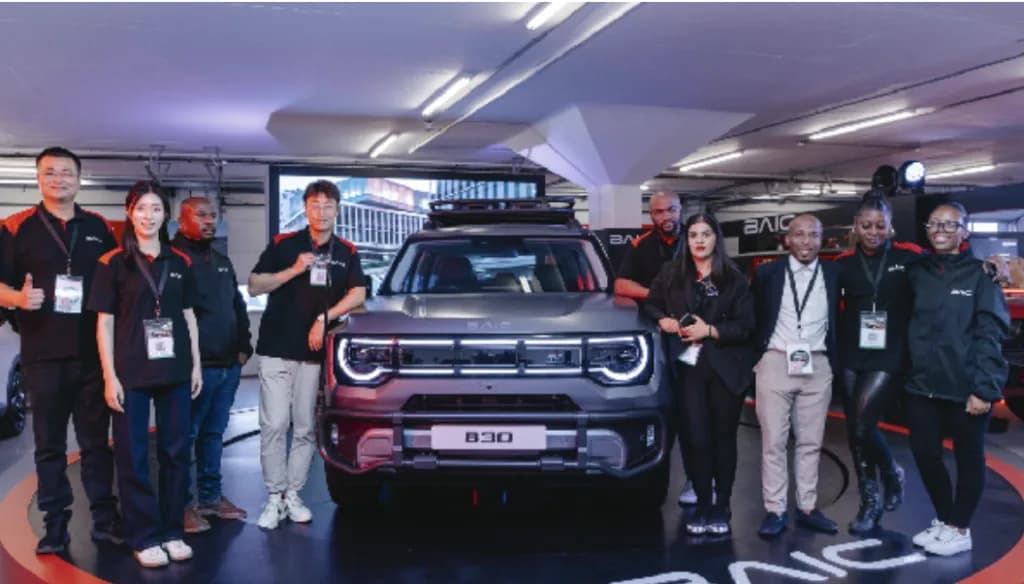
BAIC Gears Up for Full SA Local Assembly of B30 SUV in 2026
Beijing Automotive Group (BAIC) South Africa will start assembling its newly launched B30 off-road SUV at its Eastern Cape factory as early as January, the company’s Chief Financial Officer announced. This move strengthens local vehicle production and supports South Africa’s automotive industrialization goals.
Chinese Automakers Eye Africa for Growth
Amid fierce price wars in their domestic market and tighter trade restrictions from Europe and the United States, Chinese car manufacturers are increasingly turning to Africa as a growth frontier. South Africa, with its industrial infrastructure, skilled workforce, and access to regional markets, has become a prime destination for investment.
BAIC joins roughly 18 Chinese car brands already active in South Africa, including BYD and Chery. Its Gqeberha plant in the Eastern Cape currently produces the BAIC B40 Plus and Beijing X55 Plus SUVs for local buyers. “We will continue introducing new models while steadily expanding local production and value creation,” said BAIC South Africa CFO Anele Geza at Monday evening’s launch event.
From Semi-Knocked-Down to Full Local Assembly
Geza explained that both combustion and hybrid versions of the B30 will be assembled locally using a complete knocked-down (CKD) process. By building cars from a larger number of smaller components, this approach boosts local content and engages more South African suppliers.
Currently, BAIC relies on a semi-knocked-down (SKD) process, which imports partially assembled components and completes assembly locally. Transitioning to full CKD production enhances skills transfer, deepens local supplier involvement, and strengthens South Africa’s automotive industrial capacity.
Global automakers, such as Toyota and Ford, which have long-established manufacturing operations in the country, advocate higher local production for newcomers. Expanding assembly locally not only protects the domestic car industry but also aligns with the government’s Automotive Masterplan, which targets 1.4 million locally produced vehicles annually by 2035.