Another Eskom crisis on the horizon
Opposition party Democratic Alliance (DA) argues that the African National Congress's (ANC) intention to relocate Eskom away from the Department of Public Enterprises to the Department of Mineral Resources and Energy (DMRE) is 'irrational and destructive'. The party agreed with Professor Anton Eberhard that moving Eskom under the DMRE or perhaps a separate energy ministry
Another Eskom crisis on the horizon
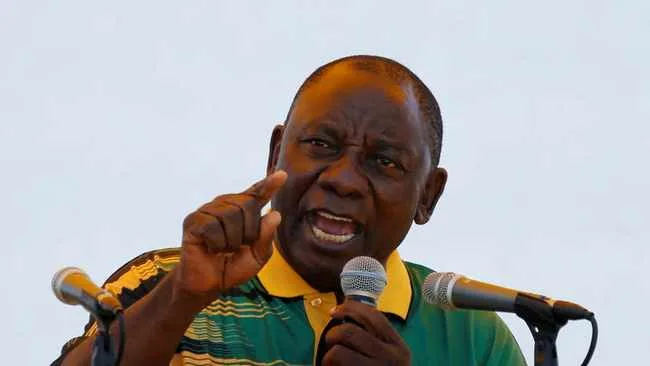
Opposition party Democratic Alliance (DA) argues that the African National Congress’s (ANC) intention to relocate Eskom away from the Department of Public Enterprises to the Department of Mineral Resources and Energy (DMRE) is ‘irrational and destructive’.
The party agreed with Professor Anton Eberhard that moving Eskom under the DMRE or perhaps a separate energy ministry would be a major error.
Eberhard is the director of Power Future Lab, which focuses on African infrastructure investment, management, reform, and regulation.
According to Eberhard, there is a clear conflict of interest in an energy ministry owning Eskom while simultaneously overseeing competition and regulation in the industry.
“There is a clear and present danger that if this happens, Eskom will never be fully unbundled – as is necessary. Moreover, it will retain its dominant market position, and the envisaged open power exchange and the market will not, in all probability, be implemented,” said the DA.
“Private investment will be pushed to the back burner and under an enhanced version of the status quo – back to the future, as it were – corruption and load-shedding will flourish again.”
“The move also has potentially significant financial implications, which we are busy unravelling.”
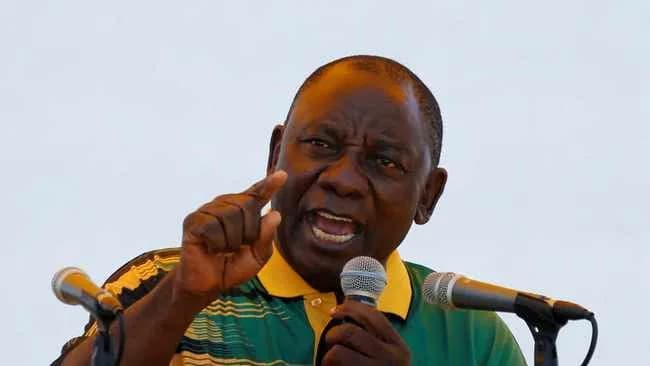
President Cyril Ramaphosa announced on January 9th that the energy department will take over oversight of the national power utility. This follows discussions with other officials at the ruling party’s national convention.
According to the party, certain state corporations functioning in specific economic sectors should be overseen by competent government ministries.
Eskom is now overseen by Minister Pravin Gordhan’s Department of Public Enterprises. The move would put Eskom closer to the control of energy minister Gwede Mantashe, a vocal supporter of the continued use of coal-fired power facilities.
Mantashe stated in October of last year that the transition to renewable energy, which is seen as the next phase in South Africa’s energy journey, will need a balancing act.
“(We) intend to move from high carbon emissions to low carbon emissions. However, we will do this in a manner that does not undermine our energy security, economic growth plans and sustainability of local communities,” Mantashe said.
When asked if renewables might halt years of continuous blackouts, he ridiculed the idea, citing Europe’s recent shift away from using fossil fuels.
Solar and wind power facilities might augment coal, gas, and nuclear power generation, but they have limits in satisfying South Africa’s demands, such as feeding mines, according to the minister.
“The excitement of moving from coal to renewables is becoming a myth.”
Despite this view, South Africa has received billions of dollars in international investment with the primary purpose of transitioning away from coal as part of the Just Energy Transition.
Eskom-caused rolling blackouts are not expected to end anytime soon. The country achieved 200 days of power outages in 2022 on December 27th, accounting for 55% of the total days in the year.
Eskom, the national power company, increased the frequency of power outages on January 10th as a result of seven units tripping and advancing to stage 6.
Eskom reorganisation
The ANC’s latest action comes as the CEO of the national electricity utility, Andre De Ruyter, is about to leave.
The failing utility published a statement announcing the resignation on Wednesday, December 14th. De Ruyter is scheduled to leave in March 2023, with no formal replacement yet identified.
Multiple requests for the CEO’s resignation have been made in light of the escalating load shedding. Gwede Mantashe stated categorically that the CEO’s inability to end load shedding amounted to advocating for the overthrow of the state.
De Ruyter’s departure as CEO of Eskom was reportedly motivated by internal disagreements within the ruling ANC. It has sparked much curiosity and astonishment.