
Angola’s New Cabinda Oil Refinery Begins Production for Local Supply and Exports
Angola’s Cabinda refinery has started exporting fuel while supplying the domestic market, marking the country’s first major refining project since independence and one of the few large-scale facilities developed in Africa in recent decades. The plant, built at a cost of more than $470 million, produces diesel for local use while exporting heavy fuel oil
Angola’s New Cabinda Oil Refinery Begins Production for Local Supply and Exports
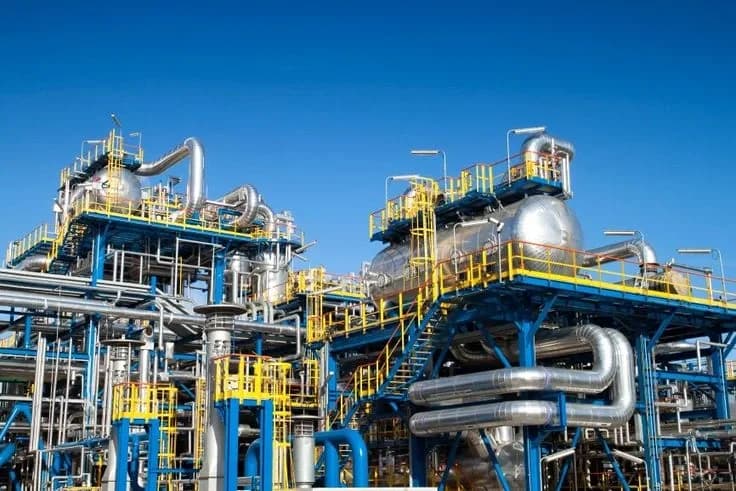
Angola’s Cabinda refinery has started exporting fuel while supplying the domestic market, marking the country’s first major refining project since independence and one of the few large-scale facilities developed in Africa in recent decades. The plant, built at a cost of more than $470 million, produces diesel for local use while exporting heavy fuel oil and naphtha to international markets.
Owned primarily by Gemcorp Capital, which holds a 90% stake, the refinery is positioned as part of Angola’s effort to reduce reliance on imported fuel and strengthen energy security. Located in the oil-rich Cabinda province, the facility was taken over by Gemcorp around six years ago and has now moved into full operational output.
Capacity Expansion Targets Growing Fuel Demand
The refinery currently processes 30,000 barrels per day, covering roughly 10% of Angola’s fuel demand. Plans are in place to double capacity to 60,000 barrels per day in a second phase, with an estimated investment of $700 million. The expansion will include additional processing units to produce higher-value fuels such as diesel and jet fuel, with financial close targeted within the year.
Despite its oil production strength, Angola still imports about 72% of its fuel needs, equivalent to roughly 3.3 million metric tons annually, according to Sonangol. Increasing local refining capacity remains a central priority to reduce import dependence and retain value within the country.
Across Africa, the imbalance between crude exports and refined product imports continues to shape energy policy. The continent exports around three-quarters of its crude oil while importing nearly 70% of refined petroleum products, a gap estimated to cost about $50 billion each year.
Projects like Cabinda show a positive push to build local refining capacity. and Angola is expanding its downstream sector through additional developments, including a 200,000-barrel-per-day refinery in Lobito and a 100,000-barrel-per-day project in Soyo, both led by Sonangol.