ANC wants Dlamini-Zuma in charge of the load-shedding debacle
The ANC wants Nkosazana Dlamini-Zuma to lead South Africa's attempts to fix the load-shedding problem, which has left the country in a state of emergency. This was one of the proposals made during the ruling party's National Executive Committee (NEC) lekgotla last week, according to the Sunday daily Rapport. At the same time, "impeccable" sources
ANC wants Dlamini-Zuma in charge of the load-shedding debacle
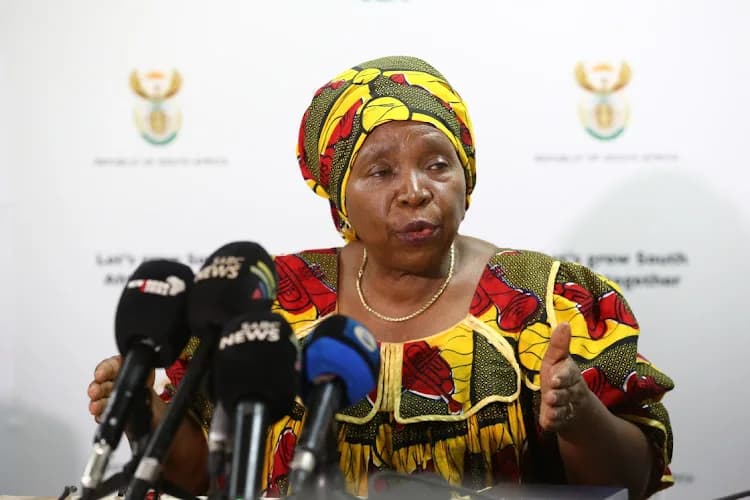
The ANC wants Nkosazana Dlamini-Zuma to lead South Africa’s attempts to fix the load-shedding problem, which has left the country in a state of emergency.
This was one of the proposals made during the ruling party’s National Executive Committee (NEC) lekgotla last week, according to the Sunday daily Rapport.
At the same time, “impeccable” sources have told Rapport that there is growing pressure inside President Cyril Ramaphosa’s cabinet to reject the decision.
Those who oppose the minister of cooperative governance and traditional affairs (COGTA) directing the country’s energy recovery efforts have cautioned that her policies during the Covid-19 outbreak made her extremely unpopular with South African voters.
Ramaphosa is anticipated to make a cabinet overhaul shortly after his 2023 state of the country speech on February 9th.
Several political analysts predict that Dlamini-Zuma, 74, would be among the ministers fired.
Aside from losing favour with the general people, she looks to have become an open political adversary of Ramaphosa.
Dlamini-Zuma was one of four ANC MPs who voted to endorse the much criticised Section 89 report on the Phala Phala farm scam, defying the party line on the issue.
For this judgement, the ANC is initiating disciplinary action against her.
However, one NEC member told Rapport that the NEC’s decision to declare a state of calamity in order to address the energy situation preserved Dlamini-cabinet Zuma’s position.
Another member stated that the COGTA minister was the “right person” for the post since he had expertise dealing with disasters.
Dlamini-Zuma was extensively chastised for some of the contentious state-of-emergency procedures her department enacted as part of lockdowns to assist contain the spread of the Covid-19 outbreak.
Many experts complained that some of these initiatives lacked scientific support and were not in line with the best practises of other countries.
These included forbidding the sale of open-toed shoes, undergarments, and prepared meals after some physical establishments were permitted to reopen in the early days of the harsh lockdown.
The protracted restrictions on the sale of alcohol and cigarettes, however, were possibly the most notorious.
Dlamini-Zuma went straight against Ramaphosa’s declaration that the restriction will be lifted at one time during the epidemic.
Every month, the prohibitions are anticipated to cost the government R1.5 billion in sin taxes.
At the same time, the illegal cigarette trade thrived, and this pattern appears to have lasted even after all lockdowns were released.
British American Tobacco, one of South Africa’s largest corporations, stated in January that it has begun layoff procedures and potentially lay off up to 200 people.
It mentioned the illegal cigarette trade as the primary source of income loss, which has resulted in employment losses.
The business stated that since 2019, it has lost around 40% of its cigarette sales to the illegal market, which now accounts for 70% of overall cigarette sales in South Africa.
The very contentious lockdown limits prompted the business interest group Sakeliga to sue Dlamini-Zuma.
Sakeliga secured an order in November 2022 requiring the minister to give it with the data records on which she relied while declaring the state of national disaster in March 2020 and continually extending it.
Dlamini-Zuma did not comply by the order’s deadline of December 22, 2022.
Sakeliga is bringing an application to find the minister in contempt of court as a result of this failure.
There are fears that the Covid-19 condition of catastrophe corruption may be replicated.
The Democratic Alliance supports declaring a state of calamity and claims to be taking real efforts to guarantee there are controls in place to prevent the “feeding frenzy” observed during the Covid-19 outbreak.
Economists, energy specialists, and other opposition groups, on the other hand, are afraid that a disaster would reopen the door to large-scale corruption and fraud.
A state of catastrophe, once again, would empower the government to take dramatic steps and commit resources to such initiatives without the usual parliamentary supervision.
In a study published in 2022, energy analyst Chris Yelland recommended declaring a national state of calamity due to the energy crisis.
However, he claims that months have gone since his first advice, and he now feels the mechanism might be used to assist and accelerate erroneous judgements and acts that he had not anticipated.
“A big concern that I have is that this, in fact, is not driven by concerns towards South Africa and the effects of load-shedding,” Yelland said.
“My concern is that it is more driven by ANC politics in the face of the looming elections next year. In other words, the real disaster driving this for the ANC is the impact on its party and not the country.”
Some experts also argue that numerous elements that will hasten South Africa’s energy recovery in the event of a calamity are already included in existing legislation.