

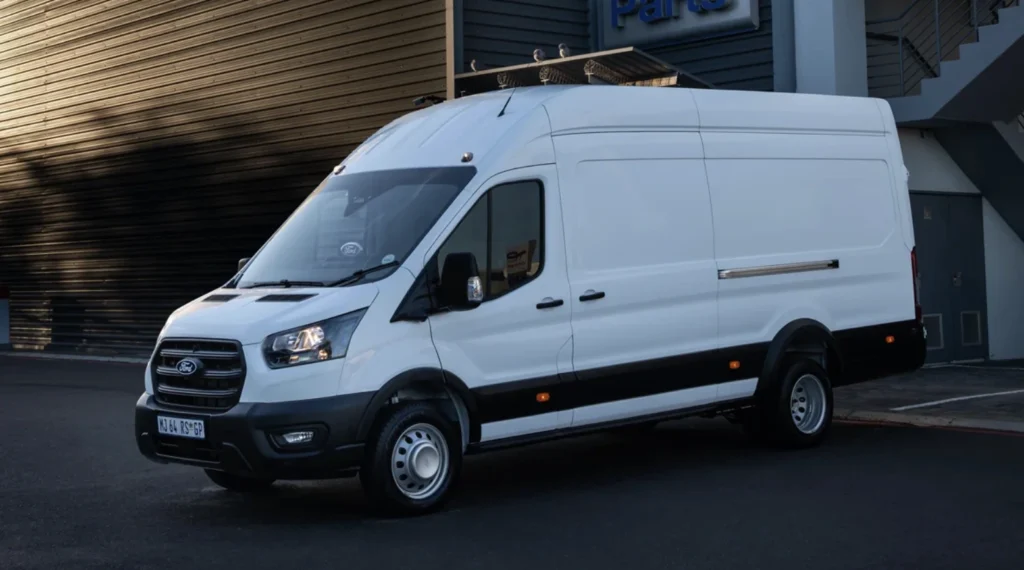
Ford South Africa has added an Extra Long Wheelbase (ELWB) derivative to its Transit Van line-up, pushing the platform to the upper limit of what a van can handle before operators need to move into light truck territory. The model targets businesses that move large volumes and heavier loads but want to avoid the regulatory, access, and operating costs associated with trucks.
This new derivative joins the fourth generation Transit range alongside existing variants and targets logistics, construction, and service operators running high-utilisation routes. The Transit nameplate has been in production for decades, but this latest addition responds to present-day fleet requirements, particularly the need to move more cargo per trip as operating costs continue to rise.
Body dimensions and load implications
Although it uses the same 3,750mm wheelbase as the Long Wheelbase (LWB) Transit, the extra-long version stretches overall length to 6,785mm. That added length converts directly into usable cargo space, pushing load length beyond four metres and increasing total volume to 15.1 cubic metres. For operators handling bulky consignments, this can reduce trip frequency and improve route efficiency.
Payload capacity rises to 2,270kg, compared with 1,325kg in the LWB, placing the vehicle in a higher operating bracket where load planning and axle distribution become more critical. To manage the added mass, Ford fits dual rear wheels, improving stability under load while introducing higher tyre and maintenance considerations than single-wheel layouts.
Access remains conventional, with a wide kerbside sliding door and rear doors that open to 180 degrees. A taller rear door opening improves usability for palletised goods and stacked cargo, particularly in warehouse and site-based operations.
Powertrain and operating considerations
Ford powers the van with its 2.0-litre Duratorq turbodiesel engine, delivering 121kW and 390Nm to the rear wheels through a six-speed manual gearbox. Output levels suit the vehicle’s working role rather than prioritising performance. Selectable drive modes assist with traction and drivability under varying loads and surface conditions.
A braked towing capacity of 3,500kg allows operators to combine cargo transport with trailer-based equipment where required. As with most vehicles in this segment, sustained use at high payloads or while towing will directly affect fuel consumption and service intervals.
Cabin, safety, and fleet usability
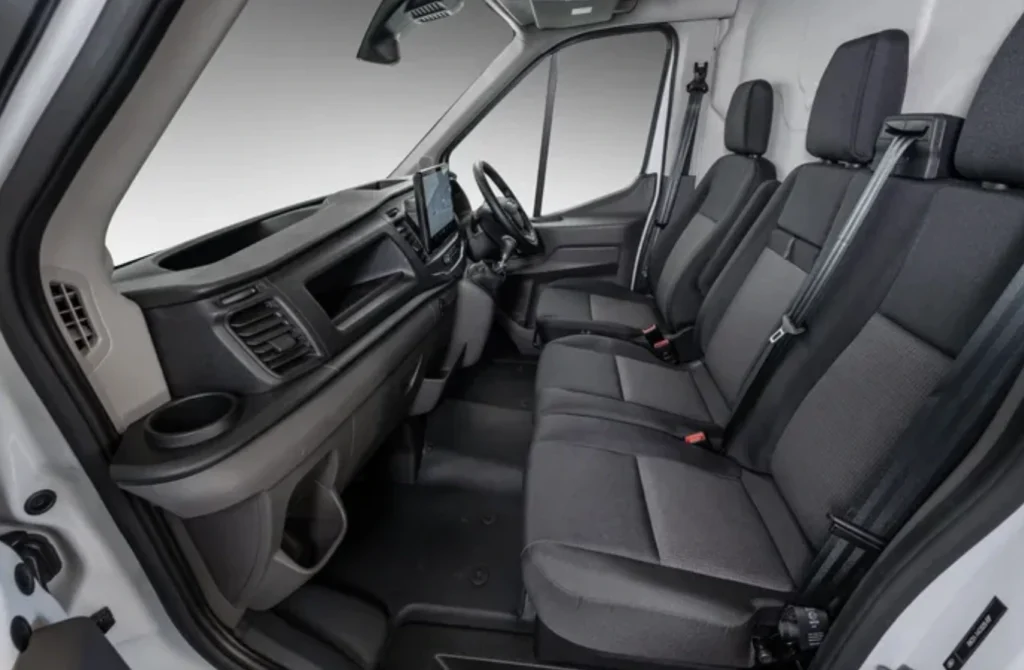
Inside the cabin, Ford’s Sync4 infotainment system with embedded connectivity supports vehicle monitoring, maintenance alerts, and remote functions. For fleet operators, these features contribute to uptime and service planning rather than serving as comfort upgrades.
Safety equipment meets current expectations in the commercial vehicle segment, with stability systems and driver assistance features supporting both urban delivery work and longer-distance operations.
The Extra Long Wheelbase Transit targets operators pushing the limits of what a van can handle before switching to a truck. For fleets that regularly move high-volume or heavier loads, it adds capacity without leaving the van category. Whether it makes sense in practice will depend on utilisation rather than specification sheets.
Read More About SA Motoring HERE