




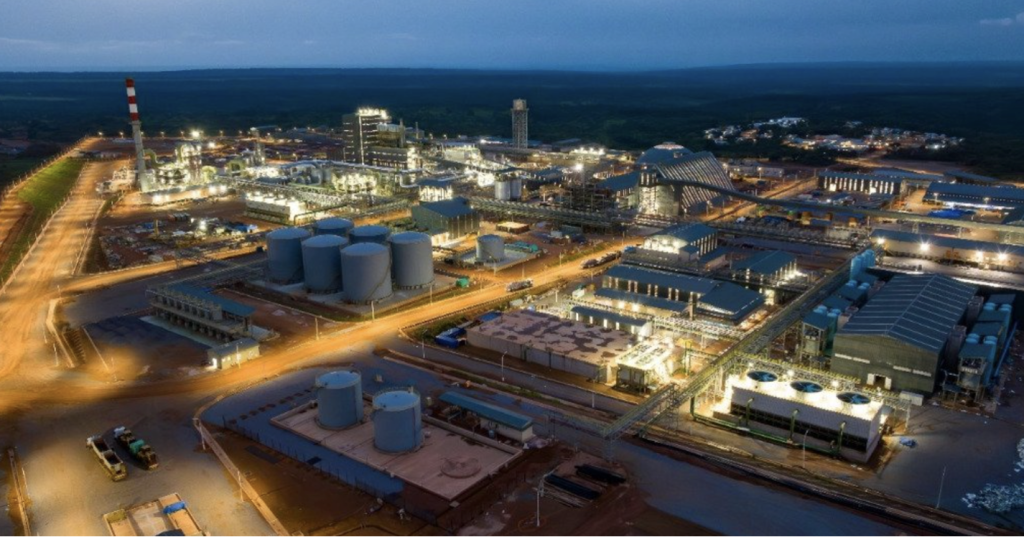
When a project like Africa’s biggest and greenest smelters like Kamoa-Kakula, in the DRC, comes online, it is hard to ignore the fact that it does not incorporate Peirce-Smith (PSC) converters. This raises a bigger question: are modern smelters entering a phase where PSC-based designs are no longer the default? The short answer is no, but the longer and more honest answer is that PSCs are clearly losing their place in new, world class copper smelting and mineral beneficiation flowsheets.
A proven technology facing change
PSC converters have served the industry well for more than a century. They are robust, familiar, and proven. For decades, they formed the backbone of copper converting, reliably turning matte into blister copper while feeding sulphur dioxide to acid plants. Many of the world’s most productive smelters still rely on them today, and they will continue operating for years. But the fact that PSCs still exist doesn’t mean they represent the future.
What projects like Kamoa-Kakula show is that the design priorities of new smelters have fundamentally changed. Developers are no longer optimising primarily for familiarity or operator comfort. They are optimising for energy efficiency, emissions control, sulphur capture, automation, and lifecycle cost. In that context, PSC converters increasingly look like a legacy solution.
The rise of integrated technologies
Modern smelters favour flash smelting and integrated converting technologies that combine steps, reduce handling, and operate in a more continuous, tightly controlled process. These systems generate less fugitive gas, capture sulphur more efficiently, and require fewer manual interventions. They also scale better in very large operations, where downtime and labour intensity carry a high penalty.
PSC converters, by contrast, are batch based, labour heavy, and harder to fully enclose. Even with modern upgrades, they struggle to match newer technologies on emissions intensity and process integration. That matters far more today than it did 20 years ago, especially in jurisdictions where environmental scrutiny is rising and financing is increasingly tied to ESG performance.
Why PSC converters still remain in use
This doesn’t mean PSCs are “obsolete.” It means they are no longer the obvious choice for greenfield, Tier-1 smelters. Where PSCs still make sense is in brownfield expansions, retrofits, or operations that already have the infrastructure, workforce, and gas handling systems in place. In those cases, replacing PSCs with flash or continuous converting can be cost prohibitive and disruptive.
There’s also a practical reality in Africa, many smelters are built to solve a specific problem processing concentrate from a defined mine or district. Simpler flowsheets help projects reach financial close. Adding cutting edge, fully integrated conversion technology raises capital costs and technical risk, even if it pays off long term.
A clear direction for future smelters
But if the question is whether many new Kamoa-Kakula-scale smelters will be built around PSC converters, the answer is almost certainly no. The industry has moved on. PSCs are becoming a bridge technology still useful and still relevant but increasingly sidelined in high-tech developments.
In that sense, PSC converters are not disappearing. They are simply stepping out of the spotlight, as modern smelters point to the direction copper metallurgy is taking next. More energy efficient and more aligned to ESG standards and regulation
Read more about African smelters HERE