




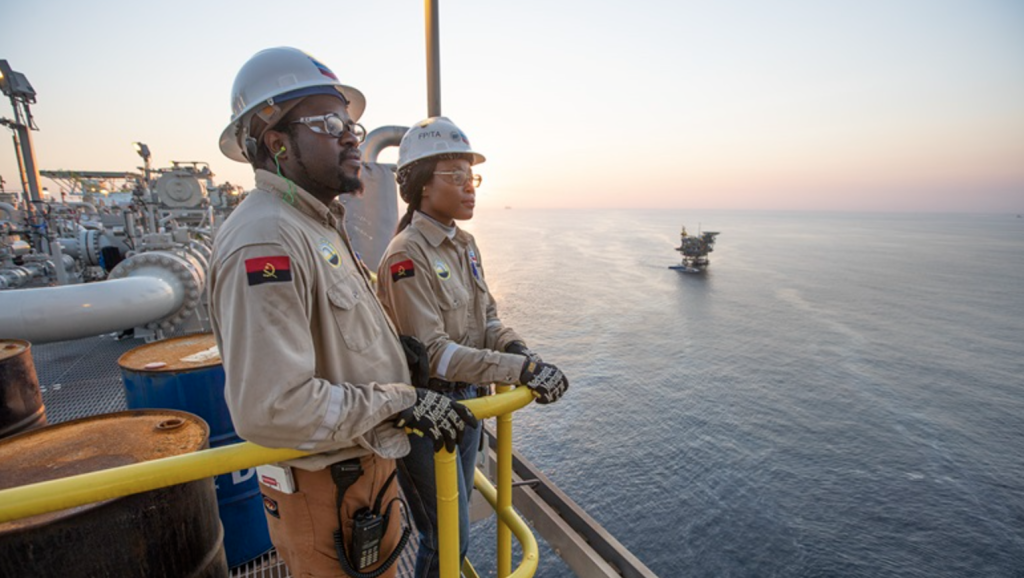
Chevron has started production at the South N’dola field in Block 0 offshore Angola, with its local subsidiary, Cabinda Gulf Oil Company (CABGOC), operating the asset. While the company has not released official production figures, industry estimates suggest oil output of about 25,000 barrels per day, alongside associated gas volumes of roughly 50 million cubic feet per day. Together, this places combined production at around 33,000 barrels of oil equivalent per day.
Using Existing Offshore Facilities
Chevron developed South N’dola by tying the field into infrastructure already operating across Block 0. This tie-back approach reduced additional capital spending and shortened the timeline between development and first production. It also fits Chevron’s broader strategy of extending output from mature offshore assets through incremental projects rather than large standalone developments.
Brent Gros, president of Chevron Offshore Business, said the start-up underscores the company’s focus on extracting additional value from its established offshore portfolio in Angola.
Gas Routed to Angola LNG
Alongside oil production, South N’dola delivers associated gas volumes to the Angola LNG plant in Soyo. The facility plays a central role in Angola’s gas commercialisation efforts by processing gas that might otherwise be flared, while also supporting continued output from mature offshore fields.
This integration has taken on greater importance as Angola’s national oil production has declined from around 2 million barrels per day in the early 2010s to roughly 1.1 million barrels per day today. By routing new gas volumes into Angola LNG, operators are helping stabilise field economics while reducing flaring.
Gas Development Gains Momentum
As oil output has fallen, Angola has placed greater emphasis on gas development, including projects not linked directly to oil production. In November 2025, the country brought its first dedicated gas field into operation.
The New Gas Consortium (NGC) project began producing gas through a processing plant in Soyo, with capacity to handle about 400 million cubic feet per day and up to 20,000 barrels of condensates. The project established a standalone route for gas production and processing, marking a shift in how Angola develops its gas resources.
National Gas Plan Provides Direction
These projects align with Angola’s National Gas Master Plan, adopted in April 2025. The plan sets out the structure of the gas sector and targets an increase in gas’s share of the national energy mix to about 25% in the near term, up from an estimated 7% to 10% today.
With South N’dola now producing, Angola continues to extend the life of its offshore assets while steadily expanding the role of gas within its energy system.