




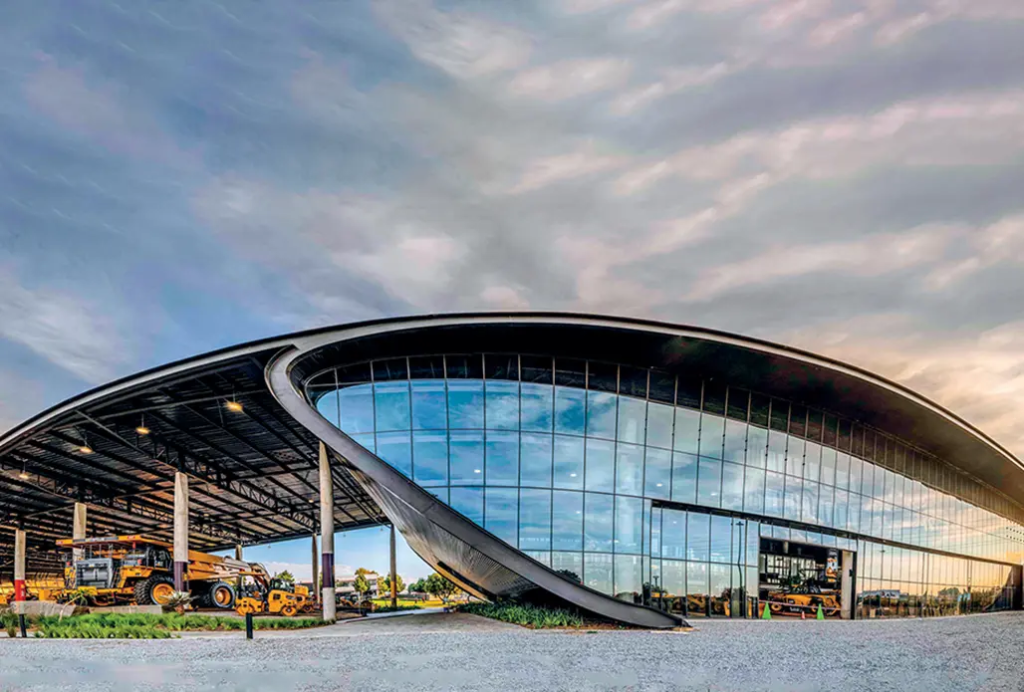
On January 27, 2026, Barloworld Limited marked the end of an era by delisting from the Johannesburg Stock Exchange (JSE) and A2X after 86 years as a publicly traded entity. This pivotal move followed a R23 billion acquisition by an Entsha-led consortium, ushering the South African industrial giant into private ownership.
The consortium, majority-owned (51%) by Entsha—a 100% black-owned investment firm linked to the Sewela family—and 49% by Saudi Arabia’s Zahid Group, positions Barloworld as a privately held, South African-led business focused on long-term growth. Led by CEO Dominic Sewela, whose two-decade tenure includes rising from Equipment South Africa CEO in 2007 to group chief executive in 2017, the transition emphasizes “patient capital” and strategic agility beyond short-term market pressures. Headquartered in Johannesburg, Barloworld retains its Southern African roots, committing to black ownership and community participation while eyeing sustainable expansion across the continent.
History Of Success
This delisting caps a remarkable 124-year journey for Barloworld, from a modest wool trading outfit to a diversified industrial leader. Founded in 1902 by Major Ernest “Billy” Barlow in Durban as Thomas Barlow and Sons, the company initially dealt in woollen blankets with a borrowed £1,000. Billy’s son, Charles Sydney “Punch” Barlow, took the helm in the 1920s and pivoted the business dramatically. In 1927, after winning a bet that a Caterpillar tractor could outperform a team of oxen in ploughing sugarcane fields, Punch secured the exclusive Caterpillar dealership for South Africa. This partnership, now spanning nearly a century, became the cornerstone of Barloworld’s success, with dealerships opening in Durban and the Free State that year.
By 1940, the company had relocated its headquarters to Johannesburg and listed on the JSE in 1941 at seven shillings and sixpence per share, one of only nine South African firms with such longevity on the exchange. Post-World War II growth was explosive. In 1969, Barloworld listed on the London Stock Exchange, signaling its international ambitions. The 1971 acquisition of Rand Mines Limited formed Barlow Rand, diversifying into mining, cement, paint, stainless steel, household appliances, and more.
By the late 1980s, amid South Africa’s apartheid-era isolation, Barlow Rand achieved R1 billion in profits, employed 240,000 people, and ranked 79th on the Fortune 500 list, a testament to its conglomerate might. The 1990s saw further expansion: into Europe with acquisitions in Belgium, Spain, and Portugal in 1992, and Caterpillar franchises in Angola and the Democratic Republic of Congo by 1994. In 1998, entry into Russia via Vostochnaya Technica established it as a Caterpillar dealer in Siberia and the Far East.
Further Acquisitions
The new millennium brought celebrations and strategic shifts. In 2002, Barloworld marked its centenary and 75 years with Caterpillar, setting a “244″ goal to double stakeholder value in four years. By 2022, it celebrated 120 years overall and 95 years of the Caterpillar alliance. Acquisitions continued, including Tongaat Hulett’s starch business Ingrain for $351 million in 2020 and Equipment Mongolia as a Caterpillar dealer the same year. In 2016, a joint venture with Germany’s BayWa bolstered agriculture and materials handling in Southern Africa.
Key to Success – Adaptability
Barloworld’s successes are rooted in adaptability and strategic partnerships. The enduring Caterpillar relationship—celebrating 90 years in South Africa in 2017—has driven dominance in industrial equipment for mining, construction, energy, and transportation across Southern Africa and Eurasia. Financially, it peaked as a global powerhouse, with 2024 revenue of R41.9 billion, operating income of R5.11 billion, and net income of R1.67 billion. Post-apartheid, it embraced transformation, investing R5.8 million in socio-economic development via the Barloworld Empowerment Foundation in 2024 and committing to increasing women in leadership. Since 2017’s “fix, optimize, and grow” strategy, it returned R16.5 billion to shareholders, showcasing consistent value creation. Culturally, initiatives like sponsoring Team Barloworld in the 2007 Tour de France—the first South African team admitted—highlighted its global profile. Its diversification into consumer industries, supplying ingredients for food, beverages, paper, and pharmaceuticals, added resilience.
Complexities Required Changes
Yet, Barloworld’s path wasn’t without hurdles. The conglomerate model bred complexity, leading to extensive unbundling and divestitures. From 2018 onward, it shed non-core assets: selling its Iberian equipment business for $180 million in 2018, exiting logistics and motor retail (including Avis and Budget via Zeda’s separate JSE listing in 2022, valued at $260 million), and cancelling R2 billion in Russian orders in 2022 due to sanctions following geopolitical tensions.
Economic volatility hit hard; 2024 saw a 7% revenue drop to R41.9 billion amid inflationary pressures and a 22% decline in Russian operations, compounded by a U.S. export control investigation. The COVID-19 pandemic in 2020 posed “unprecedented” challenges in its 118-year history, forcing swift crisis responses. Legal woes included a 2022 racism and unlawful termination lawsuit, and market skepticism about its Russian exposure eroded share value in 2023. Broader issues like apartheid-era constraints and post-1994 competition in emerging markets tested its agility.
The delisting, finalized after Newco’s compulsory acquisition of remaining shares at R120 each (following 97.6% shareholder acceptance), stemmed from a November 2025 announcement. Shares were suspended on December 1, 2025, with delisting approved by JSE and A2X on January 27, 2026. The process, extended multiple times to secure the 90% threshold, faced scrutiny over Sewela’s involvement but adhered to strict governance under the independent board. Zahid Group’s long-term stake ensures continuity, while Entsha’s majority enhances direct black ownership.
Foundation for Future Growth in Place
For Barloworld’s future in Africa, privatization promises liberation from quarterly scrutiny, enabling bold, long-term investments in core segments: industrial equipment (Caterpillar-focused) and consumer industries. Sewela highlights agility to serve customers amid market fluctuations and prioritize employee wellbeing. Anchored in South Africa, it can deepen African operations—already spanning mining and agriculture—fostering sustainable growth and stakeholder value. Challenges like illiquidity for holdout shareholders persist, but the shift aligns with South Africa’s economic transformation, potentially inspiring similar black-led buyouts. As a private entity, Barloworld is poised to leverage its heritage for resilient, continent-wide impact.
“What this transaction does is bring together experienced executive leadership and patient capital that understands the business.” said Dominic Sewela, Group Chief Executive. “Operating in the unlisted space gives us the strategic agility to focus on the core of our business — serving our customers in all market conditions and supporting the wellbeing of our employees. This transition allows us to move beyond the short term and adopt the long‑term perspective required to drive sustainable growth and create intrinsic value for all our stakeholders.”